Gail A. Cornwall, Ph.D., a professor in the School of Medicine’s Department of Cell Biology and Biochemistry at Texas Tech University Health Sciences Center, has received a 2026 National Institutes of Health Director’s Transformative Research Award. One of six U.S. researchers selected in the grant cycle, Cornwall will receive $2.9 million to investigate “Protein-Based Inheritance in Mammals,” a five-year project under the NIH Common Fund’s High-Risk, High-Reward Research program.
The award supports research that the NIH describes as exceptionally creative, highly innovative and potentially capable of broad impact across biomedical, behavioral or social sciences. For Cornwall, the central question is how information acquired through environmental experience might be transmitted across generations. Her research examines transgenerational epigenetic inheritance, a field concerned with whether changes induced by environmental stress can affect traits in descendants without those descendants directly encountering the original stressor.
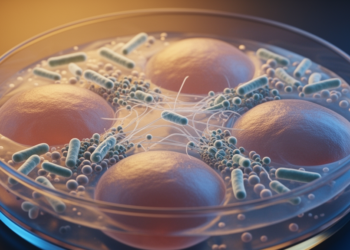
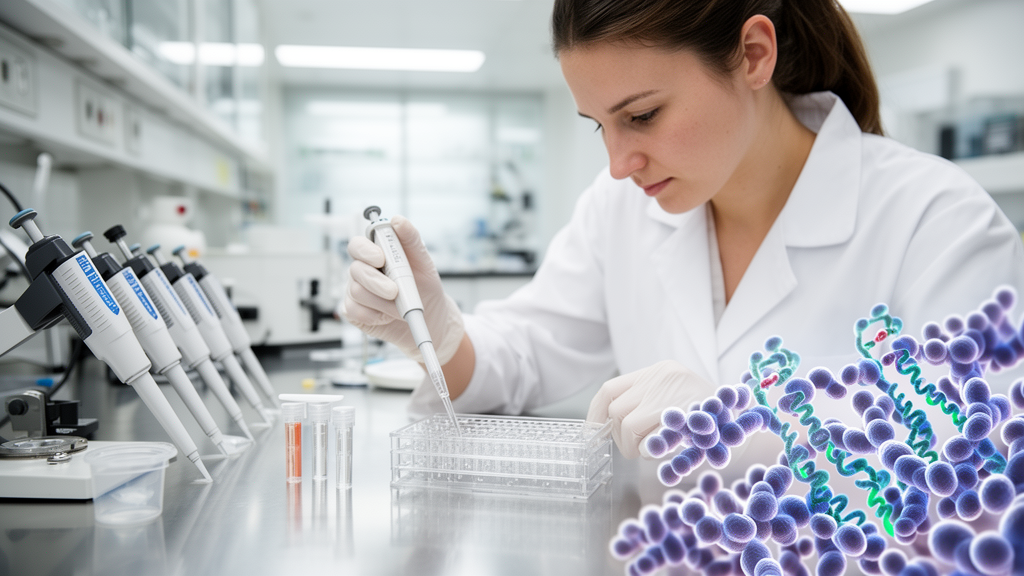
Previous studies support the general possibility that environmental stress can alter sperm and influence later generations, but the molecular carrier responsible for this transmission remains unknown. Cornwall proposes that small cellular structures called germ granules may serve that role. In her model, environmentally sensitive proteins known as amyloids carry inherited information through their three-dimensional structures. These protein structures, rather than genomic material such as DNA or RNA, would transmit information to future generations, including descendants that never experienced the environmental stress directly.
Cornwall characterized the proposed mechanism as a way for an organism to “beta test” a new phenotype before making a more permanent change to its DNA sequence. Such a temporary adaptation could allow cells to respond to altered conditions and, in some cases, produce traits associated with disease. She also cited instances in the human population in which newly acquired traits cannot be explained by genetic changes, although the supplied announcement does not identify particular studies or establish how common protein-based inheritance may be in humans.
The project is explicitly a test of a mechanism rather than a demonstration that the mechanism already operates in mammals. “If we can prove that protein-based inheritance happens in mammals, it would be a new epigenetic mechanism for how traits are acquired,” Cornwall said. The work could reveal how environmental conditions influence developmental origins of disease, but the grant itself funds research and does not establish a human clinical benefit. The NIH Director’s Transformative Research Awards are designed to initiate important new research directions over five years, making this an early-stage investigation into a speculative form of inheritance.
Subject of Research: Research into protein-based transgenerational epigenetic inheritance in mammals
Article Title: TTUHSC’s Cornwall receives 2026 NIH Director's Transformative Research Award
Article References: TTUHSC’s Cornwall receives 2026 NIH Director's Transformative Research Award. Original publication (Bibliographic details unavailable.)
Image Credits: AI Generated
DOI: Not provided
Keywords: Gail Cornwall, NIH, transformative research, epigenetic inheritance, germ granules, amyloid proteins, environmental stress, developmental origins of disease, mammalian genetics, TTUHSC, Cornwall, receives
News Source: Juliet Wilcox. (October 21, 2026). Gail Cornwall Wins NIH Grant to Test Protein-Based Inheritance. Scienmag.