A clinical protocol and narrative evidence review concludes that immunomodulatory treatments for infertility, recurrent implantation failure and recurrent pregnancy loss should not be used routinely. Intralipid and corticosteroids may be considered only in carefully selected patients after established causes have been excluded and after counseling about uncertain benefits, potential harms and cost.
The source combines proposed treatment schedules with findings from earlier studies and unpublished clinical experience. It describes the use of 20% Intralipid, intravenous immunoglobulin and corticosteroids, including doses, infusion timing and monitoring. These are proposed protocols rather than the results of a new controlled trial.
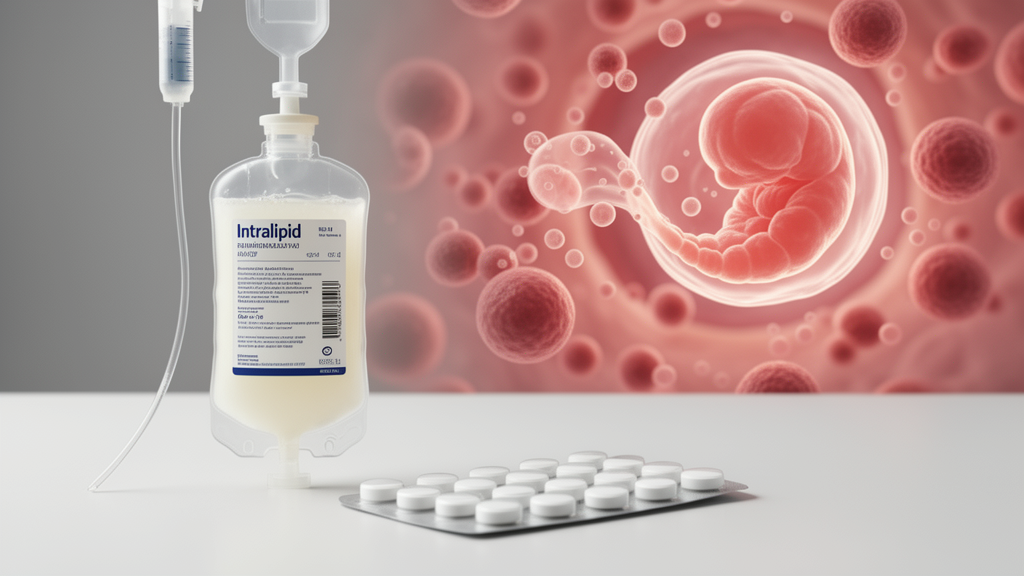
Intralipid is a soybean oil-based lipid emulsion described as suppressing natural killer-cell cytotoxicity and pro-inflammatory cytokine production. The proposed indication is an elevated proportion or absolute count of cytotoxic CD3–CD16+CD56+ natural killer cells or CD3+CD16+CD56+ natural killer T cells alongside spontaneous miscarriage, recurrent pregnancy loss, recurrent implantation failure, failed intrauterine insemination or inability to conceive.
The protocol recommends 50–200 mL of 20% Intralipid diluted in 250–500 mL of saline for slow intravenous infusion, with the dose adjusted to the degree of natural killer-cell elevation. In selected cases, prednisolone at 5–10 mg may begin about one week before ovulation or embryo transfer and continue until pregnancy testing. After a positive test, further Intralipid infusions may be given during weeks 3, 5 and 9 of amenorrhea, but only after follow-up testing confirms an elevation in the specified natural killer-cell population.
Available evidence remains limited and inconsistent. A retrospective study of 187 women with unexplained recurrent reproductive failure included 26 treated with Intralipid. Among 10 treated women with recurrent miscarriage, seven had live births, compared with significantly lower rates among untreated controls. Of 16 treated women with recurrent implantation failure, nine achieved clinical pregnancy and five of those pregnancies resulted in live birth. The small, selected treatment group and absence of identified distinguishing factors limit interpretation.
A 2020 systematic review screened 1,025 studies and included seven. A meta-analysis of nonrandomized intravenous immunoglobulin studies involving 557 participants favored treatment for live birth, with a risk ratio of 2.57 and p<0.05, but the studies had substantial heterogeneity and a moderate-to-severe risk of bias. Individual randomized trials reported favorable results for etanercept, Intralipid and prednisolone, with statistical significance for etanercept and Intralipid, although the source notes continuing controversy over Intralipid effectiveness.
Guidelines do not establish routine use. The source reports that the UK Human Fertilisation and Embryology Authority rates intravenous immunoglobulin and corticosteroids as interventions for which clinical benefit has not been established, while the American Society for Reproductive Medicine found insufficient evidence for intravenous immunoglobulin in IVF. The European Society of Human Reproduction and Embryology guideline on recurrent pregnancy loss does not support routine natural killer-cell testing or standard immunomodulatory treatment.
Safety and implementation also require caution. Reported Intralipid complications include hypersensitivity, infusion symptoms, hyperlipidemia and rare fat overload syndrome, particularly in people with impaired lipid metabolism or hepatic dysfunction. Corticosteroids carry risks that increase with dose and duration, including glucose intolerance, hypertension, infection susceptibility, mood changes, osteoporosis and adrenal suppression. Variation in doses, lack of standardized immune biomarkers and limited high-quality evidence complicate comparisons among protocols.
Subject of Research: Proposed clinical protocols for immunomodulation with Intralipid and corticosteroids in reproductive failure
Article Title: Immunomodulatory treatment protocols with Intralipid and corticosteroids for patients with reproductive failure: Clinical protocols
Article References: Velikova, T., Kokudeva, M., Mihova, A., Angelova, A., & Pencheva, B. (2026). Immunomodulatory treatment protocols with Intralipid and corticosteroids for patients with reproductive failure: Clinical protocols. Pharmacia, 73, Article e168168. https://doi.org/10.3897/pharmacia.73.e168168
Image Credits: AI Generated
DOI: 10.3897/pharmacia.73.e168168
Keywords: Intralipid, reproductive immunology, infertility, recurrent pregnancy loss, recurrent implantation failure, natural killer cells, corticosteroids, IVIG, IVF, clinical protocol, Immunomodulatory, treatment
News Source: Ophelia Keating. (October 21, 2026). Clinical protocol proposes Intralipid-based immunomodulation for selected reproductive failures, but evidence remains uncertain. Scienmag.