• HOME
  • NEWS
  • EXPLORE
    • CAREER
      • Companies
      • Jobs
    • EVENTS
    • iGEM
      • News
      • Team
    • PHOTOS
    • VIDEO
    • WIKI
  • BLOG
  • COMMUNITY
    • FACEBOOK
    • INSTAGRAM
    • TWITTER
Wednesday, October 21, 2026
BIOENGINEER.ORG
No Result
View All Result
  • Login
  • HOME
  • NEWS
  • EXPLORE
    • CAREER
      • Companies
      • Jobs
        • Lecturer
        • PhD Studentship
        • Postdoc
        • Research Assistant
    • EVENTS
    • iGEM
      • News
      • Team
    • PHOTOS
    • VIDEO
    • WIKI
  • BLOG
  • COMMUNITY
    • FACEBOOK
    • INSTAGRAM
    • TWITTER
No Result
View All Result
Bioengineer.org
No Result
View All Result
Home NEWS Science News Health

€50,000 grant funds prototype development for a portable phenylalanine sensor

by
October 21, 2026
in Health
Reading Time: 2 mins read
0
€50,000 grant funds prototype development for a portable phenylalanine sensor

Portable Sensor for Rare Metabolic Disease Wins 50,000 Euro Boost

Share on FacebookShare on TwitterShare on LinkedinShare on RedditShare on Telegram

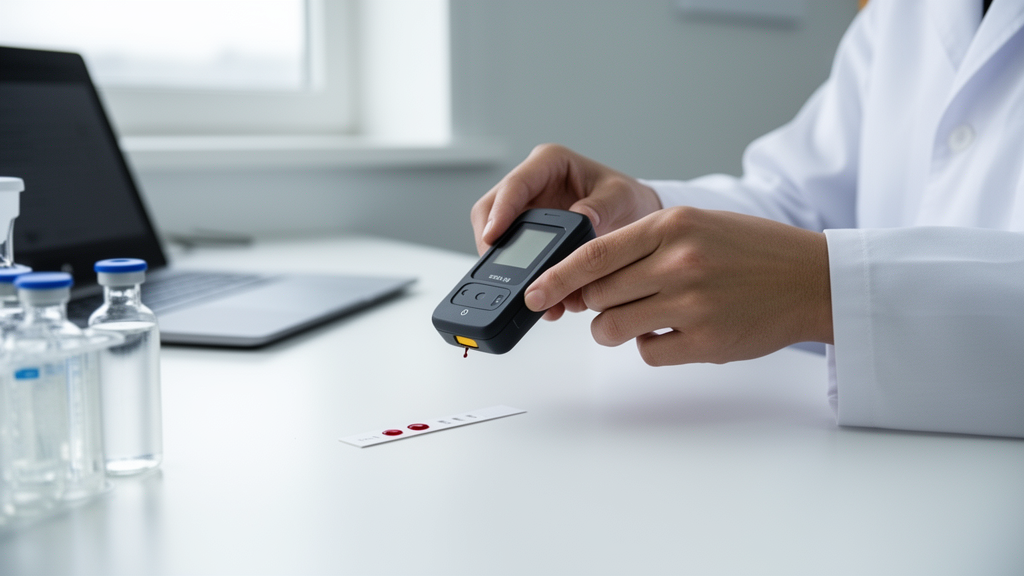
A €50,000 grant will support development of a laboratory prototype for a portable biosensor intended to measure phenylalanine in people with phenylketonuria, or PKU. The grant-funded project is led by Tiago Cordeiro at Instituto de Tecnologia Química e Biológica António Xavier da Universidade NOVA de Lisboa, known as ITQB NOVA, in Portugal. It aims to establish whether appropriately sensitive and specific biosensors can support rapid phenylalanine monitoring, but the announcement does not report sensor performance or clinical-test results.

PKU is a rare inherited condition in which the body lacks the enzyme needed to break down the amino acid phenylalanine. Phenylalanine can consequently build up in the blood and brain and, if untreated, may cause serious long-term problems, including intellectual disability, seizures, developmental delay, behavioral difficulties and psychiatric disorders. Lifelong dietary and medical management can prevent many of these outcomes, while people with PKU must individually limit phenylalanine intake because it occurs in foods such as meat, fish, dairy, nuts and some grains.

Current monitoring commonly involves blood tests. Some patients use an at-home finger-prick sample placed on filter paper that is mailed to a laboratory, with results communicated after a wait of days to a week. Other patients have biomarkers assessed through in-clinic blood draws, and testing may be needed weekly depending on the condition and its severity. The project’s stated goal is to enable patients to measure phenylalanine and adjust diet and treatment in real time, reducing the delay between obtaining a result and making a management decision.

Cordeiro and Paula Leandro of the Faculdade de Farmácia da Universidade de Lisboa are combining expertise in enzymes and macromolecular interactions with knowledge of PKU to develop the biosensors. ITQB NOVA will coordinate the scientific and technological work, drawing on its experience with intrinsically disordered proteins, electrochemistry and microfabrication. Felipe Conzuelo will lead electrochemistry and microfabrication activities, while Jorge Carvalho will participate through the institute’s Makers Hub Research Facility. Doctors and patient organizations, including APOFEN, will be involved in planned clinical validation.

The initial award covers development of a laboratory prototype for proof of concept; it is not evidence that a usable sensor has already been completed or clinically evaluated. The team may seek further funding through the same programme for later development stages. The sensor is a project objective rather than an established at-home capability, and the announcement provides no measured sensitivity, specificity, testing time, sample type, device dimensions or clinical outcomes. The work is part of CaixaImpulse Health Innovation, an 18-month programme intended to support validation and development of health and life-sciences innovations for eventual transfer through spin-offs or licensing.

Subject of Research: Grant-funded prototype development of a portable biosensor for phenylketonuria

Article Title: 50K€ to develop a portable sensor for rare metabolic disease

Article References: 50K€ to develop a portable sensor for rare metabolic disease. Original publication (Bibliographic details unavailable.)

Image Credits: AI Generated

DOI: Not provided

Keywords: phenylketonuria, phenylalanine, portable biosensor, metabolic disease, grant funding, proof of concept, clinical validation, ITQB NOVA, develop, portable, sensor, rare

News Source: Ophelia Keating. (October 21, 2026). €50,000 grant funds prototype development for a portable phenylalanine sensor. Scienmag.


Tags: clinical validationdevelopgrant fundingITQB NOVAmetabolic diseasephenylalaninephenylketonuriaportableportable biosensorproof of conceptraresensor
Share12Tweet7Share2ShareShareShare1

Related Posts

Smartphone voice patterns associated with type 2 diabetes in 461 adults

Smartphone voice patterns associated with type 2 diabetes in 461 adults

October 21, 2026
Systematic review finds bacterial contamination on 79.3% of African currency notes in pooled analysis

Systematic review finds bacterial contamination on 79.3% of African currency notes in pooled analysis

October 21, 2026

Mixed-methods field trial finds short-term adoption but no long-term sustainment for scaled employment intervention

October 21, 2026

Review links sevoflurane exposure during development to neuroinflammatory pathways linked with neurotoxicity

October 21, 2026

POPULAR NEWS

  • Smartphone voice patterns associated with type 2 diabetes in 461 adults

    Smartphone voice patterns associated with type 2 diabetes in 461 adults

    29 shares
    Share 12 Tweet 7
  • Systematic review finds bacterial contamination on 79.3% of African currency notes in pooled analysis

    29 shares
    Share 12 Tweet 7
  • Mixed-methods field trial finds short-term adoption but no long-term sustainment for scaled employment intervention

    29 shares
    Share 12 Tweet 7
  • Review links sevoflurane exposure during development to neuroinflammatory pathways linked with neurotoxicity

    29 shares
    Share 12 Tweet 7

About

We bring you the latest biotechnology news from best research centers and universities around the world. Check our website.

Follow us

Recent News

Smartphone voice patterns associated with type 2 diabetes in 461 adults

Systematic review finds bacterial contamination on 79.3% of African currency notes in pooled analysis

Mixed-methods field trial finds short-term adoption but no long-term sustainment for scaled employment intervention

Subscribe to Blog via Email

Enter your email address to subscribe to this blog and receive notifications of new posts by email.

Join 85 other subscribers
  • Contact Us

Bioengineer.org © Copyright 2023 All Rights Reserved.

Welcome Back!

Login to your account below

Forgotten Password?

Retrieve your password

Please enter your username or email address to reset your password.

Log In
No Result
View All Result
  • Homepages
    • Home Page 1
    • Home Page 2
  • News
  • National
  • Business
  • Health
  • Lifestyle
  • Science

Bioengineer.org © Copyright 2023 All Rights Reserved.