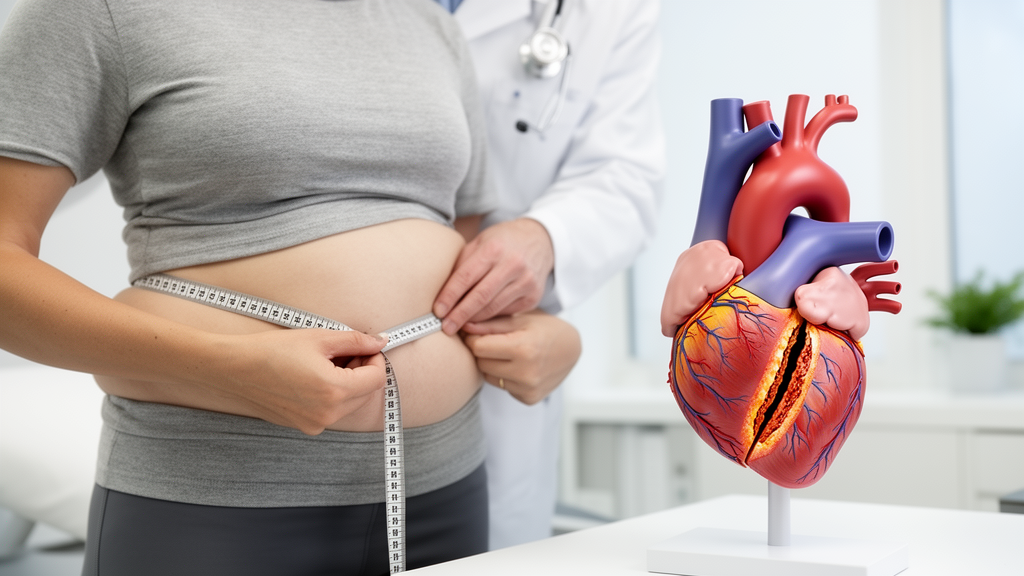
Higher body mass index, a larger waist and a higher waist-to-height ratio were associated with increased risks of aortic dissection or death from the condition in two prospective cohorts and a meta-analysis involving more than 1.1 million participants. In the UK Biobank, adults with a body mass index of at least 35 kg/m² had a 54% higher risk of aortic dissection than those with a BMI of 18.5 to below 25 kg/m² after adjustment for demographic, lifestyle and medical factors. The largest relative associations in the combined analysis involved waist-to-height ratio: each 0.1-unit increase corresponded to a 32% higher relative risk. These findings point to a possible role for abdominal adiposity in a cardiovascular emergency that remains uncommon but has a high fatality rate.
Aortic dissection occurs when a tear in the inner lining of the aorta allows blood to enter the wall and separate its layers. The resulting false lumen can reduce blood flow to organs such as the heart and brain or lead to rupture. The condition has an estimated incidence of three to four cases per 100,000 people per year in the United States and United Kingdom, so identifying enough events for precise estimates requires very large populations or long follow-up. The investigators therefore combined two unusually large prospective cohorts with a systematic review and meta-analysis of earlier cohort evidence rather than relying on one database alone. The study examined associations, not whether changes in body size or weight would prevent dissection.
The analysis used 496,255 eligible adults from the UK Biobank and 630,841 participants in the Japan-Specific Health Checkups Study, known as J-SHC. The UK cohort included people aged 37 to 73 at recruitment between 2006 and 2010 and provided a mean follow-up of 12.3 years. During 6,108,314 person-years of observation, 371 incident dissections were identified through linkage to hospital and mortality records in England, Scotland and Wales. The Japanese cohort comprised adults aged 40 to 74 who underwent health checkups between 2008 and 2015, with participants followed until death, age 75 or the end of follow-up on April 1, 2015. Its mean follow-up was four years, during which 105 deaths from aortic dissection occurred. Multivariable Cox proportional hazards models estimated hazard ratios and 95% confidence intervals, while a random-effects meta-analysis pooled adjusted estimates from cohort studies. The UK analysis assessed incident dissection and mortality, while the Japanese analysis assessed mortality from death certificates.
Measurements went beyond BMI in the UK Biobank, where the investigators also examined waist and hip circumference, waist-to-height ratio, waist-to-hip ratio, estimated fat mass and body fat percentage. In the fully adjusted analysis, the highest waist-circumference quintile had an aortic dissection hazard ratio of 1.82, or an 82% higher risk, compared with the lowest quintile. The corresponding ratios were 1.77 for hip circumference, 1.88 for waist-to-height ratio and 1.36 for fat mass. By contrast, waist-to-hip ratio and body fat percentage had no clear statistically significant association, with hazard ratios of 1.28 and 1.09, respectively. In continuous analyses, each 5 kg/m² increase in BMI was associated with a 16% higher risk, each 10 cm increase in waist circumference with a 15% higher risk, and each 0.1 increase in waist-to-height ratio with a 23% higher risk. The main UK model adjusted for age, sex, ethnicity, height, education, deprivation, alcohol, smoking, physical activity, fruit and vegetable intake and connective tissue disease.
The Japanese cohort produced directionally similar results for mortality. Compared with the normal-weight reference group, a BMI of at least 30 kg/m² was associated with a hazard ratio of 2.36 for death from aortic dissection. The highest waist-circumference and waist-to-height groups had hazard ratios of 2.26 and 2.61, respectively, compared with the lowest groups. Per specified increment, a 5 kg/m² higher BMI corresponded to 30% higher mortality risk, a 10 cm larger waist to 35% higher risk, and a 0.1-unit higher waist-to-height ratio to 54% higher risk. These estimates had wider confidence intervals than those from the longer UK follow-up. The Japanese models adjusted for age, sex, region, smoking and alcohol use, but information on education, deprivation, physical activity, diet and connective tissue disease was unavailable. As in the UK analysis, adjustment for hypertension or diastolic blood pressure reduced the estimated associations, suggesting that elevated blood pressure may account for part, but not necessarily all, of the relationship.
The meta-analysis of BMI included 2,007 cases among 4,962,288 participants from five cohorts in the United Kingdom and Japan. A 5 kg/m² increment in BMI was associated with a summary relative risk of 1.09, with a 95% confidence interval of 1.00 to 1.20 and moderate statistical heterogeneity indicated by an I² of 43%. Comparing the highest with the lowest BMI categories gave a relative risk of 1.47, with no statistical heterogeneity detected across the five studies. A dose-response model suggested that the increase became steeper at higher BMI levels: relative risks were 27% higher at a BMI of 35 and 59% higher at 40 compared with a BMI of 20. The model indicated evidence of nonlinearity, and the investigators reported that the association appeared more pronounced in men than in women. Only two studies contributed to the waist analyses, covering 476 cases and 1,127,096 participants. Per 10 cm increase in waist circumference, the summary relative risk was 1.21; per 0.1-unit increase in waist-to-height ratio, it was 1.32. Because the waist estimates came from just two studies, their apparent consistency requires confirmation in more populations.
Several mechanisms could connect excess adiposity with aortic dissection, but the observational design cannot establish which mechanism is responsible or whether adiposity itself causes the condition. Adiposity is closely linked with hypertension, an established risk factor for dissection, and the attenuation seen after adjustment for hypertension or blood pressure is consistent with blood pressure mediating part of the association. Obesity is also associated with oxidative stress, inflammation, altered coagulation, insulin resistance and unfavorable lipid profiles. The particularly strong associations for waist circumference and waist-to-height ratio may indicate that the location of fat is more informative than its total amount. Visceral and perivascular adipose tissues surround the aorta and can enter inflammatory states, promoting endothelial dysfunction, increased matrix metalloproteinase activity, extracellular degradation and weakening of the aortic wall. Experimental mouse studies reviewed by the authors found that obesity-related inflammation around the aorta could promote aneurysm development, but those animal findings do not establish a clinical benefit in humans. The analysis also found that further adjustment for diabetes strengthened some associations, consistent with diabetes being inversely associated with dissection in earlier evidence.
Subgroup analyses suggested that associations may be stronger in men than in women and, in the UK cohort, potentially stronger among younger than older adults. The waist-related patterns were also more pronounced among men in the Japanese study. The formal interaction findings were not uniformly significant, and the results do not establish that adiposity has different biological effects in men and women. The sex-stratified findings were broadly consistent with the meta-analysis, where associations appeared stronger in studies of men. The researchers also examined reverse causation and confounding by illness at baseline. Excluding the first three years of follow-up in the UK cohort, removing participants with prevalent cardiovascular disease, respiratory disease or cancer, or applying both exclusions generally left the results similar or slightly stronger. Sensitivity analyses that restricted the Japanese cohort to people without previous ischemic heart disease also produced similar patterns. The investigators assessed the proportional-hazards assumption and reported no evidence of nonlinearity between the adiposity measures and dissection risk in the UK analysis.
Important limitations constrain what can be concluded. Both analyses were observational, so residual confounding and measurement error remain possible, and adjustment for blood pressure may also obscure part of an underlying pathway. The J-SHC analysis had relatively crude information on confounders and only four years of follow-up, while both cohorts were not fully representative of the general population. Aortic dissection cases were uncommon, especially in the Japanese cohort, limiting precision. Generalizability across regions and ethnic groups also requires larger studies. The meta-analysis was comprehensive but included few studies, was not preregistered, and could not resolve uncertainty for waist measures beyond the two available cohorts. Using World Cancer Research Fund criteria, the investigators rated the evidence for a causal relationship between higher adiposity and aortic dissection as “limited-suggestive.” The results support excess weight, particularly abdominal adiposity, as a possible risk marker and potential contributor to aortic dissection, but they do not show that weight loss prevents the condition.
The overall pattern was consistent across two populations with different characteristics, including different levels of smoking and body size. In the UK Biobank, the fully adjusted estimates suggested higher dissection risk at the upper end of BMI and among people with larger waist measurements. In the J-SHC cohort, the same general pattern appeared for mortality, although confidence intervals were wider. The meta-analysis provided the strongest pooled evidence for BMI, with a modest increase in relative risk per 5 kg/m² and a steeper modeled difference at higher BMI values. Waist circumference and waist-to-height ratio had larger summary associations, but those estimates came from only two cohorts and require independent replication. The findings add evidence to a limited literature on an uncommon and serious condition and identify general and abdominal adiposity as possible markers of susceptibility. Further large-scale cohort studies with more diverse populations, longer follow-up and more detailed adjustment for blood pressure and other potential pathways are needed to clarify the size of the association and whether it differs by age, sex and geographic context.
Subject of Research: Associations of general and abdominal adiposity with aortic dissection incidence and mortality in prospective cohorts and a cohort meta-analysis
Article Title: Adiposity and the risk of aortic dissection incidence and mortality: results from the UK Biobank, the J-SHC study and a meta-analysis of cohort studies
Article References: Dillman, A., Otaki, Y., Sanchez-Perez, M., Irfan Khan, M. Y., Hibino, M., Konta, T., Yamagata, K., Fujimoto, S., Tsuruya, K., Narita, I., Kasahara, M., Shibagaki, Y., Iseki, K., Moriyama, T., Kondo, M., Asahi, K., Watanabe, T., Watanabe, T., Watanabe, M., & Aune, D. (2026). Adiposity and the risk of aortic dissection incidence and mortality: results from the UK Biobank, the J-SHC study and a meta-analysis of cohort studies. European Journal of Epidemiology. https://doi.org/10.1007/s10654-026-01456-5
Image Credits: AI Generated
DOI: 10.1007/s10654-026-01456-5
Keywords: aortic dissection, adiposity, body mass index, waist circumference, waist-to-height ratio, UK Biobank, Japan health checkups, cohort study, meta-analysis, cardiovascular risk, risk, aortic
News Source: Phoebe Ingram. (October 21, 2026). Higher Waist Size Linked to Aortic Dissection Risk in Large Cohorts. Scienmag.