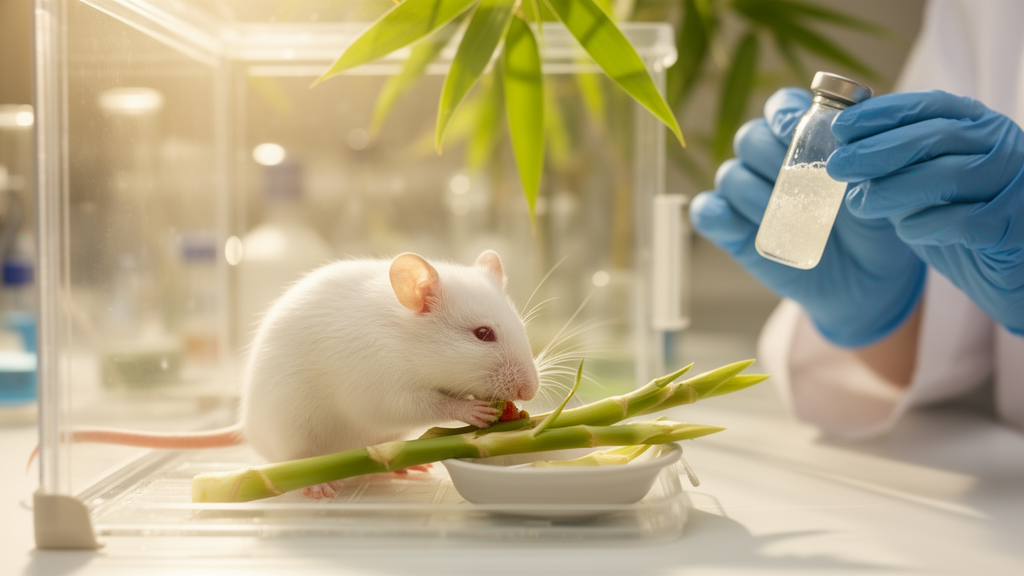
The strain, Lentilactobacillus hilgardii DSB22, was isolated from fermented shoots of Bambusa merrilliana, locally known as "bayug," a bamboo species traditionally consumed in Filipino dishes such as dineng-deng and fermented into atsara. When researchers gave the microbe orally to mice exposed to repeated low doses of bacterial endotoxin, the animals produced less of the inflammatory molecules that drive tissue damage and more of the signals that suppress it. The treated mice also kept a healthier intestinal architecture than their untreated counterparts, suggesting the microbe helps preserve the physical barrier that keeps harmful antigens and microbial toxins out of the bloodstream.
The gut mucosa is more than a passive wall. It is a selective gatekeeper that permits nutrient absorption while limiting the passage of harmful antigens and microbial toxins into systemic circulation. When this barrier is disrupted, local and systemic inflammatory responses follow, and the damage can contribute to a range of systemic diseases.
LPS triggers the release of pro-inflammatory cytokines and causes structural alterations in intestinal and immune-related tissues, making it a reliable experimental proxy for endotoxemia. After LPS enters the circulation, it activates immune responses in the spleen, a major lymphoid organ that filters blood and regulates systemic immunity. This gut–spleen interaction is what allows researchers to evaluate both local mucosal defense and systemic inflammatory responses simultaneously.
Probiotics have long been investigated for their ability to maintain mucosal integrity and regulate inflammatory signaling under these conditions. But probiotic activity is notoriously strain-specific, meaning that isolates obtained from food plant sources require individual evaluation rather than generalization from related species. Lentilactobacillus hilgardii is commonly associated with wine fermentation and product stability, yet information regarding its immunomodulatory effects remains limited.
A previous study reported anti-inflammatory activity of a specific L. hilgardii strain in vitro, but in vivo evidence regarding the immunomodulatory effects of bamboo-derived strains during systemic inflammation was still lacking. To identify the strain, the team conducted morphological and biochemical tests, including Gram staining, catalase testing, and examination of colony appearance. Safety screening on blood agar plates revealed gamma hemolysis, indicating a non-hemolytic and potentially non-pathogenic profile.
Genotypic identification was performed using 16S ribosomal RNA gene sequencing, which showed 99.78% sequence identity to Lentilactobacillus hilgardii, surpassing the ≥98.7% threshold for species-level demarcation. Phylogenetic analysis further confirmed the classification, as strain DSB22 clustered within the L. hilgardii clade alongside reference strains DSM 20176, JCM 8620, and NBRC 15886, while remaining clearly distinct from related taxa such as Lentilactobacillus buchneri and Leuconostoc brevis. For the experiment, L. hilgardii DSB22 was cultured in de Man, Rogosa, and Sharpe broth at 37 °C for 36 hours to reach the stationary phase at approximately 1.0 × 10^8 colony-forming units per milliliter.
Cells were harvested by centrifugation, washed twice with phosphate-buffered saline, and resuspended in sterile PBS. Before daily administration, the bacterial suspension was adjusted to 1.0 × 10^7 CFU per animal, delivered by oral gavage in a volume of approximately 0.3 milliliters, or about 1% of the average body weight. Daily verification of bacterial viability and concentration was performed throughout the 28-day experimental period using a Neubauer chamber with crystal violet staining.
Internal validation conducted prior to the study showed that these microscopic counts correlated strongly (r = 0.97) with CFU obtained using the conventional plate count method, ensuring that only intact cells were included in the daily dose calculation. Twenty-four 8-week-old male BALB/c mice were randomly assigned to four groups of six animals each, with the sample size determined using an a priori power analysis in GraphPad Prism version 10.6.1. The mice were kept under controlled conditions at 22 ± 2 °C with a 12-hour light/dark cycle and free access to a pellet diet and water.
Probiotic treatment was administered orally once daily for 28 consecutive days, while the control group received an equivalent volume of PBS. To induce an inflammatory response, LPS was administered at 0.5 mg/kg body weight on days 0, 7, 14, and 21, establishing a model of recurrent subclinical endotoxemia. The experimental groups were: PBS control, L. hilgardii only, LPS only, and L. hilgardii plus LPS.
On day 28, mice were anesthetized using inhalational isoflurane for blood collection and subsequently euthanized for tissue collection. Notably, mice administered the weekly LPS doses exhibited no visible signs of clinical distress, anxiety, or altered behavior, and body weight remained stable across all groups, confirming that the model induced low-grade inflammation without overt systemic toxicity. The results revealed a clear immunomodulatory signature.
Oral administration of L. hilgardii DSB22 significantly reduced tumor necrosis factor-alpha concentrations in serum (25.45 ± 6.73 pg/mg) and spleen homogenates (31.73 ± 6.82 pg/mg) in LPS-challenged mice compared with the LPS-only group. Similarly, LPS-challenged mice treated with the strain exhibited lower levels of the pro-inflammatory cytokine interleukin-6 in serum (89.083 ± 12.08 pg/mL) and spleen homogenates (36.12 ± 6.48 pg/mL). Conversely, levels of the anti-inflammatory cytokine interleukin-10 were significantly elevated in both serum (43.18 ± 4.87 pg/mL) and spleen homogenates (43.89 ± 7.02 pg/mg) of LPS-challenged mice treated with DSB22, suggesting a shift toward an anti-inflammatory immune profile.
Importantly, no significant cytokine changes were observed in LPS-unstimulated mice receiving the strain, indicating that the microbe's immunomodulatory activity is context-dependent and specifically engages during active inflammation rather than indiscriminately altering immune signaling in healthy animals. Beyond cytokine regulation, the strain enhanced mucosal immunity. In mice challenged with LPS, treatment with DSB22 resulted in a significant increase in intestinal secretory immunoglobulin A levels compared with the LPS-only control group (3.67 ± 0.97 versus 2.45 ± 0.43 ng/mg).
Secretory IgA is a critical component of the intestinal mucosal barrier and contributes to immune exclusion by preventing pathogen adhesion and limiting the translocation of luminal antigens across the intestinal epithelium. The increase in sIgA observed under inflammatory stress suggests improved mucosal immune defense precisely when the barrier is under attack. Conversely, in mice not stimulated with LPS, DSB22 administration did not significantly alter sIgA levels, reinforcing the strain's inflammation-specific enhancement of mucosal defense.
Histopathological analysis of the distal ileum provided visual confirmation of the protective effect. The control and probiotic-only groups maintained a healthy mucosal architecture with long, well-organized villi and a high villus height-to-crypt depth ratio of approximately 2.0–2.4. In contrast, LPS induction caused severe structural degradation, characterized by significant villus blunting and shortening and a marked reduction in the VH/CD ratio to approximately 0.9–1.7, indicating extensive mucosal damage.
The group receiving both LPS and the probiotic exhibited substantial morphological preservation, with elongated villi and a maintained VH/CD ratio of approximately 2.4–3.2 compared with the LPS-only group. Maintenance of intestinal morphology is important for preserving epithelial barrier integrity and reducing endotoxin translocation into systemic circulation, and the near-baseline restoration of villus structure in probiotic-treated mice indicates that DSB22 helps stabilize the physical architecture of the gut lining during inflammatory challenge. The anti-inflammatory effects may be associated with bacterial surface components and metabolites produced by L. hilgardii and other lactic acid bacteria, including surface-layer proteins and exopolysaccharides.
A previous study reported that surface-layer proteins isolated from L. hilgardii H-50 inhibited LPS-induced inflammatory responses through endotoxin-binding activity, and similar interactions may contribute to the reduction in inflammatory cytokines observed following DSB22 administration. Suppression of inflammatory mediators may also involve modulation of TLR4/NF-κB-associated inflammatory pathways activated during endotoxemia, although the molecular mechanisms of DSB22 were not directly investigated in the present study. The reduced cytokine levels in spleen homogenates suggest that the strain may influence immune responses in secondary lymphoid tissues, attenuating excessive immune stimulation during repeated LPS exposure.
The authors acknowledge limitations: the repeated low-dose LPS mouse model may not fully represent the complexity of chronic inflammation in humans, and the study did not characterize the bioactive components of DSB22 or directly investigate its effects on the gut microbiota or long-term safety. Further mechanistic and clinical studies are needed to confirm the safety, efficacy, and immunomodulatory effects of the strain in humans. Nevertheless, the findings support the potential application of bamboo-derived L. hilgardii DSB22 as a functional probiotic candidate for modulating inflammation-associated intestinal dysfunction.
Subject of Research: Immunomodulatory effects of Lentilactobacillus hilgardii DSB22 from fermented bamboo shoots in an LPS-challenged mouse model
Article Title: Lentilactobacillus hilgardii DSB22 isolated from bamboo shoots enhances mucosal immunity and modulates cytokine responses in LPS -challenged BALB/c mice
Article References: Ines-Ramil, M. D., Rafael, C. A. R., Fabia, J. Z. P., Calamayan, S. R. U. I., Dagdagan, R. V. S., Asuncion, J. G., Bucao, D. S., & Ramil, R. J. D. (2026). Lentilactobacillus hilgardii DSB22 isolated from bamboo shoots enhances mucosal immunity and modulates cytokine responses in LPS-challenged BALB/c mice. Pharmacia, 73, Article e198561. https://doi.org/10.3897/pharmacia.73.e198561
Image Credits: AI Generated
DOI: 10.3897/pharmacia.73.e198561
Keywords: Lentilactobacillus hilgardii, probiotics, bamboo shoots, fermented foods, mucosal immunity, secretory IgA, cytokines, LPS endotoxemia, intestinal barrier, BALB/c mice, Lentilactobacillus, hilgardii
News Source: Kristina Jarvis. (October 20, 2026). Bamboo-Shoot Probiotic Shields Gut and Tames Inflammation in Mice. Scienmag.