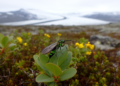
A cytogenetic survey of 31 natural populations of the midge Chironomus borokensis, combined with data from 10 previously published populations, found extensive chromosomal variation across Eastern Europe, Siberia and the Russian Far East. Quantitative analysis showed that an average of 66.1 ± 2.6% of larvae were heterozygous, with 1.1 ± 0.6 heterozygotic inversions per larva and an average of 12 ± 3 banding sequences per population. The observational study used fourth-instar larvae for polytene chromosome preparations from 29 populations.
Investigators also reanalysed permanent slides from two Far Eastern populations and two samples collected at Berdsky Pond in Novosibirsk Province in 1985, because the original publication did not provide sufficiently comprehensive data for quantitative analysis. Published data were incorporated for 10 additional populations, bringing the total to 41. Where larvae were collected repeatedly at the same site, the researchers tested for differences in banding-sequence frequencies among sampling years and combined the samples when no significant differences were found.
Species identification was based on larval morphology and polytene chromosomes from the salivary glands. Chromosome arms were mapped using established systems for the Chironomus plumosus species group, and banding sequences were classified as main, alternative, rare or unique. Quantitative analyses used populations represented by at least 10 specimens, and all populations were checked for deviations from Hardy–Weinberg equilibrium.
Only the RAL-MA population showed a deviation, involving more heterozygotes for the arm D combination p’borD1.h’borD2 than expected. Chironomus borokensis has a haploid chromosome number of four, with the arms arranged as AB, CD, EF and G. Chromosomes I and II are metacentric, chromosome III is submetacentric and chromosome IV is telocentric.
Inversion polymorphism occurred in every chromosomal arm, and the study expanded the species’ known banding-sequence pool to 40. The largest number recorded from a single collection date was 18, while one population record contained 23 sequences when observations from multiple years were combined. Six alternative banding sequences across five chromosomal arms met the study’s criteria: h’borA2 and p’borA4 in arm A, h’borB2 in arm B, h’borD2 in arm D, p’borF2 in arm F, and p’borG2 in arm G.
Each was present at high frequency in at least some populations and occurred in both heterozygous and homozygous states. The frequency of p’borG2 reached 100% in many Western Siberian populations. Rare sequences in arms A and F were p’borA5, p’borA8, p’borA9 and h’borF4.
The sequence p’borA5 is a complex inversion that differs from the main arm A sequence by three inversion steps. The authors inferred that it predates the divergence of C. borokensis because an identical sequence occurs in the sibling species C. suwai, while two inversions in C. plumosus can be derived from it through simple inversions. They regarded independent emergence of the same complex inversion in three species as unlikely and presented the common-ancestor interpretation as an inference.
Alongside inversions, the researchers recorded five translocation cases: two involving whole chromosome arms, one with breakpoints inside arms D and E, and a unique larva carrying two reciprocal whole-arm translocations. Rare variation in centromeric heterochromatin size was observed mainly in chromosome II in Western Siberia. B chromosomes occurred in some populations at frequencies of up to 30%.
They commonly lay near or contacted the centromeric heterochromatin of arm G, although the investigators could not determine whether some apparently isolated positions resulted from mechanical disruption of contacts during slide preparation. These observations describe chromosome structure and occurrence frequencies; they do not establish effects on fitness or development. Seven cytogenetic population types were identified.
Populations from Europe, the Urals and Eastern Siberia belonged to type 0, in which all main banding sequences were dominant. Most Western Siberian populations were type G, while others were assigned to types DG, FG and DFG. Far Eastern populations had types ADG and F.
Overall, the sampled Western Siberian populations showed higher chromosomal polymorphism and more varied cytogenetic structures than populations from Europe, Eastern Siberia or the Far East. The authors proposed that alternative sequences in arms D, F and G may have adaptive value in Western Siberia, but this was a hypothesis rather than a tested causal result. Cytogenetic distances among populations ranged from 0.001 to 0.461, with an average of 0.155 ± 0.024.
These within-species values were below the reported average interspecific distance of 2.618 ± 0.400 for seven species in the Chironomus plumosus group. A neighbour-joining analysis broadly grouped populations with similar cytogenetic structures but also placed some geographically distant populations together. The authors noted that water and detritus characteristics may influence chironomid population structure more directly than geography alone, although those environmental variables were not measured in this study.
Based on the greater inversion diversity, higher polymorphism and more varied population structures in Western Siberia, the authors proposed that the region may be the centre of the species’ range and possibly its place of origin; historical ancestry was not directly reconstructed.
Subject of Research: Chromosomal polymorphism across 41 populations of the midge Chironomus borokensis
Article Title: Chromosomal polymorphism in natural populations of Chironomus borokensis Kerkis, Filippova, Shobanov, Gunderina et Kiknadze, 1988 ( Diptera , Chironomidae )
Article References: Golygina, V. V., Broshkov, A. D., & Ermolaeva, O. V. (2025). Chromosomal polymorphism in natural populations of Chironomus borokensis Kerkis, Filippova, Shobanov, Gunderina et Kiknadze, 1988 (Diptera, Chironomidae). Comparative Cytogenetics, 19, 51-74. https://doi.org/10.3897/compcytogen.19.141735
Image Credits: AI Generated
DOI: 10.3897/compcytogen.19.141735
Keywords: Chironomus borokensis, chromosomal polymorphism, polytene chromosomes, inversions, translocations, B chromosomes, cytogenetic distance, Western Siberia, population genetics, Chironomus plumosus group, Chromosomal, polymorphism
News Source: Drew Townsend. (October 20, 2026). Cytogenetic survey of 41 populations maps extensive chromosomal polymorphism in Chironomus borokensis. Scienmag.