• HOME
  • NEWS
  • EXPLORE
    • CAREER
      • Companies
      • Jobs
    • EVENTS
    • iGEM
      • News
      • Team
    • PHOTOS
    • VIDEO
    • WIKI
  • BLOG
  • COMMUNITY
    • FACEBOOK
    • INSTAGRAM
    • TWITTER
Tuesday, October 20, 2026
BIOENGINEER.ORG
No Result
View All Result
  • Login
  • HOME
  • NEWS
  • EXPLORE
    • CAREER
      • Companies
      • Jobs
        • Lecturer
        • PhD Studentship
        • Postdoc
        • Research Assistant
    • EVENTS
    • iGEM
      • News
      • Team
    • PHOTOS
    • VIDEO
    • WIKI
  • BLOG
  • COMMUNITY
    • FACEBOOK
    • INSTAGRAM
    • TWITTER
No Result
View All Result
Bioengineer.org
No Result
View All Result
Home NEWS Science News Technology

Simulation study links hybrid machine learning to ring-foundation capacity in variable soils

by
October 20, 2026
in Technology
Reading Time: 2 mins read
0
Simulation study links hybrid machine learning to ring-foundation capacity in variable soils

AI Predicts Ring Foundation Safety in Uneven Soils With Under 3 Percent Error

Share on FacebookShare on TwitterShare on LinkedinShare on RedditShare on Telegram

A simulation study in Scientific Reports reports that a hybrid finite element limit analysis and machine-learning framework predicted normalized bearing-capacity and safety factors for ring foundations in spatially variable cohesive-frictional soils. According to the abstract, the convolutional neural network achieved an R² above 0.95 and relative errors below 3% across the generated dataset.

The researchers generated the dataset with finite element limit analysis using OptumG2. Their random-field model represented effective cohesion, c′, with a lognormal distribution, a depth-linear mean of µc′ = 10 kPa, a gradient of k = 1 kPa/m and a coefficient of variation of 0.3, together with friction angles, φ′, up to 40°. The simulations examined complete, internal-half, middle-half and external-half loading; inner-to-outer radius ratios from 0 to 0.9; rough and smooth interfaces; and nine anisotropic cases with horizontal scales of fluctuation of 10–60 metres and vertical scales of 2–8 metres.

Within those modeled conditions, complete and external-half loading produced the highest bearing capacities, while internal-half loading reduced capacity by as much as 40%. The abstract further reports that spatial variability in effective cohesion and friction angle contracted modeled failure envelopes by 10–25%. These results are predictions from the simulation dataset rather than measurements from constructed foundations.

The authors describe the framework as a way to support preliminary design, optimization and risk assessment while reducing computational demands relative to traditional finite element limit analysis and Monte Carlo approaches. Its reported performance remains bounded by the simulated soil properties, geometry, interface conditions and loading configurations. The available abstract does not describe a physical field test or independent validation in actual ring foundations, so the findings should be interpreted as model-based evidence rather than demonstrated performance in construction projects.

Subject of Research: Hybrid FELA and machine-learning prediction of ring-foundation bearing capacity in spatially variable cohesive-frictional soils

Article Title: Bearing capacity and safety factors of ring foundations in spatially variable soils: a hybrid FELA-machine learning approach

Article References: Mohammadizadeh, M., & Mohammadizadeh, M. (2026). Bearing capacity and safety factors of ring foundations in spatially variable soils: a hybrid FELA-machine learning approach. Scientific Reports. https://doi.org/10.1038/s41598-026-75645-3

Image Credits: AI Generated

DOI: 10.1038/s41598-026-75645-3

Keywords: ring foundations, bearing capacity, safety factors, finite element limit analysis, machine learning, convolutional neural network, spatially variable soils, random fields, cohesive-frictional soils, geotechnical engineering, Bearing, capacity

News Source: Blake Davidson. (October 20, 2026). Simulation study links hybrid machine learning to ring-foundation capacity in variable soils. Scienmag.


Tags: Bearingbearing capacitycapacitycohesive-frictional soilsconvolutional neural networkfinite element limit analysisgeotechnical engineeringMachine Learningrandom fieldsring foundationssafety factorsspatially variable soils
Share12Tweet7Share2ShareShareShare1

Related Posts

Deep reinforcement learning improves simulated short-video session duration and diversity

Deep reinforcement learning improves simulated short-video session duration and diversity

October 20, 2026
GATA6 represses BMP2 to restrain lung squamous cell carcinoma

GATA6 represses BMP2 to restrain lung squamous cell carcinoma

October 20, 2026

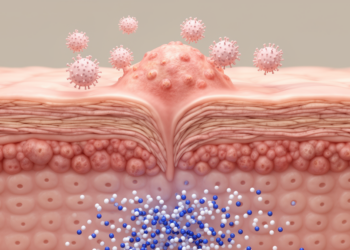
Antimicrobial cyclic peptide shows multi-target effects in laboratory acne models

October 20, 2026

Experimental coconut-derived C/CoNi aerogel shows measured electromagnetic absorption and shielding performance

October 20, 2026

POPULAR NEWS

  • Review maps molecular pathways and management strategies for low-risk HPV skin warts

    Review maps molecular pathways and management strategies for low-risk HPV skin warts

    29 shares
    Share 12 Tweet 7
  • Uncontrolled retrospective study links structured sexual healthcare with improved sexual activity among women with gynaecological conditions

    29 shares
    Share 12 Tweet 7
  • Four-gene model predicts biochemical recurrence in prostate adenocarcinoma in integrated study

    29 shares
    Share 12 Tweet 7
  • Deep reinforcement learning improves simulated short-video session duration and diversity

    29 shares
    Share 12 Tweet 7

About

We bring you the latest biotechnology news from best research centers and universities around the world. Check our website.

Follow us

Recent News

Review maps molecular pathways and management strategies for low-risk HPV skin warts

Uncontrolled retrospective study links structured sexual healthcare with improved sexual activity among women with gynaecological conditions

Four-gene model predicts biochemical recurrence in prostate adenocarcinoma in integrated study

Subscribe to Blog via Email

Enter your email address to subscribe to this blog and receive notifications of new posts by email.

Join 85 other subscribers
  • Contact Us

Bioengineer.org © Copyright 2023 All Rights Reserved.

Welcome Back!

Login to your account below

Forgotten Password?

Retrieve your password

Please enter your username or email address to reset your password.

Log In
No Result
View All Result
  • Homepages
    • Home Page 1
    • Home Page 2
  • News
  • National
  • Business
  • Health
  • Lifestyle
  • Science

Bioengineer.org © Copyright 2023 All Rights Reserved.