A prospective cohort study of adults with community-acquired pneumonia found that adding a research serotype-specific urinary antigen detection assay to conventional testing identified more cases attributed to Streptococcus pneumoniae, but the statistical significance of the paired increase was reported inconsistently. The study included 234 patients recruited at two Swiss tertiary-care hospitals between 2016 and 2021 and was published in BMC Infectious Diseases.
In a predefined subset of 161 patients who received both the serotype-specific urinary antigen detection assay, or ssUAD, and full conventional testing, conventional methods identified 30 pneumococcal cases, or 18.6% of the subset. Adding ssUAD raised the number to 47, or 29.2%. The abstract reports a p value of 0.036 for this comparison, whereas the full Results section reports that McNemar’s test found no significant difference in paired positivity rates, with p = 0.458. Because the article is internally inconsistent on this point, the increase is supported as a descriptive change in diagnostic yield but not as a statistically significant improvement on the basis of the full results.
The investigation was an observational analysis within the prospective Swiss CAPNETZ cohort. It included all enrolled patients with available urine samples. Adults were eligible if they were at least 18 years old, had a radiologically confirmed pulmonary infiltrate and had at least one compatible clinical finding: cough, purulent sputum, fever or focal chest signs on auscultation. Recruitment took place at University Hospital Basel and Cantonal Hospital St. Gallen, both of which contributed patients with diverse catchment areas.
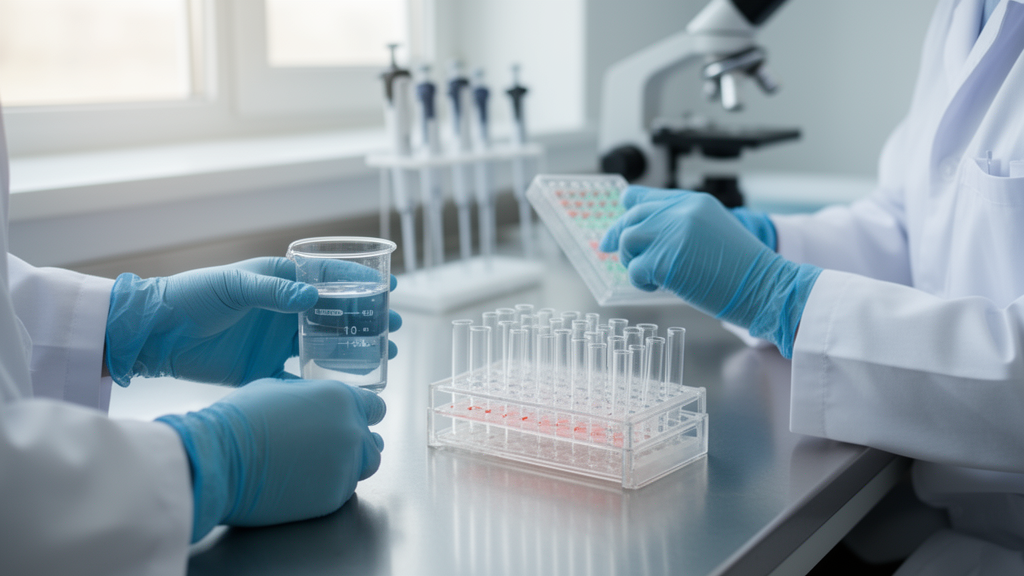
Urine specimens were collected prospectively and tested in batch at Pfizer’s Vaccines Research and Development Laboratory using a research assay based on Luminex technology. The assay assessed 24 pneumococcal serotypes: the 13 included in PCV13, seven additional serotypes included in PCV20, and four included in PPV23. Conventional microbiological assessment consisted of the pneumococcal urinary antigen test and cultures of blood, sputum or bronchoalveolar lavage. These conventional tests were performed at the discretion of treating physicians rather than uniformly for every participant.
Across the full cohort of 234 adults, conventional diagnostics identified S. pneumoniae in 37 patients, or 15.8%, while ssUAD was positive in 35, or 15.0%. Of the 35 ssUAD-positive patients, 21, or 60.0%, were also identified conventionally, while 14, or 40.0%, were not detected by standard-of-care testing. Agreement between ssUAD and conventional testing in the 161-patient comparison subset was moderate, with Cohen’s kappa of 0.442 and a 95% confidence interval of 0.255 to 0.608. These findings show that the two approaches did not capture identical cases.
Serotype 3 was the most frequently detected, appearing in 12 of the 35 ssUAD-positive patients, or 34.3%. Serotype 8 occurred in six, or 17.1%, and serotype 11A in four, or 11.4%. Based solely on the ssUAD-derived serotypes, 19 cases, or 54.3%, involved serotypes covered by PCV13; 21, or 60.0%, involved serotypes covered by PCV15; 32, or 91.4%, involved serotypes covered by PCV20; and 30, or 85.7%, involved serotypes covered by PCV21. These percentages describe the serotypes observed in this small cohort and do not measure vaccine protection or demonstrate that a particular vaccine would prevent the cases.
When the cohort was divided into 2016–2019 and 2020–2021, ssUAD positivity was 17.8% in the earlier period and 9.1% in the later period, a nonsignificant difference (p = 0.078). Among ssUAD-positive patients, however, the proportion involving serotypes not covered by PCV13 rose from 10 of 28, or 35.7%, to six of seven, or 85.7% (p = 0.018). Serotypes 11A and 9N were the most frequently detected during 2020–2021, with two cases each. The authors cautioned that the apparent serotype shift rested on only seven ssUAD-positive patients in the later period.
Several features limit the findings. The sample was small, came from two hospitals and represented a convenience sample, restricting conclusions about serotype trends, incidence and generalizability. Testing practices differed between centers and may have affected the yield of conventional methods. Requiring informed consent may also have led to underrepresentation of critically ill patients. In addition, the ssUAD covered only 24 serotypes, no serotyping was performed on culture-positive isolates, and the investigators noted that ssUAD and the pneumococcal urinary antigen test may have reduced sensitivity in non-bacteremic pneumonia. Accordingly, pneumococcal community-acquired pneumonia could have been underestimated.
Overall, the study supports ssUAD as a complementary method for detecting pneumococcal pneumonia and for serotype-oriented research. The descriptive increase when ssUAD was combined with conventional testing is the study’s principal diagnostic finding, while its statistical interpretation remains uncertain because of the conflicting p values in the article. The temporal serotype observations likewise require caution because of the small number of positive cases and the study’s observational, hospital-based design.
Subject of Research: Diagnostic yield and serotype distribution of pneumococcal urinary antigen testing in adults with community-acquired pneumonia
Article Title: Pneumococcal serotype distribution and diagnostic yield of serotype-specific urinary antigen detection in adults with CAP in Switzerland, 2016–2021: a prospective cohort study
Article References: Etienne, S., Albrich, W. C., Pletz, M. W., Panning, M., Domenech, V. S., Eberhardt, F., Barten-Neiner, G., & Stolz, D. (2026). Pneumococcal serotype distribution and diagnostic yield of serotype-specific urinary antigen detection in adults with CAP in Switzerland, 2016–2021: a prospective cohort study. BMC Infectious Diseases, 26(1), Article 1696. https://doi.org/10.1186/s12879-026-14493-y
Image Credits: AI Generated
DOI: 10.1186/s12879-026-14493-y
Keywords: community-acquired pneumonia, Streptococcus pneumoniae, urinary antigen assay, diagnostic yield, pneumococcal serotypes, prospective cohort, Switzerland, antimicrobial resistance, adult pneumonia, Pneumococcal, serotype, distribution
News Source: Ophelia Keating. (October 20, 2026). Prospective Swiss cohort finds added diagnostic yield from serotype-specific urine testing in adult pneumonia. Scienmag.