• HOME
  • NEWS
  • EXPLORE
    • CAREER
      • Companies
      • Jobs
    • EVENTS
    • iGEM
      • News
      • Team
    • PHOTOS
    • VIDEO
    • WIKI
  • BLOG
  • COMMUNITY
    • FACEBOOK
    • INSTAGRAM
    • TWITTER
Tuesday, October 20, 2026
BIOENGINEER.ORG
No Result
View All Result
  • Login
  • HOME
  • NEWS
  • EXPLORE
    • CAREER
      • Companies
      • Jobs
        • Lecturer
        • PhD Studentship
        • Postdoc
        • Research Assistant
    • EVENTS
    • iGEM
      • News
      • Team
    • PHOTOS
    • VIDEO
    • WIKI
  • BLOG
  • COMMUNITY
    • FACEBOOK
    • INSTAGRAM
    • TWITTER
No Result
View All Result
Bioengineer.org
No Result
View All Result
Home NEWS Science News Health

Prenatal PM2.5 and carbon monoxide exposure linked to higher odds of low birth weight in Fujian cohort

by
October 20, 2026
in Health
Reading Time: 2 mins read
0
Prenatal PM2.5 and carbon monoxide exposure linked to higher odds of low birth weight in Fujian cohort

Air Pollution in Pregnancy Linked to Low Birth Weight in Landmark Study of 41,000 Mothers

Share on FacebookShare on TwitterShare on LinkedinShare on RedditShare on Telegram

A retrospective cohort study of 41,397 mother-infant pairs recorded at the Obstetrics Department of Fujian Provincial Maternal and Child Health Hospital from 2015 to 2019 found that exposure to fine particulate matter (PM2.5) and carbon monoxide (CO) during the full trimester was associated with increased odds of low birth weight. The cohort included 1,532 newborns classified as having low birth weight. Logistic regression estimates were an odds ratio of 1.022 for full-trimester PM2.5 exposure (95% confidence interval, 1.002–1.042) and 1.014 for full-trimester CO exposure (95% confidence interval, 1.001–1.027). The supplied abstract does not identify the exposure increment used for these odds ratios.

Researchers used logistic regression to examine associations between individual exposures to air pollutants and low birth weight during different gestational periods. They combined the analysis with a distributed lag nonlinear model to explore exposure timing and possible vulnerable windows. The abstract does not specify a particular vulnerable window or report the corresponding numerical results, so the available evidence does not establish when pollution exposure had the strongest association with low birth weight.

Mixed-exposure analyses were conducted using dual-pollutant models and weighted quantile sum regression. These models indicated that combined exposure to air pollutants during the first trimester, the second trimester and the full trimester was associated with higher odds of low birth weight. PM2.5 and CO contributed the most to the mixed-exposure association in the weighted quantile sum model. These findings concern statistical associations from observational analyses and do not demonstrate that pollution caused low birth weight.

Stratified analyses also reported associations between prenatal PM2.5 and CO exposure and higher odds of low birth weight among pregnant women younger than 35 years, although the abstract does not identify the exposure window for those subgroup estimates. Among pregnant women with gestational diabetes, exposure to PM2.5, particulate matter with an aerodynamic diameter of 10 micrometres or less and sulfur dioxide was positively associated with odds of low birth weight. The evidence summarized here comes from the study abstract, which does not describe exposure assignment, potential confounding, missing-data handling or other details needed for a full assessment. The retrospective, single-hospital design also limits how broadly the findings can be generalized. The authors proposed further research on the synergistic effects of multiple pollutants as a direction for future study, rather than as an additional result of the current analysis.

Subject of Research: Associations between prenatal air-pollution exposure and low birth weight in a retrospective Fujian cohort

Article Title: The association between air pollution exposure during pregnancy and low birth weight: a retrospective cohort study in southern China

Article References: Cai, Y., Lin, Y., Jiang, J., Li, H., Dong, Y., Zhang, Y., & Zhang, Q. (2026). The association between air pollution exposure during pregnancy and low birth weight: a retrospective cohort study in southern China. BMC Public Health. https://doi.org/10.1186/s12889-026-29842-4

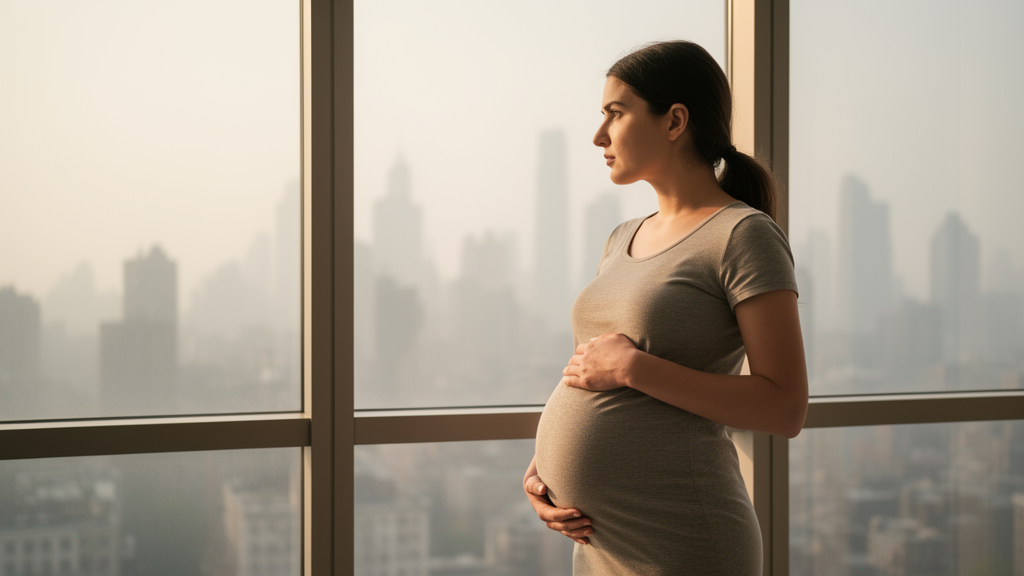
Image Credits: AI Generated

DOI: 10.1186/s12889-026-29842-4

Keywords: air pollution, pregnancy, low birth weight, PM2.5, carbon monoxide, Fujian, maternal health, retrospective cohort, mixed exposure, association, between, pollution

News Source: Russell Cooper. (October 20, 2026). Prenatal PM2.5 and carbon monoxide exposure linked to higher odds of low birth weight in Fujian cohort. Scienmag.


Tags: Air PollutionAssociationbetweencarbon monoxideFujianlow birth weightMaternal Healthmixed exposurePM2.5pollutionPregnancyRetrospective Cohort
Share12Tweet7Share2ShareShareShare1

Related Posts

Between support and uncertainty: employers’ perspectives on workplace inclusion of people with mental health problems

Between support and uncertainty: employers’ perspectives on workplace inclusion of people with mental health problems

October 20, 2026
Staphylococcus aureus in Gambian children shows high penicillin resistance and 13.6% MRSA prevalence

Staphylococcus aureus in Gambian children shows high penicillin resistance and 13.6% MRSA prevalence

October 20, 2026

Case report: Behçet’s disease initially mistaken for appendicitis in a 12-year-old girl

October 20, 2026

Price Transparency Is Not the Same as Affordability and Adherence

October 20, 2026

POPULAR NEWS

  • The application of the CRISPR-Cas system in Pseudomonas aeruginosa infections

    The application of the CRISPR-Cas system in Pseudomonas aeruginosa infections

    29 shares
    Share 12 Tweet 7
  • Prenatal PM2.5 and carbon monoxide exposure linked to higher odds of low birth weight in Fujian cohort

    29 shares
    Share 12 Tweet 7
  • Between support and uncertainty: employers’ perspectives on workplace inclusion of people with mental health problems

    29 shares
    Share 12 Tweet 7
  • Laboratory prototype tests single-switch quadratic DC–DC converter with high voltage gain

    29 shares
    Share 12 Tweet 7

About

We bring you the latest biotechnology news from best research centers and universities around the world. Check our website.

Follow us

Recent News

The application of the CRISPR-Cas system in Pseudomonas aeruginosa infections

Prenatal PM2.5 and carbon monoxide exposure linked to higher odds of low birth weight in Fujian cohort

Between support and uncertainty: employers’ perspectives on workplace inclusion of people with mental health problems

Subscribe to Blog via Email

Enter your email address to subscribe to this blog and receive notifications of new posts by email.

Join 85 other subscribers
  • Contact Us

Bioengineer.org © Copyright 2023 All Rights Reserved.

Welcome Back!

Login to your account below

Forgotten Password?

Retrieve your password

Please enter your username or email address to reset your password.

Log In
No Result
View All Result
  • Homepages
    • Home Page 1
    • Home Page 2
  • News
  • National
  • Business
  • Health
  • Lifestyle
  • Science

Bioengineer.org © Copyright 2023 All Rights Reserved.