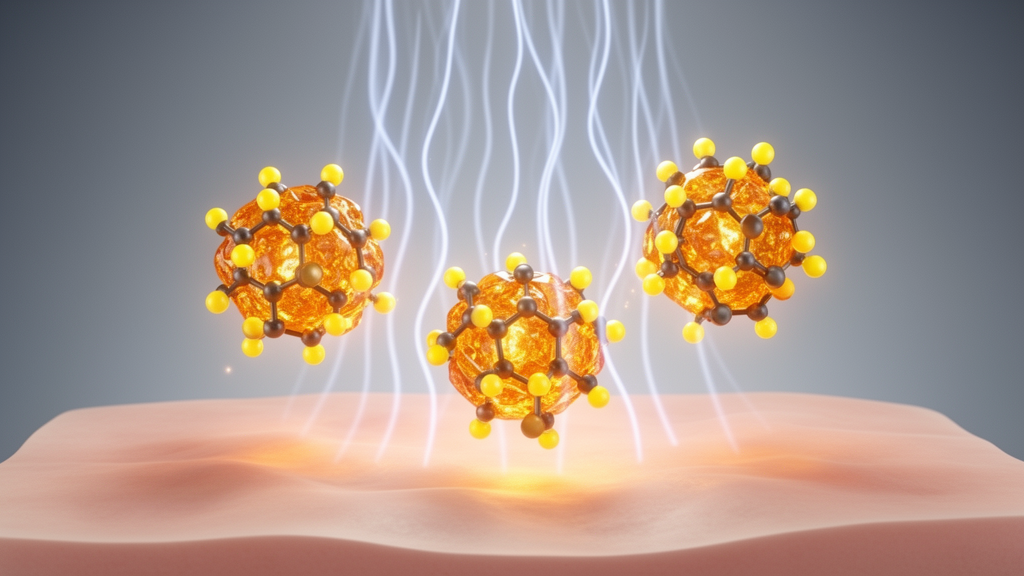
A cell-based study reported that several thiourea and (thio)semicarbazone derivatives absorbed UVB radiation, showed low cytotoxicity in normal human dermal fibroblasts and reduced selected cellular markers associated with oxidative, nitrosative and inflammatory damage. The findings are available in the published abstract; the subscription article body was not supplied for independent review.
According to the abstract, researchers assessed alkyl chain-conjugated thiourea compounds I–XIX and aryl-linked (thio)semicarbazone compounds XX–XXV. Spectroscopic analyses were used to evaluate ultraviolet absorption, molar absorptivity and photostability. Cytotoxicity, effective concentrations and bioprotective effects were examined with in vitro cellular methods, with benzophenone included as the reference compound. The abstract does not provide detailed protocols, statistical estimates or uncertainty intervals.
Several compounds showed strong UVB absorption and high molar absorptivity, with semicarbazone derivatives particularly prominent in that assessment. Ten compounds were more photostable than benzophenone. In fibroblast cultures, selected compounds significantly reduced UVB-induced intracellular reactive oxygen species and nitric oxide production. Compounds IV, XXI and XXIII also lowered the levels of interleukin-1 beta and tumor necrosis factor alpha, which the abstract identifies as components of UVB-induced inflammatory cascades. These compounds protected fibroblast morphology, prevented UVB-induced genomic DNA fragmentation and reduced the formation of cyclobutane pyrimidine dimers.
Compound XXIII showed selective UVB absorption, better photostability, low cytotoxicity and a measured sun protection factor of 16. The abstract characterizes its biological photoprotection as moderate and describes thiourea and (thio)semicarbazone derivatives, particularly compound XXIII, as promising photoprotective scaffolds. It also states that further formulation, in vivo, permeability, phototoxicity and safety studies are required before their potential as UV-filtering agents can be validated. The reported evidence comes from laboratory spectroscopy and cell cultures, so it does not establish protection or safety in humans.
Subject of Research: Laboratory assessment of thiourea and (thio)semicarbazone derivatives for UVB photoprotection in human dermal fibroblasts
Article Title: UVB photoprotection by thiourea and (thio)semicarbazone derivatives: cellular and molecular evidence
Article References: Rana, S., Bhatti, A. A., Nawaz, H., Yaqoob, S., & Hameed, A. (2026). UVB photoprotection by thiourea and (thio)semicarbazone derivatives: cellular and molecular evidence. Molecular Biology Reports, 53(1), Article 1577. https://doi.org/10.1007/s11033-026-12754-2
Image Credits: AI Generated
DOI: 10.1007/s11033-026-12754-2
Keywords: UVB radiation, photoprotection, thiourea derivatives, semicarbazones, human dermal fibroblasts, UV filters, oxidative stress, inflammation, DNA damage, photostability, thiourea, thio
News Source: Drew Townsend. (October 20, 2026). UVB photoprotection by thiourea and (thio)semicarbazone derivatives: cellular and molecular evidence. Scienmag.