• HOME
  • NEWS
  • EXPLORE
    • CAREER
      • Companies
      • Jobs
    • EVENTS
    • iGEM
      • News
      • Team
    • PHOTOS
    • VIDEO
    • WIKI
  • BLOG
  • COMMUNITY
    • FACEBOOK
    • INSTAGRAM
    • TWITTER
Tuesday, October 20, 2026
BIOENGINEER.ORG
No Result
View All Result
  • Login
  • HOME
  • NEWS
  • EXPLORE
    • CAREER
      • Companies
      • Jobs
        • Lecturer
        • PhD Studentship
        • Postdoc
        • Research Assistant
    • EVENTS
    • iGEM
      • News
      • Team
    • PHOTOS
    • VIDEO
    • WIKI
  • BLOG
  • COMMUNITY
    • FACEBOOK
    • INSTAGRAM
    • TWITTER
No Result
View All Result
Bioengineer.org
No Result
View All Result
Home NEWS Science News Health

Alarm fatigue severity and associated factors among intensive care unit nurses: a systematic review and meta-analysis

by
October 20, 2026
in Health
Reading Time: 2 mins read
0
Alarm fatigue severity and associated factors among intensive care unit nurses: a systematic review and meta-analysis

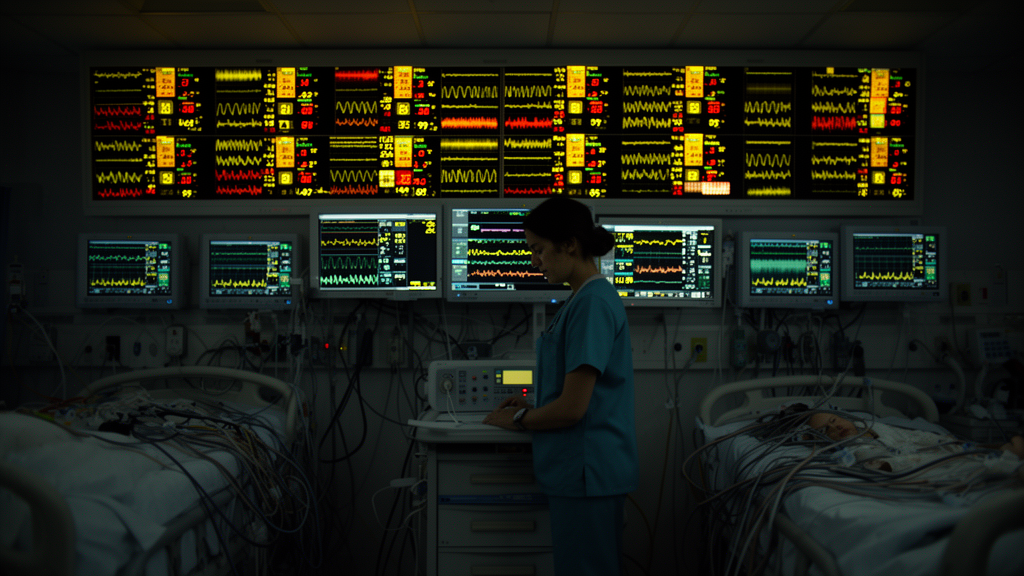
The Cacophony Problem: ICU Nurses Are Drowning in Alarms They Cannot Trust

Share on FacebookShare on TwitterShare on LinkedinShare on RedditShare on Telegram

The published abstract of a systematic review and meta-analysis reports that alarm fatigue was substantial among intensive care unit nurses, although the pooled estimate varied markedly across studies. Twenty-three studies were included, and 11 contributed quantitative results. After alarm-fatigue scores from different instruments were converted to a common scale expressed as a percentage of the maximum possible score, the random-effects meta-analysis produced a pooled value of 51.66% (95% CI, 42.33–60.99%). Between-study heterogeneity was extremely high at I² = 99.6%, so the authors describe this estimate as an exploratory descriptive summary rather than a prevalence estimate or clinical threshold.

The review followed PRISMA 2020 guidance and was registered in PROSPERO as CRD420261429354. According to the abstract, the researchers searched major databases and grey-literature sources for literature published from January 2001 through May 2026. They included intensive-care studies reporting extractable alarm-fatigue scores in the quantitative synthesis. Scores measured with different instruments were transformed to a 0–100% scale of maximum possible score and pooled with a random-effects model. Because the associated factors were methodologically heterogeneous, they were synthesized narratively rather than statistically.

Factors reported as associated with alarm fatigue included false or non-actionable alarms, a high alarm burden, inadequate alarm-management knowledge and training, night shifts, overtime, workload, role overload, organizational limitations and technology-related difficulties. The abstract also reports associations with burnout, compassion fatigue, perceived stress, reduced nursing performance and medical-error tendency. These findings describe relationships reported in the included studies, not established causes. Randomized studies included in the review indicated that structured alarm-management education could reduce alarm fatigue and unnecessary alarm exposure, but the abstract does not provide pooled effect estimates for those interventions.

The review’s main limitation is the predominantly cross-sectional, self-reported and heterogeneous body of evidence, which limits confidence in many of the reported associations. Objective alarm data and validated patient-safety outcomes were not consistently available, and the very high heterogeneity further restricts interpretation of the pooled score. The authors call for prospective studies that incorporate those data. Based on the supplied abstract, the evidence supports alarm fatigue as a multifactorial occupational and patient-safety concern among ICU nurses while showing that the prevalence, associated factors and intervention effects remain uncertain.

Subject of Research: Alarm fatigue severity, associated factors and alarm-management interventions among ICU nurses

Article Title: Alarm fatigue severity and associated factors among intensive care unit nurses: a systematic review and meta-analysis

Article References: Hu, Y., Ye, W., Zhang, H., & Ma, C. (2026). Alarm fatigue severity and associated factors among intensive care unit nurses: a systematic review and meta-analysis. BMC Nursing. https://doi.org/10.1186/s12912-026-05328-x

Image Credits: AI Generated

DOI: 10.1186/s12912-026-05328-x

Keywords: alarm fatigue, intensive care nurses, systematic review, meta-analysis, patient safety, occupational health, alarm management, burnout, Alarm, fatigue, severity, associated

News Source: Ophelia Keating. (October 20, 2026). Alarm fatigue severity and associated factors among intensive care unit nurses: a systematic review and meta-analysis. Scienmag.


Tags: Alarmalarm fatiguealarm managementassociatedBurnoutfatigueintensive care nursesMeta-analysisoccupational healthPatient Safetyseveritysystematic review
Share12Tweet7Share2ShareShareShare1

Related Posts

Functional hearing loss in 21 adolescents: case series reports inconsistent hearing tests and favorable recovery

Functional hearing loss in 21 adolescents: case series reports inconsistent hearing tests and favorable recovery

October 20, 2026
Research report: Patients’ experiences of musculoskeletal pain self-management and perspectives on virtual physiotherapy in Saudi Arabia: a reflexive thematic analysis

Research report: Patients’ experiences of musculoskeletal pain self-management and perspectives on virtual physiotherapy in Saudi Arabia: a reflexive thematic analysis

October 20, 2026

Retrospective study links vaccination status, co-infection and white blood cell count to poor prognosis in severe pediatric pertussis

October 20, 2026

French emergency department visits for mental health disorders rose after 2021, nationwide study finds

October 20, 2026

POPULAR NEWS

  • Functional hearing loss in 21 adolescents: case series reports inconsistent hearing tests and favorable recovery

    Functional hearing loss in 21 adolescents: case series reports inconsistent hearing tests and favorable recovery

    29 shares
    Share 12 Tweet 7
  • Alarm fatigue severity and associated factors among intensive care unit nurses: a systematic review and meta-analysis

    29 shares
    Share 12 Tweet 7
  • Cell study finds IL-1β amplifies TGF-β1 effects in SK-Hep1 cells through p38 MAPK-linked SMAD2/3 signaling

    29 shares
    Share 12 Tweet 7
  • Research report: Patients’ experiences of musculoskeletal pain self-management and perspectives on virtual physiotherapy in Saudi Arabia: a reflexive thematic analysis

    29 shares
    Share 12 Tweet 7

About

We bring you the latest biotechnology news from best research centers and universities around the world. Check our website.

Follow us

Recent News

Functional hearing loss in 21 adolescents: case series reports inconsistent hearing tests and favorable recovery

Alarm fatigue severity and associated factors among intensive care unit nurses: a systematic review and meta-analysis

Cell study finds IL-1β amplifies TGF-β1 effects in SK-Hep1 cells through p38 MAPK-linked SMAD2/3 signaling

Subscribe to Blog via Email

Enter your email address to subscribe to this blog and receive notifications of new posts by email.

Join 85 other subscribers
  • Contact Us

Bioengineer.org © Copyright 2023 All Rights Reserved.

Welcome Back!

Login to your account below

Forgotten Password?

Retrieve your password

Please enter your username or email address to reset your password.

Log In
No Result
View All Result
  • Homepages
    • Home Page 1
    • Home Page 2
  • News
  • National
  • Business
  • Health
  • Lifestyle
  • Science

Bioengineer.org © Copyright 2023 All Rights Reserved.