• HOME
  • NEWS
  • EXPLORE
    • CAREER
      • Companies
      • Jobs
    • EVENTS
    • iGEM
      • News
      • Team
    • PHOTOS
    • VIDEO
    • WIKI
  • BLOG
  • COMMUNITY
    • FACEBOOK
    • INSTAGRAM
    • TWITTER
Tuesday, October 20, 2026
BIOENGINEER.ORG
No Result
View All Result
  • Login
  • HOME
  • NEWS
  • EXPLORE
    • CAREER
      • Companies
      • Jobs
        • Lecturer
        • PhD Studentship
        • Postdoc
        • Research Assistant
    • EVENTS
    • iGEM
      • News
      • Team
    • PHOTOS
    • VIDEO
    • WIKI
  • BLOG
  • COMMUNITY
    • FACEBOOK
    • INSTAGRAM
    • TWITTER
No Result
View All Result
Bioengineer.org
No Result
View All Result
Home NEWS Science News Health

Mixed-methods study links volunteer community health workers’ motivation in Bolivia to training, support and incentives

by
October 20, 2026
in Health
Reading Time: 2 mins read
0
Mixed-methods study links volunteer community health workers’ motivation in Bolivia to training, support and incentives

Volunteer Health Workers in Bolivia Stay Motivated by Helping Others, Study Finds

Share on FacebookShare on TwitterShare on LinkedinShare on RedditShare on Telegram

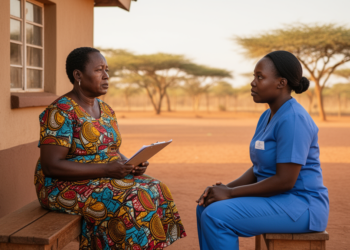
Volunteer community health workers in Bolivia reported high job satisfaction and self-efficacy despite financial limitations, limited time and competing responsibilities at home, school and paid work, according to a mixed-methods study of a Pro Mujer program. The workers associated their motivation with opportunities to help others, acquire new skills, receive incentives, build supportive relationships and pursue career advancement.

The study examined the experiences of volunteer community health workers through qualitative interviews and a quantitative survey. Researchers purposively selected five locations across Bolivia where Pro Mujer implements its community health worker program for interviews. The survey was distributed to participants from all Pro Mujer community health worker project sites. Questions in both instruments addressed workers’ experiences, perceived health effects, motivation, job satisfaction, self-efficacy, professional development and challenges.

Workers described increased self-confidence, self-esteem and pride associated with their community health worker roles. These reported outcomes were closely connected to their capacity to help other people and learn new skills and knowledge. Supportive relationships, incentives and possibilities for professional advancement were also identified as factors influencing motivation, job satisfaction and self-efficacy. The abstract reports that workers felt up-to-date, ongoing training, supportive supervision and adequate incentives would make them more likely to remain in their roles, particularly amid ongoing economic challenges in Bolivia. That statement reflects workers’ expectations rather than a measured effect of these provisions on retention.

Researchers proposed that specialized training, scholarships and mentoring could support professional advancement and sustain motivation and job satisfaction. The abstract presents this as a potential approach, not as an intervention whose effectiveness was tested. Evidence is also bounded by the available summary: it does not provide survey and interview sample sizes, response rates, participant characteristics, quantitative effect estimates, geographic breakdowns, instrument details or a full accounting of the study’s limitations. The findings therefore describe the surveyed and interviewed volunteers within the Pro Mujer program and do not establish the effects of the program on health outcomes or the experiences of community health workers outside it.

Subject of Research: Motivation, job satisfaction and self-efficacy among volunteer community health workers in Bolivia

Article Title: Motivation, job satisfaction, and self-efficacy of community health workers in Bolivia: evidence from a large NGO-run program

Article References: Hurtado, K., Keeney, Y., Mickelson, M., Monje Cuadrado, P. M. D. C., Dunn, N., & Glenn, J. (2026). Motivation, job satisfaction, and self-efficacy of community health workers in Bolivia: evidence from a large NGO-run program. BMC Health Services Research. https://doi.org/10.1186/s12913-026-15694-6

Image Credits: AI Generated

DOI: 10.1186/s12913-026-15694-6

Keywords: community health workers, Bolivia, job satisfaction, self-efficacy, worker motivation, Pro Mujer, mixed methods, volunteer health workers, workforce retention, professional development, Motivation, satisfaction

News Source: Phoebe Ingram. (October 20, 2026). Mixed-methods study links volunteer community health workers’ motivation in Bolivia to training, support and incentives. Scienmag.

Tags: Boliviacommunity health workersjob satisfactionmixed methodsmotivationPro Mujerprofessional developmentsatisfactionself-efficacyvolunteer health workersworker motivationworkforce retention
Share12Tweet7Share2ShareShareShare1

Related Posts

Known-groups study finds acceptable psychometric properties for an intersectional IPV stigma scale in Botswana

Known-groups study finds acceptable psychometric properties for an intersectional IPV stigma scale in Botswana

October 20, 2026
Interprofessional peer teaching linked to higher clinical skills scores in small randomized nursing study

Interprofessional peer teaching linked to higher clinical skills scores in small randomized nursing study

October 20, 2026

Health literacy moderates the link between health perception and surgical fear in cataract patients

October 20, 2026

Retrospective cohort reports frequent subsequent CRE infection after rectal colonization in adult ICU patients

October 20, 2026

POPULAR NEWS

  • Known-groups study finds acceptable psychometric properties for an intersectional IPV stigma scale in Botswana

    Known-groups study finds acceptable psychometric properties for an intersectional IPV stigma scale in Botswana

    29 shares
    Share 12 Tweet 7
  • Mixed-methods study links volunteer community health workers’ motivation in Bolivia to training, support and incentives

    29 shares
    Share 12 Tweet 7
  • Laboratory study reports visible-light hydrogen production with WO3/Fe2O3/GO nanocomposite

    29 shares
    Share 12 Tweet 7
  • Interprofessional peer teaching linked to higher clinical skills scores in small randomized nursing study

    29 shares
    Share 12 Tweet 7

About

We bring you the latest biotechnology news from best research centers and universities around the world. Check our website.

Follow us

Recent News

Known-groups study finds acceptable psychometric properties for an intersectional IPV stigma scale in Botswana

Mixed-methods study links volunteer community health workers’ motivation in Bolivia to training, support and incentives

Laboratory study reports visible-light hydrogen production with WO3/Fe2O3/GO nanocomposite

Subscribe to Blog via Email

Enter your email address to subscribe to this blog and receive notifications of new posts by email.

Join 85 other subscribers
  • Contact Us

Bioengineer.org © Copyright 2023 All Rights Reserved.

Welcome Back!

Login to your account below

Forgotten Password?

Retrieve your password

Please enter your username or email address to reset your password.

Log In
No Result
View All Result
  • Homepages
    • Home Page 1
    • Home Page 2
  • News
  • National
  • Business
  • Health
  • Lifestyle
  • Science

Bioengineer.org © Copyright 2023 All Rights Reserved.