• HOME
  • NEWS
  • EXPLORE
    • CAREER
      • Companies
      • Jobs
    • EVENTS
    • iGEM
      • News
      • Team
    • PHOTOS
    • VIDEO
    • WIKI
  • BLOG
  • COMMUNITY
    • FACEBOOK
    • INSTAGRAM
    • TWITTER
Tuesday, October 20, 2026
BIOENGINEER.ORG
No Result
View All Result
  • Login
  • HOME
  • NEWS
  • EXPLORE
    • CAREER
      • Companies
      • Jobs
        • Lecturer
        • PhD Studentship
        • Postdoc
        • Research Assistant
    • EVENTS
    • iGEM
      • News
      • Team
    • PHOTOS
    • VIDEO
    • WIKI
  • BLOG
  • COMMUNITY
    • FACEBOOK
    • INSTAGRAM
    • TWITTER
No Result
View All Result
Bioengineer.org
No Result
View All Result
Home NEWS Science News Agriculture

Serotonin and 24-epibrassinolide enhance physiological performance and saffron quality under water deficit: evidence from two-year field and multivariate analyses

by
October 20, 2026
in Agriculture
Reading Time: 2 mins read
0
Serotonin and 24-epibrassinolide enhance physiological performance and saffron quality under water deficit: evidence from two-year field and multivariate analyses

Serotonin and 24-epibrassinolide boost saffron yield and quality under drought

Share on FacebookShare on TwitterShare on LinkedinShare on RedditShare on Telegram

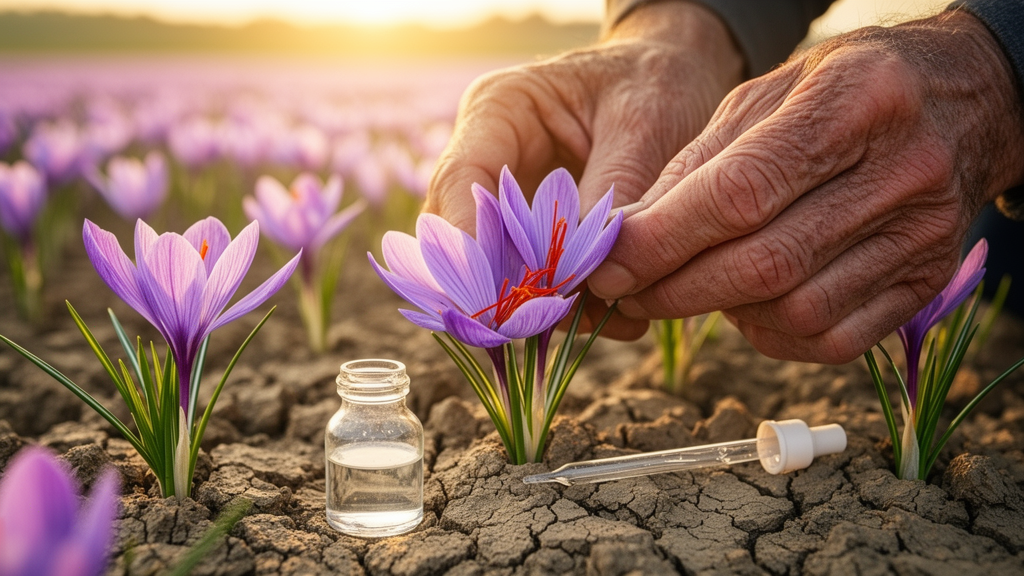
A two-year field experiment found that combining foliar serotonin (SER) and 24-epibrassinolide (EBL) improved measured physiological, biochemical, yield-related and quality traits in saffron subjected to water deficit. Under deficit irrigation, the combined treatment increased flower weight by 51%, stigma dry weight by 52%, relative water content by 32% and total chlorophyll content by 55% relative to untreated stressed plants, according to the study abstract. The work was conducted as a field experiment across two seasons, with SER applied at 50 µM and EBL at 6 ppm, individually and in combination, under normal and deficit irrigation regimes.

Water deficit reduced flower weight, stigma dry weight, leaf dry weight, relative water content and total chlorophyll content in the experiment. It also increased hydrogen peroxide, malondialdehyde and electrolyte leakage. SER and EBL, particularly when applied together, were associated with improved physiological and biochemical measures under deficit conditions. The combined treatment was associated with higher catalase activity, phenol and flavonoid contents, compatible solute accumulation and nitric oxide, as well as lower levels of the measured oxidative-damage indicators. These results concern the specific compounds, concentrations, irrigation treatments and two-season field scope evaluated in the study.

The combined treatment also corresponded to higher saffron quality-compound measurements under deficit irrigation than in untreated stressed plants: crocin content was 9.2% higher, picrocrocin content was 24% higher and safranal content was 55% higher. Multivariate analysis identified distinct physiological and defense-related dimensions. Principal component analysis explained 88.4% of the variation, with the first component accounting for 66% and being primarily associated with physiological traits, while the second accounted for 22.4% and was linked to antioxidant defense and secondary metabolism. Positive correlations between stigma yield and photosynthetic pigments indicated an association between pigment status and saffron productivity, rather than establishing a separate causal effect.

The abstract concludes that simultaneous SER and EBL application produced greater improvements across the measured traits under water deficit than either individual treatment and describes the combination as a potential biostimulant strategy for saffron grown under water-limited conditions. Its scope remains bounded by the two field seasons and the conditions tested. The authors state that validation across multiple locations is necessary to determine whether the findings generalize beyond the experimental setting. This report is based on the supplied abstract of the open-access, early-publication version, which notes that the text is subject to further editorial changes before replacement by the final Version of Record.

Subject of Research: Two-year field testing of combined serotonin and 24-epibrassinolide treatments in saffron under water deficit

Article Title: Serotonin and 24-epibrassinolide enhance physiological performance and saffron quality under water deficit: evidence from two-year field and multivariate analyses

Article References: Makarian, H., Ebrahimi, A., Sahabi, H., & Feizi, H. (2026). Serotonin and 24-epibrassinolide enhance physiological performance and saffron quality under water deficit: evidence from two-year field and multivariate analyses. BMC Plant Biology. https://doi.org/10.1186/s12870-026-10018-6

Image Credits: AI Generated

DOI: 10.1186/s12870-026-10018-6

Keywords: saffron, water deficit, serotonin, 24-epibrassinolide, field experiment, plant physiology, multivariate analysis, crop quality, epibrassinolide, enhance, physiological, performance

News Source: Alan Morgan. (October 20, 2026). Serotonin and 24-epibrassinolide enhance physiological performance and saffron quality under water deficit: evidence from two-year field and multivariate analyses. Scienmag.
Tags: 2,4-epibrassinolidecrop qualityenhanceepibrassinolidefield experimentmultivariate analysisperformancephysiologicalplant physiologysaffronserotoninwater deficit
Share12Tweet7Share2ShareShareShare1

Related Posts

Single-dataset orange image benchmark reports 99.12% accuracy with ViT, PCA and SVM

Single-dataset orange image benchmark reports 99.12% accuracy with ViT, PCA and SVM

October 20, 2026
Conserved β-tubulin as a target of ivermectin in plant-parasitic nematodes: molecular modelling and experimental protection of potato

Conserved β-tubulin as a target of ivermectin in plant-parasitic nematodes: molecular modelling and experimental protection of potato

October 20, 2026

Peanut rhizobacterium P9 improves drought recovery and pod performance, study finds

October 20, 2026

UAV 3D canopy models estimate strawberry dry biomass in Florida field trial

October 20, 2026

POPULAR NEWS

  • PBMC CXCL8 expression associated with coronary artery disease in 250-person case-control study

    PBMC CXCL8 expression associated with coronary artery disease in 250-person case-control study

    29 shares
    Share 12 Tweet 7
  • Deep-Gulf life remains depleted 16 years after oil spill

    29 shares
    Share 12 Tweet 7
  • Serotonin and 24-epibrassinolide enhance physiological performance and saffron quality under water deficit: evidence from two-year field and multivariate analyses

    29 shares
    Share 12 Tweet 7
  • Cross-sectional survey finds limited One Health readiness for Rift Valley Fever in Baringo County

    29 shares
    Share 12 Tweet 7

About

We bring you the latest biotechnology news from best research centers and universities around the world. Check our website.

Follow us

Recent News

PBMC CXCL8 expression associated with coronary artery disease in 250-person case-control study

Deep-Gulf life remains depleted 16 years after oil spill

Serotonin and 24-epibrassinolide enhance physiological performance and saffron quality under water deficit: evidence from two-year field and multivariate analyses

Subscribe to Blog via Email

Enter your email address to subscribe to this blog and receive notifications of new posts by email.

Join 85 other subscribers
  • Contact Us

Bioengineer.org © Copyright 2023 All Rights Reserved.

Welcome Back!

Login to your account below

Forgotten Password?

Retrieve your password

Please enter your username or email address to reset your password.

Log In
No Result
View All Result
  • Homepages
    • Home Page 1
    • Home Page 2
  • News
  • National
  • Business
  • Health
  • Lifestyle
  • Science

Bioengineer.org © Copyright 2023 All Rights Reserved.