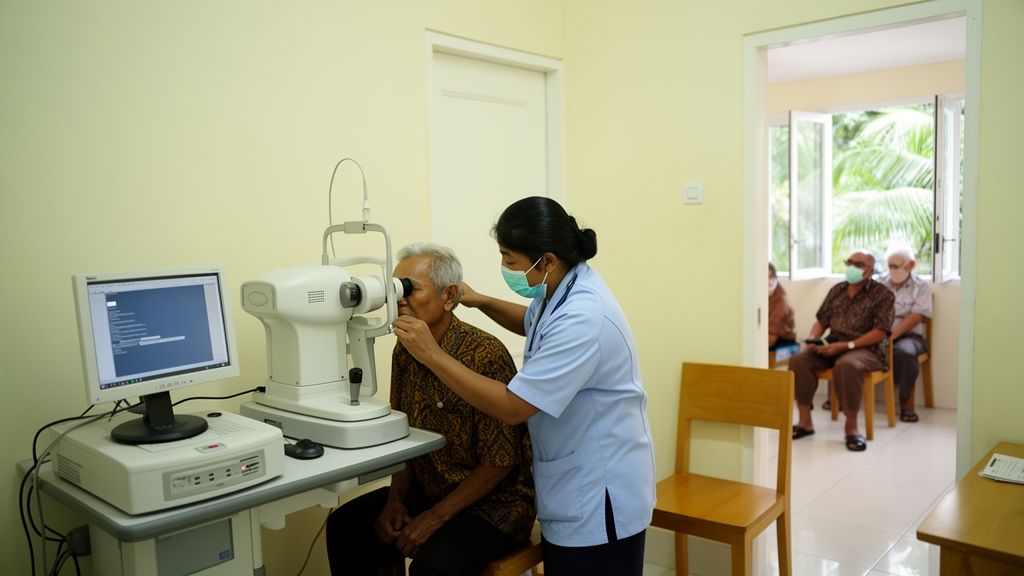
A cross-sectional assessment of diabetes and diabetic retinopathy services in Jakarta found substantial gaps in awareness, clinical-guideline recognition and screening coverage. Among 31 service respondents who completed the survey, 80.6% considered diabetes a priority, but only 41.9% recognized diabetic retinopathy as a priority and 16.1% knew the national guideline for its management. Only 22.6% reported that diabetic retinopathy screening occurred incidentally within their services.
The study examined the organization of diabetes and diabetic retinopathy care in Indonesia’s capital as part of an effort to identify service gaps and opportunities for prevention planning. The abstract reports that 18% of people in Jakarta have diabetic retinopathy and that 19% of those affected have vision-threatening diabetic retinopathy. The findings concern access to screening and clinical support rather than the effect of any screening program on patient outcomes.
Researchers used the World Health Organization’s TADDS recommendations, with adjustments, to select respondents and assess diabetes and diabetic retinopathy management. They contacted 33 participants with an online questionnaire based on the WHO-TADDS protocol. The questionnaire contained scores for items related to the services under evaluation. Thirty-one people completed the assessment, yielding a response rate of 93.9%.
Each service domain was assigned a final score according to the most frequently chosen responses and analyzed quantitatively. Participants were then invited to elaborate on their selected scores. When interpretations differed, the researchers reached consensus through discussion. Data collection took place from March to May 2024, giving the study a snapshot of the diabetes and eye-care infrastructure reported at that time.
The clearest divide in the results was between the recognized importance of diabetes and the lower priority assigned to diabetic retinopathy. Although diabetes was widely acknowledged as a Jakarta health priority, fewer than half of respondents treated its retinal complication as a priority. Awareness of clinical guidance was more limited still: only 16.1% recognized the national diabetic retinopathy management guideline. The survey therefore identified a gap not only in the availability of services but also in awareness of the guidance needed to organize them.
Respondents reported that diabetes services were available at several levels of the health system, but that access was constrained by limited public awareness, financial barriers and preference for alternative treatments. The findings suggest that the presence of diabetes services did not automatically translate into systematic retinal assessment. The assessment also identified inequality in training and in access to essential diabetic retinopathy diagnostic tools within primary care, indicating differences in the capacity of services to identify and manage the complication.
Low screening coverage compounds those operational weaknesses. Only 22.6% of respondents reported incidental diabetic retinopathy screening, a figure that cannot be interpreted as the percentage of all services or patients screened because the supplied results do not establish those denominators. The reported response nevertheless demonstrates that routine screening was uncommon in the services represented by the survey. The authors concluded that Jakarta needs systematic diabetic retinopathy screening supported by greater awareness and stronger implementation of clinical guidelines.
The study’s conclusions call for more comprehensive and accessible diabetes and diabetic retinopathy services, including better access to diagnostic tools and more consistent use of recognized management guidance. The cross-sectional design captured reported service capacity and knowledge rather than measuring blindness prevented, changes in prevalence or the effectiveness of a future program. With only 31 completed questionnaires, the results are also limited to the perspectives of the participating service representatives and the specific WHO-TADDS items applied in Jakarta.
Subject of Research: Assessment of diabetes and diabetic retinopathy services and screening gaps in Jakarta
Article Title: Evaluating diabetes and diabetic retinopathy healthcare services in Jakarta, Indonesia: current challenges and opportunities for improvement
Article References: Lestari, Y. D., Sitompul, R., Widyahening, I. S., Tahapary, D. L., Yusuf, P. A., Sasongko, M. B., Riono, P., Nursakina, Y., & Alexandra, G. (2026). Evaluating diabetes and diabetic retinopathy healthcare services in Jakarta, Indonesia: current challenges and opportunities for improvement. BMC Health Services Research. https://doi.org/10.1186/s12913-026-15488-w
Image Credits: AI Generated
DOI: 10.1186/s12913-026-15488-w
Keywords: Jakarta, diabetic retinopathy, diabetes services, retinal screening, WHO-TADDS, health services research, clinical guidelines, primary care, Indonesia, Evaluating, diabetes, diabetic
News Source: Ophelia Keating. (October 20, 2026). Survey finds gaps in Jakarta diabetic retinopathy screening. Scienmag.