• HOME
  • NEWS
  • EXPLORE
    • CAREER
      • Companies
      • Jobs
    • EVENTS
    • iGEM
      • News
      • Team
    • PHOTOS
    • VIDEO
    • WIKI
  • BLOG
  • COMMUNITY
    • FACEBOOK
    • INSTAGRAM
    • TWITTER
Tuesday, October 20, 2026
BIOENGINEER.ORG
No Result
View All Result
  • Login
  • HOME
  • NEWS
  • EXPLORE
    • CAREER
      • Companies
      • Jobs
        • Lecturer
        • PhD Studentship
        • Postdoc
        • Research Assistant
    • EVENTS
    • iGEM
      • News
      • Team
    • PHOTOS
    • VIDEO
    • WIKI
  • BLOG
  • COMMUNITY
    • FACEBOOK
    • INSTAGRAM
    • TWITTER
No Result
View All Result
Bioengineer.org
No Result
View All Result
Home NEWS Science News Agriculture

Soybean seed pigmentation is associated with oil and lipid differences

by
October 20, 2026
in Agriculture
Reading Time: 2 mins read
0
Soybean seed pigmentation is associated with oil and lipid differences

Soybean seed pigmentation is associated with oil and lipid differences

Share on FacebookShare on TwitterShare on LinkedinShare on RedditShare on Telegram

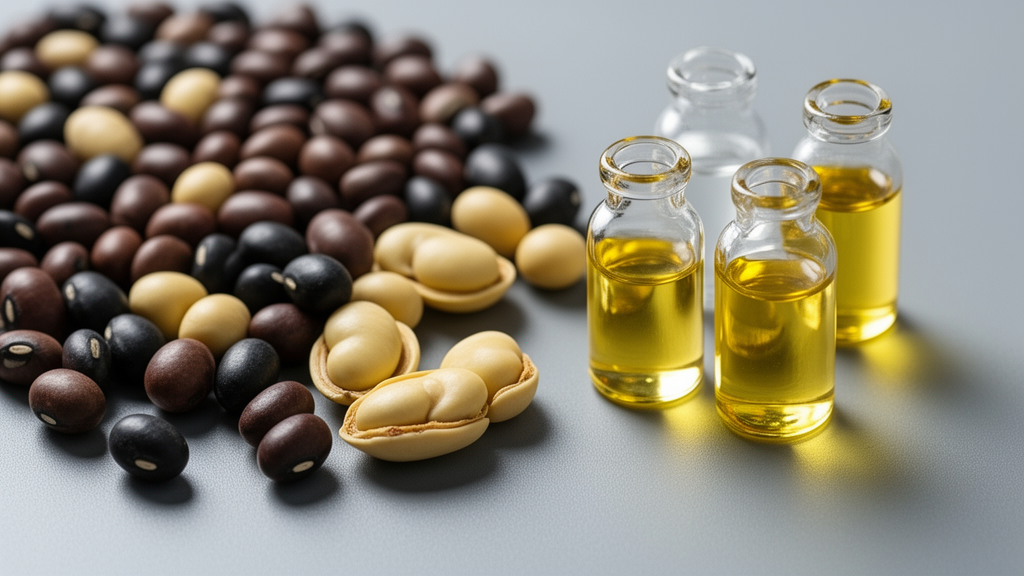
Soybean accessions with increasingly dark seed coats had lower oil content and distinct lipid profiles in a study that combined broad screening with quantitative lipidomics. Among 169 yellow, green, brown and black accessions, yellow seeds had the highest oil content and black seeds the lowest, revealing a negative association between seed coat pigmentation and oil content. The researchers also identified 38 differentially accumulated lipids between common yellow and black soybeans, with these compounds significantly enriched in the sphingolipid metabolism pathway.

The research, published in npj Science of Food, used Soxhlet extraction to measure oil in all 169 soybean accessions. The researchers then selected two representative accessions from each of the four seed color groups for metabolomic analysis and detailed quantitative lipidomic profiling. This design separated the large-scale assessment of oil content from the more intensive molecular comparison, which involved eight accessions. The broader screening established the overall association with pigmentation, while the selected accessions were used to characterize differences in metabolic pathways and individual lipid species.

Quantitative profiling identified 650 lipid species in the eight accessions, divided among five major lipid classes and 26 subclasses. HPLC quantification showed that total lipid content decreased progressively as seed coat pigmentation increased. The differences were mainly associated with changes in triglycerides, phosphatidylethanolamines, phosphatidylcholines and phosphatidylinositols. In the broader metabolomic analysis, lipid subclasses were consistently represented among significantly altered pathways across the four color groups. These measurements show that the observed differences in oil content were accompanied by shifts in the classes and subclasses of lipids present in the seeds.

The comparison between common yellow and black soybeans produced the most specific set of differential findings: 38 lipids accumulated differently between the two groups, and pathway analysis indicated significant enrichment in sphingolipid metabolism. The study therefore links visible variation in seed coat color with both total oil content and lipid composition. Its scope should be considered carefully, however. Oil content was measured across 169 accessions, but metabolomic and quantitative lipidomic analyses were confined to two representatives from each color group. The reported results are associations among seed color groups and lipid profiles; they do not establish that pigmentation causes the differences or directly demonstrate effects on human dietary outcomes.

Subject of Research: Association of soybean seed coat pigmentation with oil content and lipidomic profiles

Article Title: Quantitative lipidomics reveals differences in oil metabolism and nutritional profiles of soybeans with various seed coat colors

Article References: Zhao, Y., Zhao, S., Li, J., Tang, F., He, L., Li, X., Su, Y., Xu, H., Du, N., Chi, H., Cheng, B., Zhang, Z., Xu, M., Tang, X., Xiao, H., Yang, W., & Liu, W. (2026). Quantitative lipidomics reveals differences in oil metabolism and nutritional profiles of soybeans with various seed coat colors. npj Science of Food. https://doi.org/10.1038/s41538-026-01195-7

Image Credits: AI Generated

DOI: 10.1038/s41538-026-01195-7

Keywords: soybean, seed coat color, oil content, quantitative lipidomics, sphingolipid metabolism, triglycerides, phosphatidylcholines, metabolomics, food chemistry, crop diversity, Quantitative, lipidomics

News Source: Alan Morgan. (October 20, 2026). Soybean seed pigmentation is associated with oil and lipid differences. Scienmag.


Tags: crop diversityfood chemistryLipidomicsMetabolomicsoil contentphosphatidylcholinesQuantitativequantitative lipidomicsseed coat colorsoybeansphingolipid metabolismtriglycerides
Share12Tweet7Share2ShareShareShare1

Related Posts

Postbiotics Gain Ground as Functional Foods, but Human Evidence Varies

Postbiotics Gain Ground as Functional Foods, but Human Evidence Varies

October 20, 2026
Research report: Spatiotemporal optimization of micro spray mist: effects on growth physiology in apple trees and comprehensive evaluation

Research report: Spatiotemporal optimization of micro spray mist: effects on growth physiology in apple trees and comprehensive evaluation

October 20, 2026

Cyanidin glycosides protect zebrafish brains in Alzheimer’s-like model

October 20, 2026

Bayesian workflow analyzes censored soybean R6 timing across COâ‚‚, light and photoperiod treatments

October 20, 2026

POPULAR NEWS

  • Lab study links neurokinin receptor blockers to reduced breast cancer cell viability

    Lab study links neurokinin receptor blockers to reduced breast cancer cell viability

    29 shares
    Share 12 Tweet 7
  • Extra Trees leads 13-model cyberbullying benchmark on English tweets

    29 shares
    Share 12 Tweet 7
  • Soybean seed pigmentation is associated with oil and lipid differences

    29 shares
    Share 12 Tweet 7
  • Dusty mining jobs linked to higher pneumoconiosis prevalence in US miners

    29 shares
    Share 12 Tweet 7

About

We bring you the latest biotechnology news from best research centers and universities around the world. Check our website.

Follow us

Recent News

Lab study links neurokinin receptor blockers to reduced breast cancer cell viability

Extra Trees leads 13-model cyberbullying benchmark on English tweets

Soybean seed pigmentation is associated with oil and lipid differences

Subscribe to Blog via Email

Enter your email address to subscribe to this blog and receive notifications of new posts by email.

Join 85 other subscribers
  • Contact Us

Bioengineer.org © Copyright 2023 All Rights Reserved.

Welcome Back!

Login to your account below

Forgotten Password?

Retrieve your password

Please enter your username or email address to reset your password.

Log In
No Result
View All Result
  • Homepages
    • Home Page 1
    • Home Page 2
  • News
  • National
  • Business
  • Health
  • Lifestyle
  • Science

Bioengineer.org © Copyright 2023 All Rights Reserved.