• HOME
  • NEWS
  • EXPLORE
    • CAREER
      • Companies
      • Jobs
    • EVENTS
    • iGEM
      • News
      • Team
    • PHOTOS
    • VIDEO
    • WIKI
  • BLOG
  • COMMUNITY
    • FACEBOOK
    • INSTAGRAM
    • TWITTER
Monday, May 25, 2026
BIOENGINEER.ORG
No Result
View All Result
  • Login
  • HOME
  • NEWS
  • EXPLORE
    • CAREER
      • Companies
      • Jobs
        • Lecturer
        • PhD Studentship
        • Postdoc
        • Research Assistant
    • EVENTS
    • iGEM
      • News
      • Team
    • PHOTOS
    • VIDEO
    • WIKI
  • BLOG
  • COMMUNITY
    • FACEBOOK
    • INSTAGRAM
    • TWITTER
  • HOME
  • NEWS
  • EXPLORE
    • CAREER
      • Companies
      • Jobs
        • Lecturer
        • PhD Studentship
        • Postdoc
        • Research Assistant
    • EVENTS
    • iGEM
      • News
      • Team
    • PHOTOS
    • VIDEO
    • WIKI
  • BLOG
  • COMMUNITY
    • FACEBOOK
    • INSTAGRAM
    • TWITTER
No Result
View All Result
Bioengineer.org
No Result
View All Result
Home NEWS Science News

Boosting immune cell memory to improve vaccines and cancer immunotherapy

Bioengineer by Bioengineer
August 28, 2017
in Science News
Reading Time: 2 mins read
0
Share on FacebookShare on TwitterShare on LinkedinShare on RedditShare on Telegram
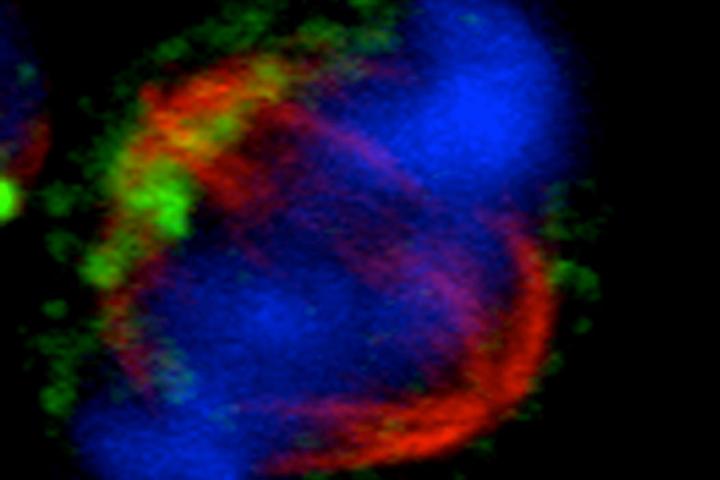
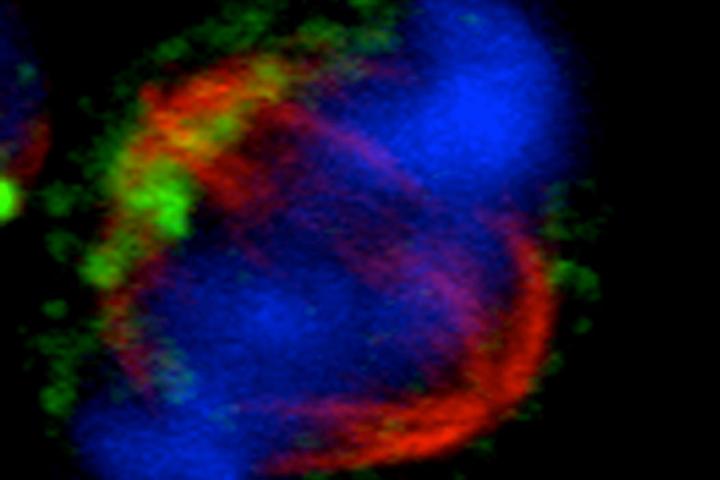
IMAGE

Credit: UC San Diego Health

Vaccines and cancer immunotherapies do essentially the same thing: They boost a person's immune system, better enabling it to fight an offender, be it microbe or malignancy. Both approaches focus on CD8+ T cells, a type of immune cell that can either kill immediately or commit the offender to "memory," providing long-term protection. In mouse experiments, researchers at University of California San Diego School of Medicine have discovered that drugs that activate the cells' proteasome, or recycling center, tip the balance in favor of memory CD8+ T cells. This approach could be used to improve how well vaccines and immunotherapies work and how long they last.

The study will be published August 28 in the Journal of Clinical Investigation.

"We already knew that activated CD8+ T cells divide asymmetrically, giving rise to both effector cells and memory cells," said senior author John T. Chang, MD, associate professor at UC San Diego School of Medicine. "But we didn't really know how the unequal segregation of cellular components during CD8+ T cell division affects their fate."

Using mice and cellular models, Chang and team determined that the two different types of CD8+ T cells, effector and memory, differ in their proteasome activity rates. A cell's proteasome is the cellular machinery that degrades and recycles damaged or unneeded proteins. It's an essential part of all cells, and researchers recently discovered that manipulating proteasome activity can change cellular function.

Proteasome activators and inhibitors are commercially available. Bortezomib, an anti-cancer drug used to treat multiple myeloma, inhibits proteasome activity. Chang and team discovered that cyclosporine, an immunosuppressive drug prescribed to organ transplant recipients, activates the proteasome in CD8+ T cells.

What's more, they found that treating CD8+ T cells with cyclosporine early after microbial infection generated twice as many long-lived memory cells as mock-treated controls.

"While so far this work has only been done in mouse cells and experimental models of infection, we envision this approach could one day be used as an adjuvant therapy — a one- or two-dose immune booster given alongside a vaccine or cancer immunotherapy to help the intervention work better and last longer," Chang said.

###

Study co-authors also include: Christella E. Widjaja, Jocelyn G. Olvera, Patrick J. Metz, Anthony T. Phan, Kathleen Fisch, Justine Lopez, Stephanie H. Kim, Daniel A. Garcia, Stephen Searles, Jack D. Bui, Aaron N. Chang, Ananda W. Goldrath, UC San Diego; Jeffrey N. Savas, John R. Yates III, The Scripps Research Institute; Gerjan de Bruin, Bogdan I. Florea, Hermen S. Overkleeft, Leiden University; Yves Leestemaker, Celia R. Berkers, Annemieke de Jong, and Huib Ovaa, The Netherlands Cancer Institute.

Media Contact

Heather Buschman
[email protected]
858-249-0456
@UCSanDiego

http://www.ucsd.edu

Related Journal Article

http://dx.doi.org/10.1172/JCI90895

Share12Tweet8Share2ShareShareShare2

Related Posts

How Wasp Societies Conquer Intense Leadership Conflicts — Biology

How Wasp Societies Conquer Intense Leadership Conflicts

May 25, 2026

Thalamo-Cortical Synchrony Drives Temporal Lobe Seizures

May 25, 2026

Nanosecond-Latency All-Optical Fiber Sensing Advances

May 25, 2026

Machine Learning Enhances Dual-Target Deep Brain Stimulation

May 25, 2026
Please login to join discussion

POPULAR NEWS

  • ESMO 2025: mRNA COVID Vaccines Enhance Efficacy of Cancer Immunotherapy

    315 shares
    Share 126 Tweet 79
  • New Study Reveals Plants Can Detect the Sound of Rain

    734 shares
    Share 293 Tweet 183
  • Research Indicates Potential Connection Between Prenatal Medication Exposure and Elevated Autism Risk

    847 shares
    Share 339 Tweet 212
  • Common Food Preservatives Associated with Elevated Blood Pressure and Increased Heart Disease Risk

    56 shares
    Share 22 Tweet 14

About

BIOENGINEER.ORG

We bring you the latest biotechnology news from best research centers and universities around the world. Check our website.

Follow us

Recent News

How Wasp Societies Conquer Intense Leadership Conflicts

Thalamo-Cortical Synchrony Drives Temporal Lobe Seizures

Nanosecond-Latency All-Optical Fiber Sensing Advances

Subscribe to Blog via Email

Enter your email address to subscribe to this blog and receive notifications of new posts by email.

Join 83 other subscribers
  • Contact Us

Bioengineer.org © Copyright 2023 All Rights Reserved.

Welcome Back!

Login to your account below

Forgotten Password?

Retrieve your password

Please enter your username or email address to reset your password.

Log In
No Result
View All Result
  • Homepages
    • Home Page 1
    • Home Page 2
  • News
  • National
  • Business
  • Health
  • Lifestyle
  • Science

Bioengineer.org © Copyright 2023 All Rights Reserved.