Deep in the shallow waters along the shoreline of Dongting Lake, one of China’s largest freshwater systems, fungi are quietly decomposing sunken wood in ways that scientists are only beginning to catalog. A new study published in MycoKeys describes two previously unknown species of freshwater fungi collected from submerged wood at the lake, which sits in the mid-lower reaches of the Yangtze River basin in Hunan Province. The species, named Annulatascus dongtingensis and Fusoidigranularius dongtingensis, both belong to the family Annulatascaceae, a group of microscopic decomposers that has long frustrated taxonomists because its members look remarkably alike while hiding deep genetic differences.
The discovery matters because freshwater fungi remain one of the most poorly documented corners of global fungal diversity. Researchers have so far identified more than 3,870 freshwater fungal species, a figure that pales beside estimates suggesting the fungal kingdom as a whole may contain around 1.5 million species. Intensified exploration in Asia has begun to close that gap: more than 200 novel freshwater fungal species have been described from China and Thailand alone since 2015. Even so, large river basins such as the Yangtze remain under-sampled, and most surveys have concentrated on a narrow range of substrates, chiefly submerged wood, while habitats such as open water, foam, and rock surfaces have received far less attention.
Annulatascaceae once seemed like a tidy family. Its members typically produce cylindrical, thin-walled asci, the sac-like cells that contain sexual spores, topped with a large apical ring that does not turn blue in iodine, and their ascospores are usually equipped with appendages or gelatinous sheaths. Those shared traits provided a stable morphological framework for classification for decades. Molecular studies, however, shattered that picture. Phylogenetic analyses revealed that the family is polyphyletic, meaning its members are scattered across multiple unrelated lineages of the fungal tree, prompting major revisions and the establishment of new orders and families, including Atractosporaceae, Barbatosphaeriaceae, Conlariaceae, Lentomitellaceae, Pseudoproboscisporaceae, and Woswasiaceae, to accommodate former annulatascaceous fungi.
The type genus of the family, Annulatascus, has been at the center of this taxonomic turbulence. Species in the genus are characterized by immersed to superficial, brown to black fruiting bodies called ascomata, which may bear long or short necks, along with unitunicate, cylindrical, pedicellate asci carrying a relatively massive refractive apical ring and mostly uniseriate, hyaline, fusiform ascospores. Several taxa historically assigned to Annulatascus have turned out to be phylogenetically distant from the core group, forcing their reassignment. One striking example is Annulatascus aquatorbae, which was moved into the newly erected genus Longivarius on the basis of its unevenly colored ascospores with brown central cells and subhyaline end cells.
Similarly, the species once known as Annulatascus nilensis was transferred to a new genus, Fusoidigranularius, established in 2021. The genus is defined by a distinctive combination of traits: horizontally oriented, immersed ascomata with laterally growing, upward-curving necks, and ascospores divided into five to nine, occasionally up to eleven, cells by septa, wrapped in an irregular granular sheath. Even so, the familial position of Fusoidigranularius remains uncertain, and its known diversity is limited, underscoring how much work remains to be done in this group. Continued surveys in subtropical and tropical Asia keep revealing cryptic species that morphology alone had lumped together.
The two new Dongting Lake species were collected in December 2024 from submerged wood along the lake’s shoreline near Yiyang City. The researchers examined the specimens with stereomicroscopy and compound microscopy, measuring structures such as ascomata, peridia, paraphyses, asci, and ascospores with image-analysis software. They then isolated single ascospores onto potato dextrose agar and grew the cultures at 25 degrees Celsius in darkness. Genomic DNA extracted from thirty-day-old mycelium was used to amplify three genetic regions, the internal transcribed spacer (ITS), the large subunit (LSU), and the small subunit (SSU) of the nuclear ribosomal RNA gene cluster, the standard workhorses of fungal barcoding and phylogeny.
The resulting sequences were aligned with data from related taxa and analyzed using maximum likelihood and Bayesian methods, with two Ophiostoma species serving as outgroups to root the tree. The final concatenated alignment contained 2,496 characters across 32 strains. Both analyses produced trees whose topologies were largely consistent with earlier studies, and both new species emerged as well-supported, distinct lineages. Annulatascus dongtingensis formed a sister clade to A. hongkongensis and A. thailandensis, while Fusoidigranularius dongtingensis grouped with the type species of its genus, F. nilensis.
Under the microscope, the two species reveal telling differences from their closest relatives. Annulatascus dongtingensis produces immersed, black, subglobose to ellipsoidal ascomata, 200 to 350 micrometers high, with long necks that erupt straight through the wood surface. Its cylindrical asci measure roughly 252 by 12 micrometers and contain eight hyaline, aseptate, fusiform ascospores about 30.6 by 9.5 micrometers, each wrapped in a mucilaginous sheath. Compared with A. hongkongensis, the new species has narrower asci, smaller spores, and spores lacking septa; compared with A. thailandensis, it differs in ascus size, spore width, septation, and the orientation of its ascomata, which are immersed with straight necks rather than superficial with necks lying across the substrate.
Fusoidigranularius dongtingensis, meanwhile, broadens the known morphological variation of its genus in a surprising way. Whereas the type species F. nilensis bears ascomata oriented horizontally on the substrate with laterally emerging, upward-curving necks, the new species produces a straight neck that projects vertically through the host wood. It also has smaller ostioles, narrower asci, and ascospores with only three, occasionally four, septa instead of the five to nine typical of F. nilensis. LSU sequence comparisons show a 1.98 percent difference between the two species. The finding suggests that neck orientation, a trait once considered diagnostic, may be evolutionarily plastic in these fungi, and possibly influenced by environmental factors such as water flow, substrate structure, and oxygen availability, a caution the authors emphasize when weighing morphological characters against molecular evidence.
The study also raises a lingering puzzle. Sequence divergence between Annulatascus dongtingensis and A. thailandensis is remarkably low, just 0.5 percent of LSU base pairs, comparable to or lower than some accepted intraspecific differences within the genus, leading the authors to tentatively suggest the two may eventually be synonymized. Yet the observed morphological differences, including ascospore septation and ascomatal orientation, are real and should not be dismissed, so re-collection of A. hongkongensis and additional multi-locus analyses are recommended. More broadly, the discovery shows that even heavily studied countries like China still harbor undocumented fungal life in their great river systems, and that combining careful morphology with DNA sequencing remains the only reliable way to untangle groups riddled with convergent forms. Expanding sampling to underexplored substrates, sequencing type specimens, and building culture collections, the authors argue, will be essential to stabilizing the classification of freshwater fungi worldwide.
Subject of Research: Taxonomy and phylogeny of two new freshwater fungal species in Annulatascaceae from Dongting Lake, China
Article Title: Two new species of Annulatascaceae ( Annulatascales , Sordariomycetes ) from Dongting Lake
Article References: Wang, Z.-Y., Thiyagaraja, V., He, S.-C., Kularathnage, N., Yuan, L.-L., Cheewangkoon, R., Hyde, K. D., & Zhao, Q. (2026). Two new species of Annulatascaceae (Annulatascales, Sordariomycetes) from Dongting Lake. MycoKeys, 136, 217-232. https://doi.org/10.3897/mycokeys.136.188740
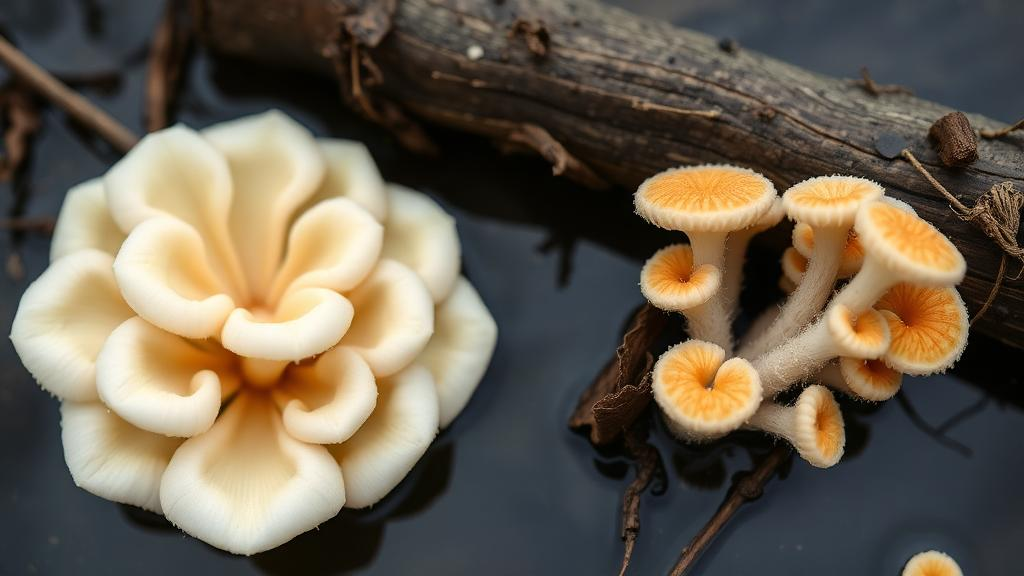
Image Credits: AI Generated
DOI: 10.3897/mycokeys.136.188740
Keywords: freshwater fungi, Annulatascaceae, Annulatascus, Fusoidigranularius, Dongting Lake, new species, taxonomy, phylogenetics, Sordariomycetes, Yangtze River basin, mycology, submerged wood
News Source: Roger Howard. (October 19, 2026). Two New Fungal Species Emerge from Submerged Wood in China’s Dongting Lake. Scienmag.