Hearing loss is one of the most common chronic conditions on the planet, and its burden falls disproportionately on people least equipped to manage it. The World Health Organization estimates that the majority of individuals affected by disabling hearing loss live in low- and middle-income settings, where audiologists and ear, nose and throat specialists are scarce, waiting lists are long, and hearing aids are often simply unavailable. A new feasibility study published in BMC Health Services Research offers a strikingly practical answer to this access crisis: train community healthcare workers to deliver the entire hearing care pathway, from screening to fitting to follow-up, using mobile health tools. The research, led by Caitlin Frisby and De Wet Swanepoel of the University of Pretoria together with colleagues at Johns Hopkins and the World Health Organization, tested a WHO-recommended task-sharing model in three South African communities and found that the approach worked remarkably well.
The study took place between October 2023 and July 2024 in three distinct South African settings: Khayelitsha, a large township outside Cape Town; the Paarl Valley in the Western Cape; and Atteridgeville in Gauteng province. These communities were deliberately chosen to represent the kinds of low- and middle-income environments where hearing services are most desperately needed. Rather than importing teams of specialists, the researchers recruited three community healthcare workers, trusted local people embedded in the health system who already deliver primary care. Over five days, the workers received intensive training covering both theoretical knowledge and hands-on practice in facilitating hearing assessments, fitting hearing aids, and providing follow-up care. Crucially, the training incorporated mHealth tools, smartphone-based applications and connected hardware that allow standardized testing and remote professional support without requiring an audiologist in the room.
To evaluate whether such a model could realistically be scaled, the team structured their assessment around Bowen’s feasibility framework, a widely used evaluation architecture in implementation science that examines six domains: acceptability, demand, implementation, integration, practicality, and adaptation. The investigators asked three linked questions. First, could community healthcare workers actually be trained to competence in delivering hearing services? Second, would patients engage with the service and would the community accept it? Third, what logistical and organizational factors would shape real-world implementation? Questionnaires administered to workers, participants, and the program manager provided the data to answer each question systematically, an approach that moves beyond simply asking whether a pilot worked and instead probes where, how, and under what conditions it could be replicated elsewhere.
The results on training were encouraging. The three community healthcare workers demonstrated high competency levels after their five-day course, with measurable improvements in both technical knowledge and self-confidence from before to after training. This finding matters because a frequent criticism of task-sharing, the deliberate redistribution of clinical tasks from scarce professionals to trained lay workers, is that brief training cannot produce safe, reliable service. Here, with structured protocols, validated mHealth tools that automate much of the technical decision-making, and remote access to professionals, the workers performed the core steps of hearing care competently. The model essentially shifts the professional’s role from performing every procedure to supervising a system in which well-designed technology and trained community workers handle the routine work.
Community engagement told a similarly positive story. In total, 166 adult community members were enrolled in the program across the three sites. Hearing assessment identified those with hearing loss amenable to amplification, and of the 36 participants initially eligible for hearing aids, 28, or 77.8 percent, accepted them at the time of assessment. The remaining eight initially declined but were fitted following reassessment, suggesting that some patients need time and repeated contact before committing to a device. This kind of staged uptake is a realistic picture of human behavior rather than a failure of the model, and the fact that nearly four in five eligible adults said yes on the spot indicates substantial latent demand for hearing care that conventional clinic-based services are failing to meet.
Perhaps the most important number in the study is what happened six months later. Of the 36 participants fitted with hearing aids, 34 were still using them, a retention rate of roughly 94 percent that compares favorably with outcomes reported in high-income clinical settings, where hearing aid abandonment is a persistent and well-documented problem. Only two participants returned their devices, one because of mental health difficulties and one because of blindness, both reflecting individual circumstances rather than flaws in the service model itself. Sustained use is the true endpoint of any hearing aid program, since a device sitting in a drawer provides no benefit, and these results suggest that community-embedded fitting and follow-up may actually improve long-term adoption.
Satisfaction with the service was equally striking. At the six-month follow-up, 97.1 percent of participants, 33 of the 34 still using their aids, reported that the services were greatly helpful. This near-universal endorsement speaks to the acceptability domain of Bowen’s framework and carries a broader lesson: care delivered close to home, by people from the community, with technology that shortens the pathway from suspicion of hearing loss to working amplification, is not a compromise. For many recipients it was their first-ever interaction with formal hearing care, a service they had effectively been locked out of by geography, cost, and the sheer scarcity of professionals in their region.
The study was not without friction, and the researchers document the implementation barriers candidly. The program manager reported limited support from referral clinics, driven by long waiting times for appointments, along with low community awareness of hearing health as significant challenges. These are familiar structural constraints in low- and middle-income health systems, where even a streamlined community pathway ultimately depends on access to ear specialists for cases requiring medical attention, such as impacted cerumen or chronic infection. The team also generated concrete recommendations for strengthening future implementations: establishing a panel of audiologists for rapid remote case reviews, scheduling regular dedicated wax removal days, and developing support groups for hearing aid users to reinforce device handling and continued use. Each recommendation targets a specific bottleneck identified during the pilot rather than a generic aspiration.
Technically, the model’s success rests on the interplay between task-sharing and mHealth. Smartphone-based audiometry can deliver calibrated pure-tone testing, automated interpretation of results against international thresholds, and guided hearing aid programming, which compresses the expertise once required of a professional into software running on hardware that community workers already carry. Remote consultation channels, in this study including a WhatsApp support group with an ENT specialist, provide a safety net for atypical or medically concerning cases. This layered architecture, lay workers at the base, automated decision support in the middle, and professionals overseeing exceptions at the top, is increasingly recognized as the only arithmetic that works when the global supply of audiologists is compared against the estimated 1.5 billion people worldwide living with some degree of hearing loss.
The authors conclude that the WHO-recommended community healthcare worker-led approach demonstrated high worker competency, positive community engagement, and sustained hearing aid use at six months, and that task-sharing supported by mHealth tools can meaningfully enhance access to hearing care in low- and middle-income settings. They are careful to note the caveats: improved clinic support and ongoing worker training are essential if such services are to be sustainable and scalable beyond a feasibility study. Still, the implications are considerable. A five-day training, three workers, and 166 people screened in three communities is a small footprint, but it sketches a blueprint for how the largest unmet need in hearing healthcare could finally be met, not by waiting for professionals who will not arrive in sufficient numbers, but by equipping communities to care for their own, with technology doing the heavy technical lifting.
Subject of Research: Task-sharing delivery of hearing aid services by community healthcare workers in low- and middle-income communities
Article Title: Feasibility of hearing aid service-delivery in low- and middle-income communities
Article References: Frisby, C., De Sousa, K. C., de Kock, T., Nieman, C. L., Der, C., Dillard, L. K., Chadha, S., & Swanepoel, D. W. (2026). Feasibility of hearing aid service-delivery in low- and middle-income communities. BMC Health Services Research. https://doi.org/10.1186/s12913-026-15529-4
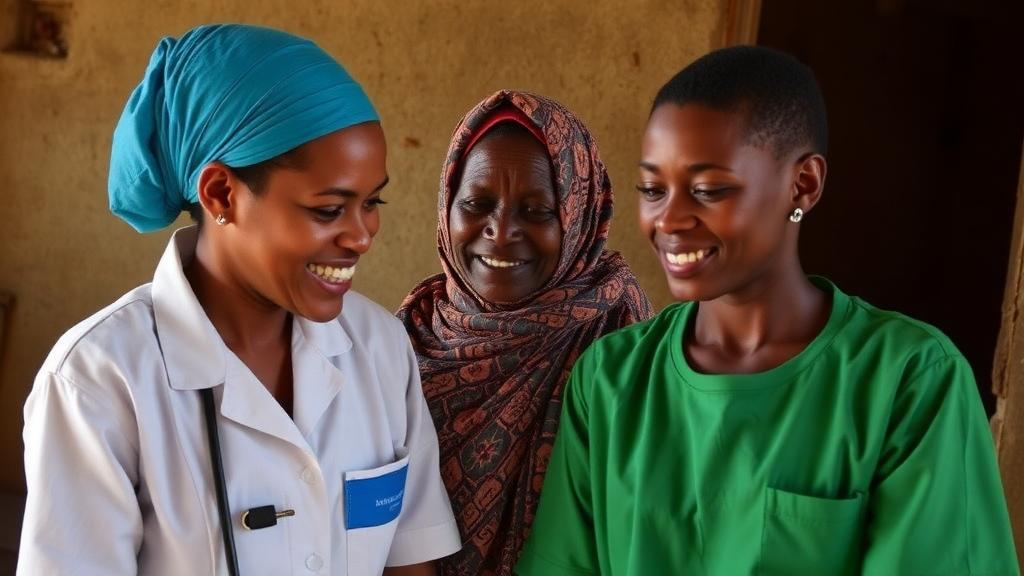
Image Credits: AI Generated
DOI: 10.1186/s12913-026-15529-4
Keywords: hearing loss, hearing aids, community healthcare workers, task-sharing, mHealth, low- and middle-income countries, South Africa, World Health Organization, feasibility study, hearing healthcare access, implementation science, Bowen's framework
News Source: Phoebe Ingram. (October 19, 2026). Community Health Workers Prove Hearing Aids Can Reach the World’s Poorest Communities. Scienmag.