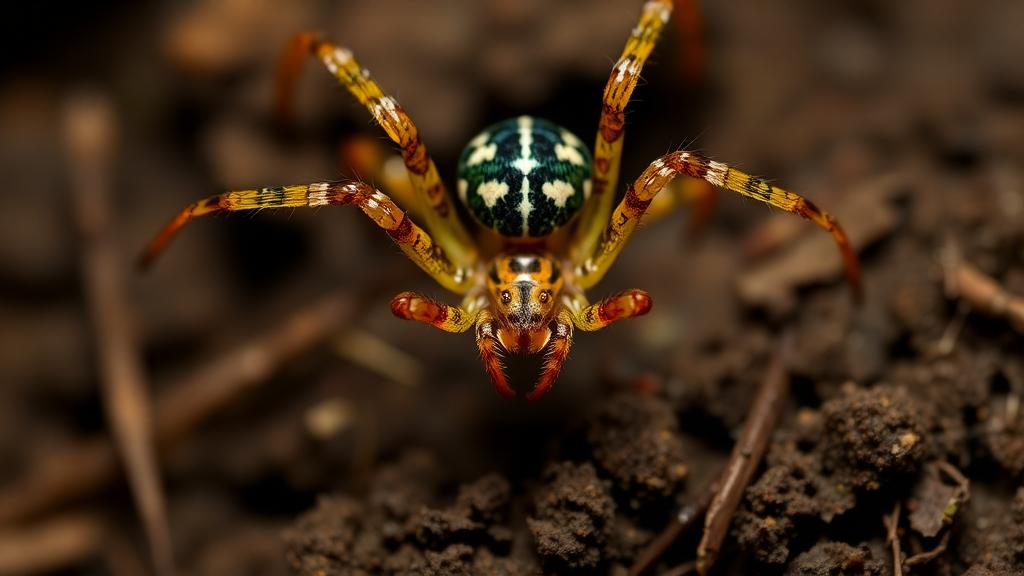
Deep in the dry inter-Andean valleys of Ecuador, tucked beneath rocks, dead agave leaves, and even the occasional garage wall, live spiders that science has never formally named. A new study published in the journal Evolutionary Systematics describes two previously unknown species of the genus Loxosceles, the infamous recluse spiders whose bites can, in rare cases, cause necrotic wounds. The discovery doubles the number of Loxosceles species known from mainland Ecuador and highlights how little is still known about a genus that lives, quite literally, on humanity’s doorstep.
The two new species, named Loxosceles guayllabamba and Loxosceles binfordae, were described by arachnologists Nadine Dupérré and Elicio Tapia based on specimens collected in the Ecuadorian Andes. Both belong to the laeta species group, the second most diverse lineage within the genus, which now includes twenty-six described species. Before this study, only three Loxosceles species were known from mainland Ecuador: Loxosceles gloria on the coast, and Loxosceles lutea and Loxosceles taeniopalpis in the Andes. A fourth species, the highly synanthropic Loxosceles laeta, has been recorded only from the Galapagos Islands, despite a decades-old suggestion that it ranged across the whole country.
The genus Loxosceles is the dominant branch of the spider family Sicariidae, accounting for 143 of the family’s 172 described species, or roughly 83 percent of its total diversity. The family also contains the African genus Hexophthalma with eight species and the American genus Sicarius with twenty-one. Loxosceles spiders occur naturally on every continent except Oceania and Antarctica, and many species show a strong tendency to live alongside humans, sheltering in and around houses, in waste piles, and in human debris. In wild settings they prefer dry, sheltered microhabitats: under rocks, logs, and the bark of dead trees, and inside caves. In South America they occupy xerophytic forests, semi-arid vegetation, and transitional coastal deserts.
Notoriety has followed the genus because of its venom. While most Loxosceles bites are medically minor, occasional envenomations become necrotic, and less commonly produce systemic effects. According to the research, such severe outcomes remain relatively uncommon and are largely confined to regions where the spiders are endemic, or to cases involving highly synanthropic species such as Loxosceles laeta, which thrives in human dwellings. This medical relevance makes accurate species identification more than an academic exercise: knowing which species live where, and how close they come to people, directly informs public health understanding in the Andean region.
The first new species, Loxosceles guayllabamba, was found in Pichincha and Imbabura provinces at elevations between roughly 2,000 and 2,600 meters, in the Guayllabamba valley where Ecuador’s sprawling capital, Quito, sits. The holotype male was hand collected in November 2019 from holes and under rocks in a dry area near Quito, and paratypes were later found in the Bosque Protector Jerusalem under rocks, dead trees, old bark, and dead agave leaves. Tellingly, a few specimens were also collected inside a house and an adjacent garage, making this the only one of the two new species confirmed to share living space with people. The species name honors the Guayllabamba parish where it was found.
Males of Loxosceles guayllabamba most closely resemble Loxosceles rufipes and Loxosceles lutea, but careful morphological comparison reveals decisive differences. The new species has a shorter, non-sinuous embolus, the intromittent part of the male palpal organ, compared with the long and sinuous embolus of L. rufipes, and its palpal tibia lacks the thickened basal third seen in L. lutea, with a femur 6.5 times longer than wide rather than 4.2 times. Females were distinguished by their short spermathecae, the sperm-storage structures of the internal genitalia, which are as long as wide with wide bases and small pointed outer lobes. The male holotype measures just over six millimeters in total body length, with a light yellow-brown carapace and the characteristic six eyes arranged in three pairs.
The second species, Loxosceles binfordae, comes from much farther south, in Loja province near the town of Oña at around 2,250 meters, where males and females were collected under rocks and logs in semi-deciduous shrubland. It is named in honor of Greta Binford, the arachnologist and evolutionary biologist known for her research on Loxosceles venom and systematics. Males resemble Loxosceles taeniopalpis and Loxosceles inca but differ in the proportions of the palpal femur and tibia, which are 7 and 2.8 times longer than wide respectively, compared with 8 and 3.5 in L. taeniopalpis, and in the leg formula 2413 rather than 2143 seen in L. inca. Scanning electron microscopy also revealed a distinctive twist in the embolus tip at one third of its length. So far the species is known only from its type locality, though it was found close to new housing development near Oña.
A technical highlight of the study is its treatment of female internal genitalia, structures that are semi-transparent, delicate, and considered variable within the laeta group. The authors dissected female genitalia, digested surrounding tissue with a pancreatin solution, and imaged the spermathecae, uterus, and bursa copulatrix using scanning electron microscopy after dehydration and drying with hexamethyldisilazane. These high-resolution images revealed clear differences between the two new species and their Andean relatives: L. binfordae has bean-shaped spermathecae that are shorter than wide, at 0.6 times, with low wide outer lobes, while L. taeniopalpis has spermathecae only 0.3 times as long as wide with two outer lobes, and L. lutea has elongated, constricted spermathecae. Documenting the range of variation within each new species strengthens the case that these are genuinely distinct lineages rather than variants of known forms.
The study also settles a taxonomic dispute. In 2021, other researchers synonymized the Peruvian species Loxosceles alicea under Loxosceles rufescens, a widespread Mediterranean species thought to have been introduced to the Americas, basing their conclusion solely on published illustrations rather than type specimens. Dupérré and Tapia reject that synonymy as doubtful, pointing to the genus’s high diversity in South America and the fact that L. rufescens is considered absent from Central and South America by several authorities. Until the type of L. alicea can be physically examined, the authors argue, the synonymy should not stand, a reminder that in spider taxonomy, careful examination of specimens still trumps inference from old drawings.
Perhaps the most striking implication of the work is how much remains unknown. The most recent revision of South American Loxosceles was published more than fifty years ago, in 1967, yet it remains the standard reference for recognizing species in the region. No new Ecuadorian species had been recognized since then, and no distribution or natural history data had been published for the country’s recluses, even as fourteen new South American species were described in the last decade alone, mostly from Brazil and Chile. The new distribution map extends the known range of Loxosceles lutea from Carchi province in the north all the way to Azuay in the south. With one of the two new species living in and around homes in one of South America’s most populous highland capitals, the message is clear: the Andes still conceal undocumented neighbors, some of them venomous, waiting just beneath the nearest rock.
Subject of Research: Taxonomic description of two new Loxosceles recluse spider species from the Ecuadorian Andes
Article Title: Two new species of the spider genus Loxosceles ( Araneae , Sicariidae ) from the Ecuadorian Andes
Article References: Dupérré, N., Harms, D., Crespo-Pérez, V., & Tapia, E. (2024). Two new species of the spider genus Loxosceles (Araneae, Sicariidae) from the Ecuadorian Andes. Evolutionary Systematics, 8(1), 1-14. https://doi.org/10.3897/evolsyst.8.107213
Image Credits: AI Generated
DOI: 10.3897/evolsyst.8.107213
Keywords: Loxosceles, Sicariidae, recluse spiders, Ecuador, Andes, new species, taxonomy, arachnology, spermathecae, scanning electron microscopy, venom, species distribution
News Source: Drew Townsend. (October 19, 2026). Two New Recluse Spider Species Discovered Hiding in the Ecuadorian Andes. Scienmag.