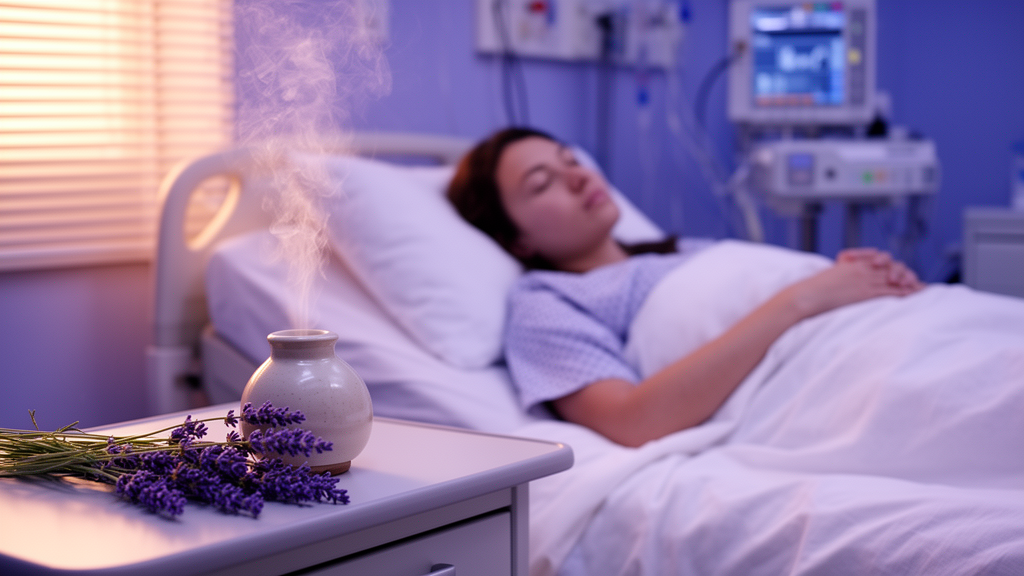
A few drops of lavender oil on a gauze pad may sound like the stuff of spa brochures rather than intensive care medicine, but a new study from Taiwan suggests that this humble aromatherapy ritual could make a measurable difference for some of the most vulnerable patients in the hospital. Researchers report that intensive care unit patients recovering from curative surgery for early-stage liver cancer slept better, felt less pain, and experienced less anxiety when inhaled lavender essential oil was added to their standard postoperative care. The findings, published in the journal Supportive Care in Cancer, add to a growing body of evidence that inexpensive, non-pharmacological interventions can address problems that drugs alone often fail to solve in the critical care setting.
The study focused on patients who had undergone elective curative hepatic resection, the surgical removal of part of the liver to treat hepatocellular carcinoma, the most common primary liver cancer in adults. Hepatocellular carcinoma is a major global health burden, and surgical resection remains one of the most effective curative options for early-stage disease. Yet the operation is a major physiological insult, and the hours and days that follow are typically spent in an intensive care unit, an environment notorious for disrupting sleep. Alarms, lighting, monitoring equipment, noise, and pain all conspire to fragment sleep, and poor sleep in critically ill patients has been linked in prior research to worse outcomes, including postoperative delirium.
The research team, led by nurses at Linkou Chang Gung Memorial Hospital in Taoyuan, Taiwan, together with colleagues at Chang Gung University of Science and Technology and Taipei Medical University, designed a prospective two-group quasi-experimental study. Between 2022 and 2023, they enrolled 52 adults who had undergone elective curative hepatic resection at the tertiary medical center in northern Taiwan. Rather than randomizing patients individually, the researchers enrolled participants sequentially according to the recruitment period: one group received usual postoperative ICU care alone, while the other received inhaled lavender aromatherapy as an adjunct to that same usual care. This design, while less rigorous than a randomized controlled trial, is a common and pragmatic approach in busy clinical settings where contamination between concurrent patients would otherwise be difficult to control.
The intervention itself was strikingly simple. On the evenings of postoperative days one and two, two drops of lavender essential oil were applied to a gauze pad that was held near the patient’s nose for ten breaths and then fixed to the patient’s collar from eight in the evening until eight the following morning. In other words, patients were continuously exposed to a gentle lavender scent throughout the first two nights of their ICU stay, a period when sleep disturbance and discomfort tend to peak. No additional drugs were given, no sedatives were changed, and the control group simply received the standard care that all patients would normally get.
To measure the effects, the team used three validated instruments. Sleep quality was assessed with the Richards-Campbell Sleep Questionnaire, a tool specifically developed to capture how well patients feel they slept in the noisy, interrupt-laden ICU environment. Pain was evaluated with the Critical Care Pain Observation Tool, a behavioral scale that is particularly valuable in intensive care because it relies on observable indicators such as facial expression and body movement rather than self-report, which is useful when patients are too unwell or too fatigued to answer questions reliably. Anxiety was measured with the Visual Analogue Scale for Anxiety, on which patients mark their level of anxiety along a continuous line. Assessments were performed at baseline before the intervention, and again at two postoperative follow-up points, allowing the researchers to track changes over time.
Because the same patients were measured repeatedly, the analysis used generalized estimating equations, a statistical framework designed for longitudinal data that can account for the correlation between repeated measurements within each person while adjusting for covariates. The key question was whether the two groups followed different trajectories over time, which shows up statistically as a significant group-by-time interaction. The results were consistent across all three outcomes. For pain, the interaction test yielded a Wald chi-square of 23.41 with a p-value below .001, indicating a highly significant divergence between the groups. For anxiety, the Wald chi-square was 9.38 with a p-value of .009, and for sleep quality it was 8.33 with a p-value of .016. All three are statistically robust findings, not marginal ones.
The magnitude of the differences at the final follow-up point is what makes the study clinically interesting. By the second assessment, patients who had received lavender aromatherapy had significantly lower pain scores on the Critical Care Pain Observation Tool and significantly lower anxiety scores on the Visual Analogue Scale for Anxiety than patients who had received usual care alone. Their sleep quality scores on the Richards-Campbell Sleep Questionnaire were significantly higher. Most notably, the adjusted between-group difference in sleep quality was 14.81 points, with a 95 percent confidence interval ranging from 4.82 to 24.80. Because that interval lies entirely above zero and its magnitude is large relative to the scale, the authors characterize it as a potentially clinically meaningful improvement in sleep quality, the kind of change a patient would genuinely feel rather than a statistical artifact.
Importantly, the two groups of 26 patients each were comparable at the outset, with no significant differences in demographic or clinical characteristics, which strengthens the argument that the aromatherapy itself, rather than some pre-existing imbalance, drove the observed differences. The study also has transparent limitations that the quasi-experimental design imposes. Because patients were enrolled by recruitment period rather than randomly assigned, unmeasured temporal factors, such as changes in staffing, seasonal variation, or shifts in unit practice, cannot be fully excluded as alternative explanations. The sample size of 52 is modest, and the findings apply specifically to adults recovering from curative resection for early-stage hepatocellular carcinoma at a single tertiary center, so generalization to other surgical populations or other ICUs requires caution. Self-reported sleep and anxiety measures are also inherently subjective, although the use of a behavioral pain tool partially mitigates this concern.
Why would a plant extract delivered through the nose influence pain, anxiety, and sleep at all? The biological plausibility rests on the anatomy of olfaction. Odorant molecules bind to receptors in the nasal epithelium that send signals directly to the olfactory bulb and from there to limbic brain structures, including the amygdala and hypothalamus, which are central to emotion, stress responses, and the regulation of arousal and sleep-wake cycles. Lavender oil contains compounds such as linalool and linalyl acetate, which have been studied for their calming and anxiolytic properties, and systematic reviews have reported anxiolytic effects of Lavandula angustifolia across multiple clinical contexts. Recent reviews of inhalation aromatherapy have also suggested benefits for postoperative pain management, possibly through reduction of anxiety-related amplification of pain perception, since pain and anxiety reinforce one another in a well-known feedback loop.
The practical implications could be considerable. Pharmacologic options for promoting sleep in the ICU are limited, and a rapid systematic review of pharmacologic sleep promotion modalities in intensive care has highlighted how weak the evidence base is for most drug-based approaches, along with concerns about side effects such as next-day sedation and delirium. Against that backdrop, a two-drop, low-cost, low-risk intervention that requires no prescription and no change to existing protocols is attractive, provided it works. This study stops short of proving causation with the certainty of a randomized trial, but its longitudinal analysis, validated measures, and clinically meaningful effect sizes make a credible case that lavender aromatherapy deserves testing in larger randomized studies. For now, the image of an ICU patient drifting to sleep with a lavender-scented gauze clipped to the collar is less a folk remedy than an emerging, evidence-informed candidate for supportive cancer care, one whose biggest virtues, simplicity and safety, may be exactly what critical care medicine needs.
Subject of Research: Effects of inhaled lavender essential oil aromatherapy on sleep, pain, and anxiety in postoperative ICU patients
Article Title: Effects of inhaled lavender essential oil on sleep quality, pain, and anxiety in ICU patients after curative hepatocellular carcinoma resection: a quasi-experimental study
Article References: Lu, Y.-Y., Tsai, P.-C., Hu, Y.-C., & Hsu, W.-C. (2026). Effects of inhaled lavender essential oil on sleep quality, pain, and anxiety in ICU patients after curative hepatocellular carcinoma resection: a quasi-experimental study. Supportive Care in Cancer, 34(10), Article 942. https://doi.org/10.1007/s00520-026-11184-x
Image Credits: AI Generated
DOI: 10.1007/s00520-026-11184-x
Keywords: lavender aromatherapy, hepatocellular carcinoma, intensive care unit, sleep quality, postoperative pain, anxiety, essential oils, non-pharmacological intervention, liver resection, supportive care, Richards-Campbell Sleep Questionnaire, critical care
News Source: Nathaniel Bowman. (October 18, 2026). Lavender Scent in the ICU Eases Pain, Anxiety, and Poor Sleep After Liver Cancer Surgery. Scienmag.