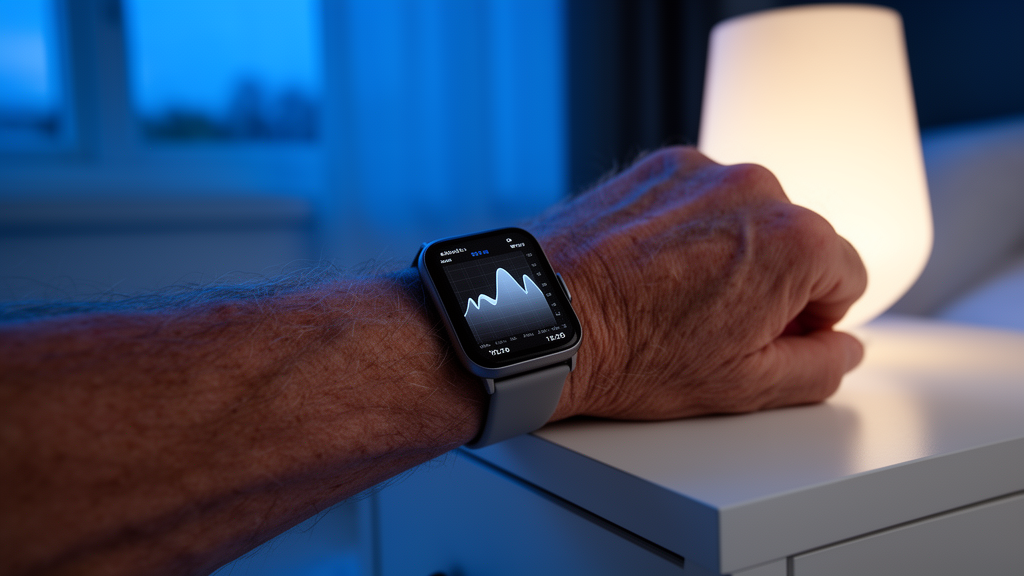
A consumer smartwatch worn on the wrist may soon become one of the most accessible tools for flagging a dangerous and vastly underdiagnosed sleep disorder. New research from Stanford University, published in the Journal of Clinical Sleep Medicine, reports that the Samsung Galaxy Watch demonstrated high accuracy in identifying adults with moderate-to-severe obstructive sleep apnea, a condition in which breathing repeatedly stops or becomes restricted during sleep because the upper airway collapses or narrows. The findings suggest that a device millions of people already wear to bed each night could serve as a first line of screening, potentially shortening the long journey that most patients currently face between symptoms and formal diagnosis.
The study, led by investigators at Stanford University in collaboration with the American Academy of Sleep Medicine community, involved 147 adults with an average age of 54 years. Every participant either had a prior diagnosis of moderate-to-severe sleep apnea or was judged to have a high pre-test likelihood of having the disorder. Each volunteer wore a Galaxy Watch 6 for two nights while undergoing overnight sleep studies at the Stanford Health Care Sleep Medicine Center, and then for three additional nights at home in their own sleeping environment. Researchers then compared the watch’s Sleep Apnea Feature, the algorithm that analyzes overnight physiological signals, against the results of the laboratory polysomnography, the gold-standard diagnostic test that records brain waves, breathing effort, oxygen saturation and muscle activity throughout the night.
The headline numbers are striking. At its default setting, the watch correctly distinguished adults with moderate-to-severe obstructive sleep apnea 94 percent of the time, achieving 94 percent sensitivity and 67 percent specificity. In practical terms, sensitivity measures how reliably the device catches people who truly have the condition, while specificity measures how well it avoids falsely flagging people who do not. A high-sensitivity screening tool is exactly what sleep medicine wants at the front door of the diagnostic pathway: it may occasionally raise a false alarm, but it rarely misses a genuine case. That trade-off is acceptable for screening, because a positive result can be confirmed or ruled out with a formal sleep study before any treatment begins.
Even more remarkable was the device’s performance among high-risk individuals with elevated hypoxic burden, a physiologic marker that quantifies how severely and how often blood oxygen saturation drops during sleep. In this subgroup, the watch achieved 100 percent sensitivity and 100 percent specificity. Hypoxic burden has emerged in recent sleep research as a measure that captures the actual physiological stress imposed by repetitive airway collapses, rather than simply counting the respiratory events themselves. A screening tool that performs perfectly in the patients whose oxygen desaturation burden is highest is clinically meaningful, because those are precisely the individuals in whom untreated apnea is most likely to drive cardiovascular and neurological harm.
Principal investigator Dr. Robson Capasso, professor of otolaryngology, head and neck surgery, at Stanford University, framed the results as a step toward democratizing sleep apnea screening. According to the research team, consumer smartwatches can make screening more accessible by identifying people at risk for moderate-to-severe obstructive sleep apnea. Capasso emphasized that these devices are not diagnostic instruments, but argued that by bringing validated screening into something people already wear every night, clinicians may be able to identify risk earlier and shorten the path to evaluation and to low-risk, well-established therapies such as positive airway pressure and weight management. The distinction between screening and diagnosis is central to how the technology should be used: the watch can raise a flag, but only a sleep study can confirm the disorder and characterize its severity.
Lead author Arash Alavi, who holds a doctorate in computer science and serves as director of software engineering at Stanford University’s Deep Data Research Center, highlighted the rigor behind the validation. He noted that one of the important aspects of the study is that the smartwatch was validated across multiple nights and multiple sleep apnea measures, including the apnea-hypopnea index, the standard metric that counts the number of breathing interruptions and partial airflow restrictions per hour of sleep, and hypoxic burden. Alavi argued that this kind of rigorous validation is essential for clinical screening, because a single-night comparison in a laboratory can overstate a device’s real-world reliability. By testing the algorithm both in the sleep center and across three nights of home use, the team captured the night-to-night variability that defines how sleep apnea actually behaves in patients’ daily lives.
The stakes of earlier detection are considerable. According to the American Academy of Sleep Medicine, obstructive sleep apnea is a common and serious disorder in which breathing repeatedly stops or becomes restricted during sleep due to blockage of the upper airway. Untreated sleep apnea is associated with an increased risk of stroke, heart attacks, depression and motor vehicle accidents. The repetitive cycles of oxygen deprivation and abrupt arousal that characterize the disorder place sustained strain on the cardiovascular system, fragment sleep architecture and impair daytime alertness. Because loud habitual snoring, gasping and choking during sleep occur while the patient is unconscious, many people with the condition remain unaware of it for years, and bed partners are often the first to notice. Population studies have long suggested that a large majority of adults with moderate-to-severe sleep apnea have never been diagnosed, which is precisely the gap a wrist-worn screener could help close.
The study’s methodology reflects a growing trend in sleep medicine toward leveraging consumer wearables as triage instruments rather than replacements for polysomnography. Modern smartwatches estimate sleep-disordered breathing by combining photoplethysmography, an optical technique that tracks blood volume pulses at the wrist to derive heart rate and oxygen saturation, with accelerometer signals that capture movement and sleep-wake timing. Machine learning models trained on these signals can infer patterns consistent with repetitive respiratory disturbances. What separates a validated screening algorithm from a marketing feature is exactly the kind of head-to-head comparison against in-lab sleep studies reported here, with performance measured across multiple metrics and multiple nights rather than a single laboratory session.
The authors concluded that the findings demonstrate consumer sleep wearables can serve as an effective screening tool to help identify individuals who may benefit from formal diagnostic testing. While wearable technology is not intended to diagnose obstructive sleep apnea, it may help guide individuals toward timely evaluation and treatment, converting a passive gadget into an active gateway to care. The American Academy of Sleep Medicine advises that anyone with signs of sleep apnea, such as habitual snoring and gasping or choking during sleep, should talk to a doctor or contact an AASM-accredited sleep center for help. In a healthcare landscape where sleep laboratories face capacity constraints and diagnostic delays of months are common, a validated algorithm running silently on a wristwatch could redirect clinical attention to the patients who need it most.
The research also carries a note of transparency that readers should weigh. The authors disclosed that Samsung Electronics Co. Ltd. provided financial support and material for the study, and that the Stanford Sleep Center and the Stanford Center for Clinical Research assisted with the trial. Capasso also serves on the Scientific Advisory Board for Restera Medical. Industry funding does not invalidate the results, but it underscores the importance of the independent validation work that will need to follow as consumer sleep apnea screening moves from research settings into everyday clinical practice. If subsequent studies replicate these accuracy figures across broader and more diverse populations, the quiet revolution already happening on millions of wrists could become one of the most consequential public health screening tools of the decade, catching silently dangerous breathing disorders years before they announce themselves as strokes, heart attacks or highway tragedies.
Subject of Research: Smartwatch-based screening for obstructive sleep apnea
Article Title: Study finds a smartwatch can help screen for obstructive sleep apnea
Article References: Study finds a smartwatch can help screen for obstructive sleep apnea. (n.d.). Original publication
Image Credits: AI Generated
DOI: Not provided
Keywords: obstructive sleep apnea, smartwatch, wearable technology, sleep medicine, screening, hypoxic burden, apnea-hypopnea index, polysomnography, Samsung Galaxy Watch, Stanford University, Journal of Clinical Sleep Medicine, diagnostic accuracy
News Source: Ophelia Keating. (October 17, 2026). Smartwatch Shows High Accuracy in Screening Adults for Obstructive Sleep Apnea. Scienmag.