Burn wound infections are among the most stubborn complications in modern medicine, turning injuries that might otherwise heal within weeks into prolonged hospital stays, repeated surgeries, and, in severe cases, life-threatening sepsis. For decades, clinicians have relied heavily on topical antibiotics and silver-based creams to keep these wounds in check, but the growing shadow of antimicrobial resistance has made every prescription a calculated trade-off. Now, a large late-stage clinical trial published in the journal Burns & Trauma offers compelling evidence that a synthetic antimicrobial peptide sprayed directly onto infected burns can outperform a placebo on both healing and bacterial clearance, all without detectable absorption into the patient’s bloodstream. The findings, reported on 6 October 2026, position peceleganan, known commercially and in the literature as PL-5, as one of the most promising antibiotic-sparing candidates to emerge in wound care in recent years.
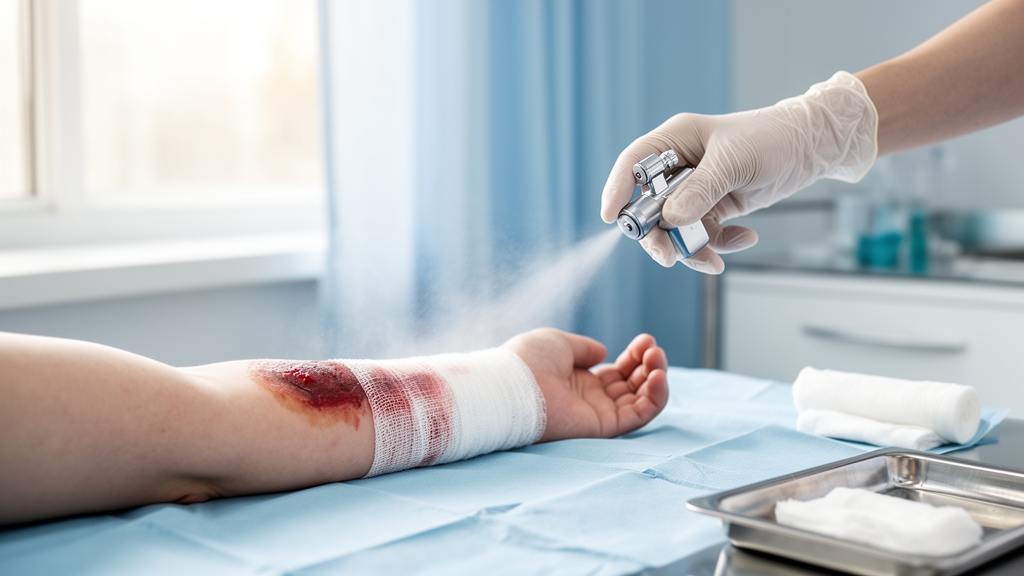
The phase IIIb trial was led by researchers at the First Affiliated Hospital of Shenzhen University and Shenzhen Second People’s Hospital and conducted across 23 centers in China. It enrolled 348 adults with mild infected burn wounds and randomized them in a 2:1 ratio, assigning 232 patients to receive a 2‰ PL-5 spray and 116 to receive an identical placebo spray. Treatment was applied once daily for 14 days, and the investigators tracked complete wound healing, bacterial clearance, overall clinical efficacy, safety, and any evidence of systemic drug absorption. The primary endpoint was complete wound healing on day 15, a deliberately early time point chosen to capture whether the spray could accelerate closure rather than merely prevent deterioration.
The results were striking. On day 15, complete wound healing was achieved in 64.3 percent of patients treated with PL-5, compared with 43.1 percent of those receiving placebo, a difference that was highly statistically significant with a P value of 0.0002. That translates into an absolute risk difference of 21.2 percentage points and a number needed to treat of just 5, meaning that for every five patients treated with the peptide spray, one additional patient achieved complete healing who would not have done so with placebo. By day 21, the healing advantage persisted, with 73.5 percent of the PL-5 group healed versus 56.9 percent of the placebo group, a difference that remained statistically significant at P = 0.0018. Interestingly, the day 8 assessment did not show a significant difference between the groups, suggesting that the peptide’s benefit on wound closure becomes most apparent in the second week of treatment as newly cleared infections allow tissue repair to proceed.
Bacterial control told an equally important story. On day 15, microbiological efficacy, a measure of whether the infecting organisms were successfully eradicated or reduced below clinically meaningful thresholds, reached 72.3 percent in the PL-5 group versus 50.5 percent with placebo, with a P value of 0.0001. Comprehensive efficacy, which integrates both clinical and microbiological outcomes, was 63.1 percent versus 41.9 percent, significant at P = 0.0003. Laboratory testing of isolates recovered from the wounds provided a mechanistic underpinning for these results. Minimum inhibitory concentration testing showed that PL-5 inhibited nine common wound pathogens at a geometric mean MIC of 9.110 micrograms per milliliter or lower, with MIC50 values ranging from 2 to 8 micrograms per milliliter and MIC90 values from 2 to 16 micrograms per milliliter. The spray demonstrated particularly strong activity against Staphylococcus epidermidis and Staphylococcus aureus, two of the most frequently recovered organisms from infected burn wounds, and the PL-5 group showed significantly better microbiological efficacy than placebo against both species.
What makes peceleganan scientifically interesting is its mechanism of action, which differs fundamentally from conventional antibiotics. PL-5 is a synthetic alpha-helical antimicrobial peptide composed of 26 amino acid residues, engineered specifically to target wound pathogens. Rather than binding to a single bacterial enzyme or ribosomal subunit, antimicrobial peptides disrupt microbial membranes through non-specific physicochemical interactions, inserting into lipid bilayers and creating defects that compromise cell integrity. Because this mode of attack does not depend on a single molecular target, the probability that bacteria can evolve resistance through a simple point mutation is substantially lower than it is for traditional antibiotics. This property is precisely what makes AMPs attractive in burn care, where dense polymicrobial biofilms and high bacterial loads create fertile ground for resistance to emerge under the selective pressure of repeated topical antibiotic use.
The safety and pharmacokinetic data from the trial were equally reassuring. Pharmacokinetic blood sampling found plasma concentrations of PL-5 below the lower limit of quantification in all tested samples, indicating that the peptide acts locally at the wound surface without entering systemic circulation. Adverse event rates were similar between the PL-5 and placebo groups, and there were no drug-related serious adverse events and no deaths during the study period. For a topical agent intended for daily application over two weeks, this profile matters enormously. Systemically absorbed topical agents can accumulate in patients with impaired renal or hepatic function, and broad-spectrum topical antibiotics are known to disrupt the skin microbiome and select for resistant organisms even when they never enter the bloodstream. A locally acting peptide that leaves the rest of the body untouched sidesteps many of these concerns.
The trial’s authors framed the results as a proof of concept that a topical antimicrobial peptide can accelerate wound closure without systemic exposure. They noted that PL-5’s membrane-disrupting mechanism may help address the mounting problem of antibiotic resistance, and that the day-15 healing advantage over placebo was clinically meaningful rather than merely statistically significant. They also emphasized that the low adverse-event rates and undetectable plasma concentrations support further evaluation of the peptide in broader wound-care settings. At the same time, the authors were careful to draw boundaries around their conclusions, stating that the results do not yet justify replacing standard care in all burn patients, but that they support PL-5 as a promising local option for mild infections.
That caution is warranted, and the trial’s limitations deserve close attention. The study focused exclusively on mild infected burn wounds covering no more than 10 percent of total body surface area, with test wounds between 25 and 100 square centimeters, in patients aged 18 to 65 with positive bacterial cultures. Patients with significant comorbidities were excluded, and follow-up extended only 15 days after the end of treatment. Whether PL-5 can deliver similar benefits in severe or extensive burns, in surgical wounds, in chronic non-healing ulcers, or in patients with diabetes and vascular disease remains unknown. Longer studies will also be needed to assess whether infections recur after treatment ends and whether any reduction in bacterial susceptibility to the peptide emerges over time. The authors indicate that future phase IV research will test broader patient populations, and for now PL-5 remains an investigational therapy whose place in standard burn care will depend on confirmatory studies and regulatory review.
Still, the broader context gives the findings weight. Burn wound infections remain a major global health burden, often requiring hospitalization and delaying tissue repair, and the overuse of topical antibiotics has been repeatedly linked to disruption of the skin microbiome and the selection of resistant strains. Earlier clinical work had already suggested that PL-5 outperformed silver sulfadiazine cream, the long-standing mainstay of burn wound care, but a rigorous placebo-controlled evaluation in infected burns had been lacking until this trial. By delivering a 21-percentage-point absolute improvement in complete healing, robust bacterial clearance against the most common wound pathogens, and an unblemished systemic safety profile, the study provides the kind of evidence that regulators and clinicians can act on.
If approved, PL-5 topical spray could offer a locally acting, antibiotic-sparing option for mild burn wound infections, potentially reducing reliance on systemic or broad-spectrum antibiotics in outpatient clinics and hospital wards where repeated dressing changes are routine. The prospect of a treatment that works through a resistance-resistant mechanism, at the site of infection and nowhere else, captures exactly the direction in which antimicrobial therapy needs to move. The trial was funded by Jiangsu Protelight Pharmaceutical & Biotechnology Co., Ltd., along with the Sanming Project of Medicine in Shenzhen, the National Key Research and Development Program, the Jiangsu Province Technology Transformation Special Fund Project, and the National Natural Science Foundation of China, and the authors declared no competing interests. As antimicrobial resistance continues to erode the effectiveness of the antibiotic arsenal, a 26-amino-acid peptide that heals infected burns with a daily spray may prove to be a small molecule with an outsized impact.
Subject of Research: A phase IIIb clinical trial evaluating the efficacy and safety of the topical antimicrobial peptide peceleganan (PL-5) spray for treating mild infected burn wounds.
Article Title: PL-5 spray improves healing in infected burn wounds, phase IIIb trial finds
Article References: PL-5 spray improves healing in infected burn wounds, phase IIIb trial finds. (n.d.). Original publication
Image Credits: AI Generated
DOI: Not provided
Keywords: PL-5, peceleganan, burn wound infections, antimicrobial peptides, phase IIIb trial, wound healing, antimicrobial resistance, topical spray, Staphylococcus aureus, Burns & Trauma, bacterial clearance, placebo-controlled trial
News Source: Ophelia Keating. (October 17, 2026). Antimicrobial Peptide Spray PL-5 Speeds Healing of Infected Burn Wounds in Late-Stage Trial. Scienmag.