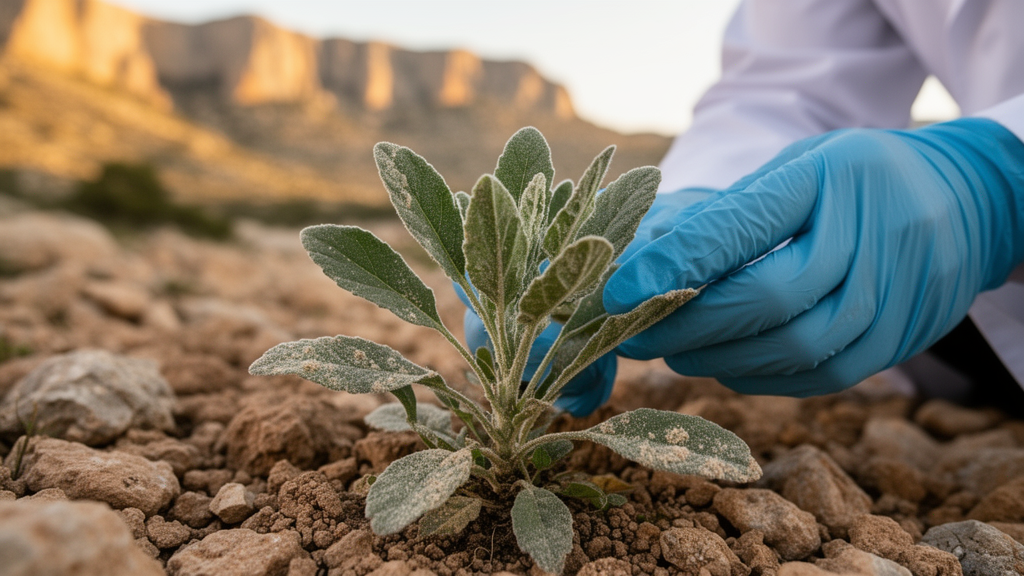
Deep in the arid zones of Andalusia, a microscopic fungus living quietly on the surface of an endemic plant has delivered a surprise that could ripple through the worlds of drug discovery and fungal taxonomy. Researchers investigating a fungal epiphyte isolated from dead leaves of Bupleurum gibraltaricum, a plant found only in southern Spain and Morocco, have discovered a brand-new molecule with striking cytotoxic activity against human cancer cells. The compound, named spectabilide A, belongs to a family of peptide-derived natural products known as cyclic lipodepsipeptides, and it displayed potent cytotoxicity across a panel of five human tumour cell lines, with its strongest effect against breast adenocarcinoma cells at an ED50 of just 0.11 micromolar. The findings, published in the journal IMA Fungus, also prompted an unexpected taxonomic revision, reclassifying the fungus from the genus Stanjemonium to Trichothecium as the new combination Trichothecium spectabile comb. nov.
The story began during a bioprospecting campaign in the arid areas of Andalusia, where plant-associated fungi remain largely undiscovered. The research team isolated the fungal strain CF-278320 directly from conidiophores developed on dead leaves of Bupleurum gibraltaricum collected at Embalse de Canales in Granada, Spain, in July 2011. What caught the researchers’ attention was the unusual origin of the isolate. While most known Stanjemonium strains had been obtained from soil sources, this fungus was living as an epiphyte on a plant surface, a lifestyle that hinted at a distinct evolutionary history and, potentially, a distinct biosynthetic repertoire. The strain was initially identified as Stanjemonium spectabile based on its morphological characteristics and ITS sequence analysis, which revealed a 100 percent similarity with the ex-type strain CBS 340.70T.
However, the phylogenetic picture soon became more complicated. Previous studies had suggested that CBS 340.70T forms a fully supported clade with species of Trichothecium, clearly separating from the Stanjemonium clade. To resolve this ambiguity, the researchers conducted comprehensive phylogenetic analyses using four genetic loci: ITS, LSU, rpb2 and tef-1α. Both Maximum Likelihood and Bayesian methods produced the same tree topology, confirming that the two strains of S. spectabile, along with the putative conspecific Aphanocladium spectabile NBRC 101148, cluster within the Trichothecium clade while other Stanjemonium species remain separated. The chemotaxonomic evidence reinforced this conclusion. The metabolic analysis revealed that both strains produce trichodepsipeptide B and guangomide B, characteristic compounds only described for members of the Trichothecium genus. Meanwhile, peptaibols, polypeptides typically produced by Trichoderma and Emericellopsis genera and known from other Stanjemonium species like S. grisellum, were completely absent in the examined strains. Based on this combined phylogenetic and chemotaxonomic evidence, the researchers proposed the new combination Trichothecium spectabile comb. nov., transferring the species from Stanjemonium to the more ancient generic epithet Trichothecium.
With the fungus’s identity clarified, the researchers turned to the central challenge of modern natural product discovery: activating the silent biosynthetic pathways that remain dormant under standard laboratory conditions. It is well established that most fungal biosynthetic pathways stay inactive in conventional cultures, requiring novel methods to stimulate this cryptic metabolism. The team employed the One Strain, Many Compounds (OSMAC) approach, a strategy that systematically changes cultivation parameters to force the microorganism to adapt and express genes activated only under precise environmental conditions. But rather than applying OSMAC blindly, the researchers first investigated the nutritional requirements of the strains using Biolog FF MicroPlates, 96-well panels containing different carbon and nitrogen sources whose consumption is measured colorimetrically through the reduction of the redox dye iodonitrotetrazolium violet. The substrate utilization profiles of the two strains differed from each other in terms of preferred substrates and metabolic activity, providing the necessary information to tailor a panel of fermentation media designed specifically for the OSMAC-based study.
The OSMAC experiment ultimately encompassed 78 fermentation conditions for each strain, combining 26 media formulations with three incubation times of 7, 14 and 21 days. Ten carbon sources, including sucrose, fructose, xylose, maltose, dextrin, glucose, D-sorbitol, D-cellobiose, N-acetyl-D-glucosamine and glycerol, were paired with five nitrogen-containing substrates: L-proline, succinic acid, L-glutamic acid, L-aspartic acid and L-serine. Some media contained complex substrates like oat, soy, wheat, corn flour, brown rice and V8 juice, while others relied on simple saccharides. The researchers also tested the addition of the epigenetic modifier SAHA, a histone deacetylase inhibitor that perturbs chromatin dynamics and can activate silent genes, as well as the adsorptive polymeric resin XAD-16, which captures metabolites and prevents their degradation or toxic effects on the producing cell. The combination of these variables expanded the chemical space of the fungus dramatically, revealing 29 putative compounds that were poorly produced or not produced at all under standard cultivation conditions.
Chemical dereplication, the process of identifying known molecules to avoid re-discovery, was carried out using Fundación MEDINA’s proprietary database and open-access tools. Most of the annotated compounds were mycotoxins, including trichodermol, trichoverrol A, verrol, myrothecine C, roridin A, verrucarin J, myrotoxin and verrucarin L-acetate, all belonging to the trichothecene family of fungal toxins produced by species of the genera Fusarium, Myrothecium, Spicellum, Stachybotrys, Cephalosporium, Trichoderma and Trichothecium. Other detected compounds, such as 8-α-acetoxyverrol, antibiotic TAN 1746, emerixanthone E and cerebroside B, are reported in the literature to have antifungal or antibacterial activity. The analysis also unveiled the presence of five compounds lacking putative annotations, four of which were only present in traces. However, the fifth unknown compound, with a predicted molecular formula of C28H48N4O7, showed relevant chromatographic and mass spectrometric peaks in 7 of the 20 selected fermentation conditions, immediately drawing the researchers’ attention.
To better visualize and interpret the dataset, the researchers generated a feature-based molecular network using the Global Natural Products Social Molecular Networking platform, converting LC-MS/MS data into mzXML format and creating a network where edges were filtered to have a cosine score above 0.7 and more than 6 matched peaks. The molecular network revealed the presence of several clusters, including those of the previously annotated toxins and that of the unknown compound. Moreover, the network analysis revealed two putative analogs of the unknown metabolite, with tentative molecular formulae of C28H46N4O6 and C28H47N3O8, produced in traces. These could correspond to a loss of water in the first case and the substitution of an amino group with a hydroxyl group in the second. The production titers of the unknown compound were highest in the solid-state medium BRFT, followed by FOF, MV8 and YEC media, and were generally higher for strain CF-278320 than for the CBS 340.70T holotype strain. The addition of SAHA slightly increased production in some media, while the XAD-16 resin increased it in others but strongly decreased it in YEC medium, demonstrating the complex interplay between cultivation variables and metabolite expression.
With the best-producing conditions identified, the researchers scaled up the cultures and purified the novel compound, designated spectabilide A, from a 1.5-litre culture in BRFT medium. The compound was extracted with acetone, partitioned with ethyl acetate, and purified through C-18 reversed-phase flash chromatography followed by repeated semi-preparative reversed-phase HPLC, yielding 3.5 milligrams of spectabilide A as an amorphous pale-white solid. Structural elucidation through 1D and 2D NMR spectroscopy revealed a molecule composed of three amino acids and a hydroxylated aliphatic side chain. The amino acid sequence was established as L-homoglutamine, β-alanine and dehydroalanine, with key HMBC correlations between the protons of homoglutamine and the carbonyl group of β-alanine, as well as between the protons of β-alanine and the carbonyl of dehydroalanine. An additional HMBC correlation between the proton at position 5 of the fatty acid moiety and the carbonyl of homoglutamine indicated the presence of an ester bridge linking these two structural units, consistent with the downfield chemical shift observed. A second ring closure between the nitrogen of dehydroalanine and the carbonyl group of the fatty acid was proposed to comply with the molecular formula derived from high-resolution mass spectrometry data.
The fatty acid component was identified as 3,5-dihydroxy-2,4-dimethyltetradecanoic acid based on COSY and HMBC correlations. The absolute configuration of the homoglutamine residue was determined as L through Marfey’s analysis, while the relative stereochemistry of the fatty acid moiety was tentatively proposed as 2R,3S,5S based on coupling constant analysis and NOESY correlations. Large coupling constants of 10.8 and 10.7 hertz for the pairs H-5/H-4a and H-3/H-4b indicated an antiperiplanar arrangement, and NOESY correlations between H-2, H-3 and H-4a located these three hydrogens on the same face of the molecule. J-based configurational analysis was applied to determine the relative configuration around the C-5/C-6 bond, with the pattern of values obtained in agreement with an anti configuration and consequently a 6R relative configuration. The structure of spectabilide A resembles that of fusaristatins, a group of metabolites produced by Fusarium species, which also belongs to the Hypocreales order. These compounds are typically biosynthesized by the combination of a non-ribosomal peptide synthetase, which constructs the amino acid moiety, and a polyketide synthase, which is involved in the fatty acid synthesis.
The bioactivity of spectabilide A was evaluated against five human cancer cell lines using MTT reduction colorimetric assays in a high-throughput 96-well-plate format, testing the compound in triplicate across 10-point dose-response curves with a starting concentration of 50 micromolar over 72 hours. The novel compound displayed potent cytotoxicity against all cell lines tested, with ED50 values of 0.28 micromolar for HepG2 hepatocellular carcinoma, 0.11 micromolar for MCF-7 breast adenocarcinoma, 0.23 micromolar for MIA PaCa-2 pancreas carcinoma, 0.13 micromolar for A2058 skin melanoma and 0.16 micromolar for A549 lung carcinoma. These values are considerably lower than those reported in the literature for fusaristatins A and B against lung cancer cells, which showed IC50 values of 23 and 7 micromolar respectively. The discovery of spectabilide A highlights the potential of underexplored fungal taxa and cultivation strategies for the discovery of novel bioactive scaffolds, and underscores the value of combining metabolomics, phylogeny and chemotaxonomy to uncover both new insights into fungal reclassification and new compounds with interesting biological activities. Further studies are needed to define the biosynthetic process behind the production of this novel cyclodepsipeptide, as well as to explore the unexpressed biosynthetic potential of Trichothecium spectabile strains, but the molecule’s potent cytotoxic profile suggests a pharmacological interest that extends well beyond the borders of Andalusia.
Subject of Research: Discovery of spectabilide A, a new cytotoxic cyclic lipodepsipeptide from Trichothecium spectabile comb. nov. (Ascomycota, Sordariomycetes) revealed by OSMAC-guided metabolomics
Article Title: Discovery of spectabilide A, a new cytotoxic cyclic lipodepsipeptide from Trichothecium spectabile comb. nov. ( Ascomycota , Sordariomycetes ) revealed by OSMAC-guided metabolomics
Article References: Pecin, G., Gonzalez-Menendez, V., Martin, J., Annang, F., Mackenzie, T. A., Reyes, F., & Genilloud, O. (2026). Discovery of spectabilide A, a new cytotoxic cyclic lipodepsipeptide from Trichothecium spectabile comb. nov. (Ascomycota, Sordariomycetes) revealed by OSMAC-guided metabolomics. IMA Fungus, 17, Article e192814. https://doi.org/10.3897/imafungus.17.192814
Image Credits: AI Generated
DOI: 10.3897/imafungus.17.192814
Keywords: natural products, mycology, drug discovery, OSMAC approach, cytotoxicity, fungal taxonomy, cyclic lipodepsipeptides, metabolomics, Discovery, spectabilide, cytotoxic, cyclic
News Source: Roger Howard. (October 17, 2026). Fungus hiding on a rare Spanish plant yields potent new anticancer molecule. Scienmag.