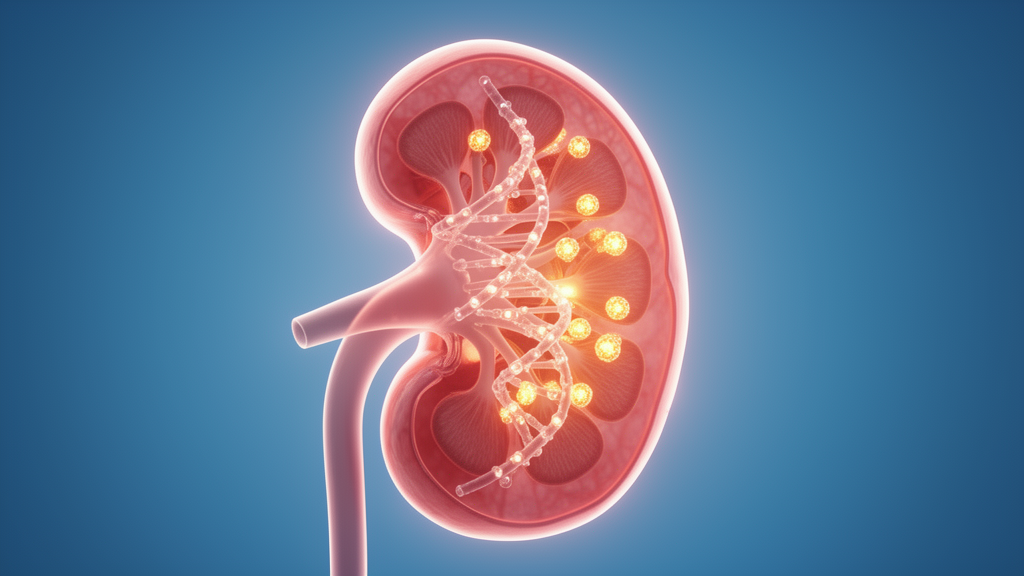
Nephrotic syndrome is one of the most common kidney disorders of childhood, and its defining features are as alarming as they sound: the kidneys leak protein into the urine, albumin levels in the blood collapse, and lipid concentrations soar. A new study from Zagazig University in Egypt now suggests that a child’s own antioxidant machinery may help determine who develops this metabolic storm. The research, published in Molecular Biology Reports, examined two well-known variants in the gene encoding paraoxonase-1, an enzyme that rides on HDL cholesterol particles and shields lipids from oxidative damage, and found that both the variants and the enzyme’s circulating levels are tied to the disease and its biochemical fingerprint.
Paraoxonase-1, usually abbreviated PON1, is a curious enzyme in the world of redox biology. It is produced mainly by the liver, secreted into the bloodstream, and then binds to HDL particles, where it hydrolyzes oxidized lipids that would otherwise propagate inflammation and atherosclerosis. In effect, PON1 acts as a molecular bodyguard for circulating fats. Two coding variants have attracted decades of attention: L55M, in which a leucine at position 55 can be replaced by methionine, and Q192R, in which a glutamine at position 192 can be swapped for arginine. Both variants alter the enzyme’s structure and, in turn, its behavior. The Q192R substitution is famous for changing how efficiently the enzyme hydrolyzes different substrates, while L55M has been linked to differences in the amount of PON1 that reaches the blood. Because nephrotic syndrome is characterized by proteinuria, hypoalbuminemia, and dyslipidemia, and because oxidative stress is increasingly recognized as a player in pediatric kidney disease, the Zagazig team asked whether these variants might shape susceptibility to the syndrome in Egyptian children.
The study was a case-control design involving 84 children aged four to twelve years. Half of the participants, 42 children, had nephrotic syndrome; the other 42 were healthy controls matched for age and sex. The researchers measured serum PON1 concentrations alongside a standard biochemical panel: total cholesterol, LDL cholesterol, HDL cholesterol, triglycerides, albumin, blood urea, and urinary albumin excretion. To determine each child’s genotype at the two PON1 variants, the team used a clever laboratory technique called tetra-primer amplification refractory mutation system polymerase chain reaction, or T-ARMS-PCR. This method uses four primers in a single reaction tube, two flanking primers and two allele-specific primers, so that the presence or absence of each variant can be read directly from the pattern of amplified DNA fragments. The approach is fast, inexpensive, and well suited to genotyping studies in resource-limited settings.
The biochemical results confirmed the expected metabolic chaos of nephrotic syndrome. Children with the disease had significantly higher total cholesterol, LDL cholesterol, triglycerides, blood urea, and urinary albumin excretion than controls, and significantly lower HDL cholesterol, albumin, and PON1 concentrations. Every one of these differences was highly significant, with p values below 0.001. The collapse of PON1 levels is particularly striking because it suggests that the disease strips away one of the body’s key antioxidant defenses precisely when lipid oxidation would be most damaging. This is consistent with a growing literature linking reduced PON1 activity to chronic kidney disease and to the accelerated vascular damage seen in patients with protein-losing kidney disorders.
When the researchers turned to genetics, the picture became more nuanced. At the L55M variant, the MM genotype, in which both copies of the gene carry the methionine variant, was far more common among children with nephrotic syndrome than among controls, appearing in 66.7 percent of cases versus 40.5 percent of controls. This difference translated into an odds ratio of 3.77 with a p value of 0.02, meaning that children carrying the MM genotype had nearly four times the odds of having the disease in this cohort. The MM genotype was also associated with a worse biochemical profile, suggesting that the variant does not merely track with the disease but may shape its metabolic severity.
At the Q192R variant, the R allele was associated with nephrotic syndrome, appearing in 61.9 percent of cases versus 42.9 percent of controls, with an odds ratio of 2.17 and a p value of 0.01. Under a recessive genetic model, in which the effect is considered only when both copies of the gene carry the R variant, the RR genotype showed an association with an odds ratio of 2.67 and a p value of 0.04. In other words, the R variant appears to raise disease risk, and the risk becomes more pronounced when both copies carry it. This kind of dose-response pattern is a classic signature in genetic association studies and lends weight to the idea that the Q192R variant is functionally relevant rather than a passive marker.
Perhaps the most intriguing finding is what happened when the researchers combined the two variants. Because the L55M and Q192R sites sit on the same gene, they are inherited together as haplotypes, specific combinations of variants passed down as a unit. Haplotype analysis suggested associations between the LQ haplotype and the MR haplotype and nephrotic syndrome. This kind of combined analysis is important because individual variants may not capture the full functional picture. The two sites can interact, and the effect of one variant may depend on which variant is present at the other site. Haplotype-aware modeling is increasingly recognized as essential for understanding how genetic variation shapes gene function, and the Zagazig team’s approach reflects that shift in thinking.
The functional link between genotype and phenotype became even clearer when the researchers examined PON1 concentrations by genotype. Children carrying the MM genotype at L55M and the RR genotype at Q192R had the lowest PON1 concentrations in the cohort. This is a classic genotype-phenotype interaction: the variants do not merely correlate with disease, they also correlate with the level of the enzyme itself, and the enzyme level in turn correlates with the biochemical chaos of nephrotic syndrome. The MM and RR carriers, in effect, have a double disadvantage, a genetic profile associated with lower antioxidant capacity and a disease state that further depletes the enzyme.
The study’s conclusions point toward a role for PON1-mediated antioxidant pathways in the pathophysiology of nephrotic syndrome and in variation in oxidative stress responses among children. The authors suggest that PON1 genetic variation and reduced PON1 concentrations may contribute to the metabolic phenotype and susceptibility to the disease. This is consistent with a broader literature linking PON1 variation to metabolic syndrome, diabetic nephropathy, sickle cell disease, and rheumatoid arthritis, and with meta-analyses showing reduced PON1 activity in chronic kidney disease. The Zagazig findings add a pediatric and population-specific dimension to this picture, suggesting that the same antioxidant gene that shapes vascular risk in adults may also shape kidney disease risk in children.
For clinicians and researchers, the study raises several questions worth pursuing. If PON1 variants and levels track with disease susceptibility and severity, could they serve as biomarkers for identifying children at higher risk? Could interventions that boost PON1 activity, such as dietary polyphenols or exercise, offer a way to modulate oxidative stress in affected children? And could haplotype-based genotyping, rather than single-variant analysis, improve risk prediction in clinical settings? The Zagazig team’s work does not answer these questions, but it provides a foundation for asking them. In a field where oxidative stress is increasingly recognized as a driver of pediatric kidney disease, the finding that a single antioxidant gene and its circulating product are tied to both disease and its metabolic fingerprint is a compelling piece of the puzzle.
Subject of Research: Genetics
Article Title: Haplotype structure and functional genotype–phenotype interactions of PON1 (L55M/Q192R) variants in Egyptian children with nephrotic syndrome
Article References: Gohary, A. E., Shalaby, S. M., Bediar, H. M., & Sameh, H. (2026). Haplotype structure and functional genotype–phenotype interactions of PON1 (L55M/Q192R) variants in Egyptian children with nephrotic syndrome. Molecular Biology Reports, 53(1), Article 1757. https://doi.org/10.1007/s11033-026-12844-1
Image Credits: AI Generated
DOI: 10.1007/s11033-026-12844-1
Keywords: nephrotic syndrome, PON1, paraoxonase-1, genetics, oxidative stress, pediatrics, haplotype, Egypt, structure, functional, genotype, phenotype
News Source: Juliet Wilcox. (October 17, 2026). Antioxidant Gene Variants Linked to Kidney Disease in Egyptian Children. Scienmag.