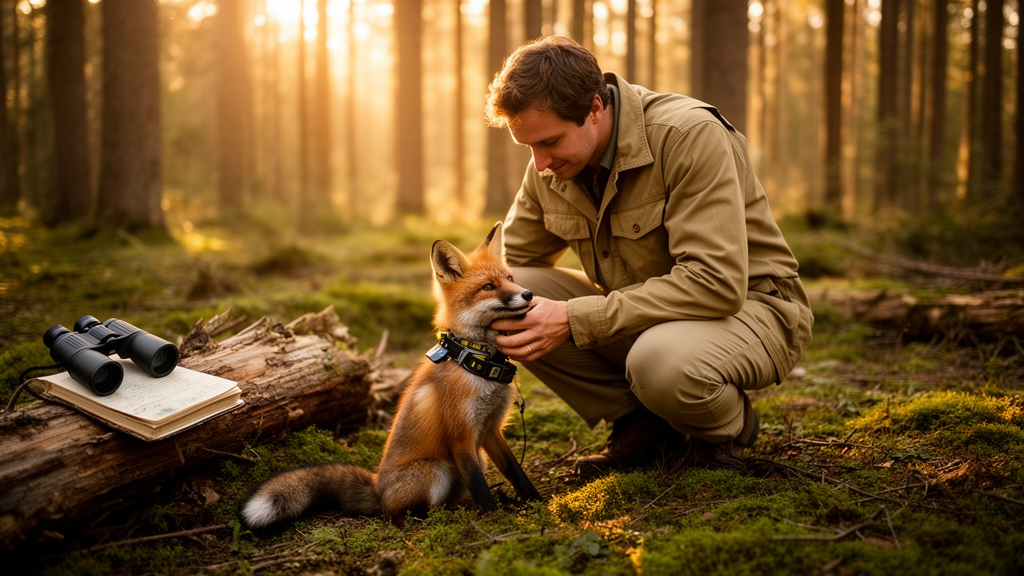
Ask a behavioural ecologist why they chose their study organism and you will rarely hear a purely rational answer. A sweeping new survey of 868 ethologists and behavioural ecologists, published in the journal Ecology and Evolution, has traced the roots of one of science’s most stubborn patterns — taxonomic bias — to a tangle of logistics, inheritance, and, above all, emotion. The findings suggest that the animals dominating research journals are there not because they are the easiest or most useful to study, but because scientists like them, and liking them makes scientists more likely to study them.
Taxonomic bias, sometimes called taxonomic chauvinism, describes the disproportionate research attention lavished on a few groups of organisms while the vast majority of life remains in scientific darkness. Birds and mammals make up less than one percent of animal biodiversity, yet they dominate conservation funding and research output across most subfields of ecology and evolution. The problem extends down to fine taxonomic scales: within entire clades, a handful of genera and species soak up most of the attention. The classic fruit fly Drosophila melanogaster, the lab rat Rattus norvegicus, and the great tit Parus major were each named by more than a dozen participants in the new survey as organisms they had recently worked with, and fewer than two-thirds of all responses represented unique species.
The research team, led by Pietro Pollo and Michael Kasumovic of the University of New South Wales, hypothesised that the choice of study organisms is shaped by factors along three axes: reason, context, and emotion. Rational factors include logistic advantages, unique traits, and applied potential such as economic importance or conservation status. Contextual factors include a species’ reputation as a model organism and taxonomic inheritance from supervisors. Emotional factors include fondness, hobbies, and work-related preferences such as a love of fieldwork. Many of the predictions were preregistered before data collection, a research plan made prior to analysis that strengthens the credibility of the findings.
To test the framework, the team distributed an online survey between May and August 2025, targeting researchers who had directly collected behavioural data from at least one non-human organism and published at least one research output as a result. The recruitment list contained 20,818 unique email addresses extracted from journals publishing ethological and behavioural research, and 946 researchers completed the survey. After careful screening — excluding 77 responses with failed attention checks, dubious veracity, contradictions, or duplication — 868 responses were retained for analysis. Participants were, on average, nearly 43 years old, roughly half identified as men, and about 90 percent held a PhD.
The statistical analysis was technically ambitious. The team fitted generalised linear models with negative binomial and Poisson error distributions to examine how many species and taxonomic groups participants had experienced. Cumulative linked mixed models, a form of ordinal regression, were used to analyse seven-point Likert-scale agreement with statements about the species participants most recently worked with, with genus and participant identity as random factors. Model selection relied on the Akaike Information Criterion corrected for small sample sizes, retaining models within two units of the lowest value. All analyses were conducted in R, with model assumptions verified using residual diagnostics.
The results overturned a common assumption. The most popular organisms — birds and mammals — were rarely perceived as easier to work with than other groups. With some exceptions, mammals were considered as difficult or more difficult to find, observe, rear, or buy than other taxa. Molluscs, which only about six percent of participants had worked with, were largely perceived as easy to study both in the field and in the laboratory. Logistic convenience, it turns out, may explain why certain genera are popular within taxonomic groups, but it does not explain why entire groups such as mammals dominate the field at higher taxonomic levels.
Contextual factors proved more powerful. Within taxonomic groups, the more frequently a genus was mentioned by distinct participants, the more it was perceived as a model organism, as possessing ideal traits, and as economically important. Participants’ perception that their most recent species was a model organism was strongly related to the impression that the behavioural literature on it was extensive, with a Spearman correlation of 0.643, and moderately related to how easy it was to buy, rear, and observe in the laboratory. Strikingly, many participants deemed species such as barn swallows and crab-eating macaques as model organisms even though they are not officially listed as such. The authors argue that the model organism label should be abolished in most spheres of ecology and evolution because it rewards species that have acquired an arbitrary status among researchers.
Taxonomic inheritance emerged as a major bottleneck. Most participants reported working, at multiple career stages, with species suggested by their supervisors, although this pattern weakened after researchers obtained permanent positions. Early-career researchers interact with few senior scientists who can act as mentors, and because few senior researchers work with neglected taxonomic groups, early-career scientists hoping to study such organisms are less likely to find supervisors who can support their interests. The authors recommend that institutions consider the diversity of taxonomic experiences of senior researchers when recruiting them, that senior researchers adopt a flexible approach supporting junior colleagues to engage with diverse taxa, and that funding organisations include criteria favouring neglected taxa in hiring and grant assessments.
Emotion, however, may be the deepest driver of all. Participants declared more favourable perceptions of taxa they had experienced than of other taxa, and the most popular groups — birds and mammals — overwhelmingly elicited positive feelings even from researchers who had never worked with them. The relationship between fondness and experience appears reciprocal: appreciation of a taxonomic group increases the likelihood of working with it, while experience with it enhances appreciation. This self-reinforcing cycle means that familiarity generates affinity, so taxonomic bias may be self-perpetuating as researchers gravitate towards organisms they already like and become even more attached to them, while unfamiliar taxa remain avoided. The pattern echoes societal values in which vertebrates are generally better perceived than invertebrates, perceptions formed in childhood and reinforced by media and textbooks.
The consequences reach far beyond academic curiosity. Insects were perceived as economically important as mammals, yet invertebrates are under severe threat, underrepresented in biodiversity databases, and their conservation remains underfunded. The authors describe this as a taxonomic bias vortex, in which lack of data generates the impression that no problem exists, leading to even less attention. Meta-analyses of animal behaviour that underrepresent invertebrates risk improper generalisations, curbing the power of studies attempting to draw broad conclusions about nature. The authors advocate for a more taxonomically equitable education beginning as early as childcare, outreach programs promoting appreciation of neglected groups, and the use of citizen science data and recent tracking technologies to facilitate research with different species. If ecology and evolution are to develop truly generalisable theories, the field must look beyond the animals it already loves.
Subject of Research: Ecology and Evolution
Article Title: Drivers of Taxonomic Bias in Ecology and Evolution: Insights From Ethologists and Behavioural Ecologists
Article References: Pollo, P., & Kasumovic, M. M. (2026). Drivers of Taxonomic Bias in Ecology and Evolution: Insights From Ethologists and Behavioural Ecologists. Ecology and Evolution, 16(10), Article e74460. https://doi.org/10.1002/ece3.74460
Image Credits: AI Generated
DOI: 10.1002/ece3.74460
Keywords: taxonomic bias, behavioural ecology, ethology, model organisms, biodiversity, conservation, research methods, invertebrates, Drivers, Taxonomic, Bias, Ecology
News Source: Margaret Porter. (October 17, 2026). Why Ecologists Fall in Love With the Animals They Study. Scienmag.