Photosynthesis is often described as a plant eating light, but the full recipe is richer than that. According to a new mini review published in Frontiers in Photobiology, plants also eat a suite of essential nutrient elements along with that light, and without them the entire process stalls. Dmitry Shevela of Umeå University in Sweden and Arthur Nonomura of Northern Arizona University in the United States argue that mineral nutrition is not a side concern for photosynthesis but is woven directly into its molecular machinery, from the pigments that catch sunlight to the enzymes that fix carbon dioxide into sugars. Their synthesis maps where each essential element acts within the photosynthetic apparatus, and it arrives at a striking conclusion: managing minerals in the field is one of the most direct levers for modulating photosynthesis itself.
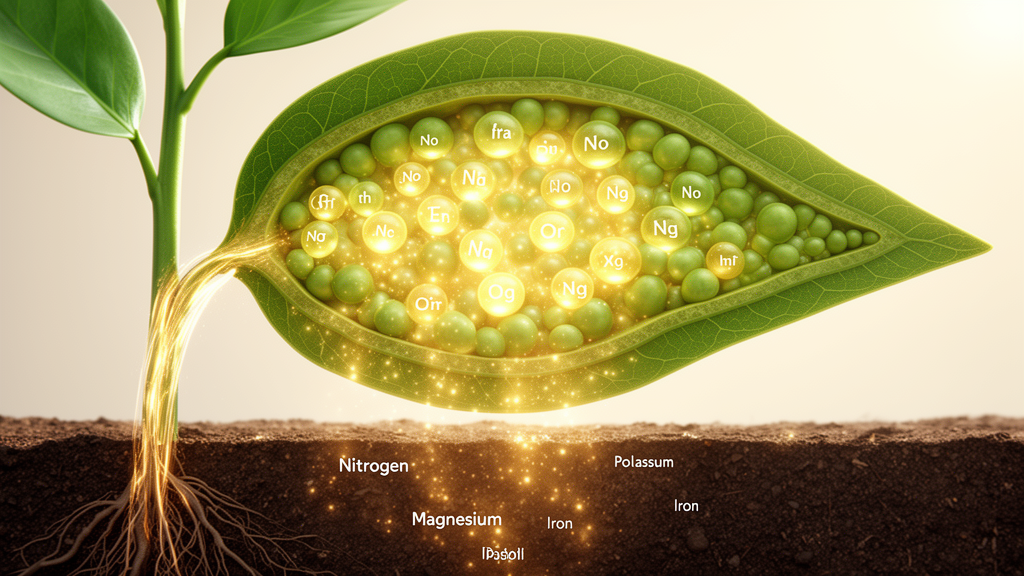
The review begins with a principle that has governed plant nutrition for decades. Essentiality means that the absence of even one essential plant nutrient element renders growth or reproduction impossible. By convention, the essentials for plant nutrition include carbon, hydrogen, oxygen, nitrogen, phosphorus, potassium, calcium, magnesium, sulfur, iron, zinc, manganese, copper, boron, chlorine, molybdenum, nickel, and, to the extent that it is accepted as an essential mineral element, cobalt. On a dry-weight basis, the elements derived from air and water, namely carbon, hydrogen and oxygen, account for roughly 94 to 96 percent of plant biomass. The primary macronutrients make up about 2 to 3.5 percent, the secondary macronutrients about 0.5 to 1.5 percent, and the micronutrients less than 0.1 percent of dry mass. Despite their small share, the authors emphasize, these elements sustain light harvesting, water oxidation, electron transport, ATP and NADPH production, the carbon reactions, and the integration of photosynthesis with the metabolism of the whole plant.
To understand why, it helps to revisit the architecture of photosynthesis. Two pigment-protein systems embedded in the thylakoid membrane of the chloroplast, Photosystem I and Photosystem II, mediate light absorption, excitation energy transfer, primary photochemistry, electron transfer, the oxidation of water, and the reduction of NADP+ to NADPH. In addition to electron transfer, several membrane complexes release protons into the thylakoid lumen, generating a proton gradient that is exploited by ATP synthase to produce ATP. The NADPH and ATP are then used to convert carbon dioxide into carbohydrates via the C3 and C4 pathways, packing energy into sugar bonds. Each of these steps depends on specific elements. Magnesium sits at the center of every chlorophyll molecule, both in the antenna complexes that harvest sunlight and in the reaction-center chlorophylls of Photosystems I and II that drive electron transfer from water to NADP+. Manganese and calcium form the Mn4CaO5 cluster of Photosystem II, the site of water splitting and oxygen evolution. Iron and sulfur together build the iron-sulfur clusters of the cytochrome b6f complex, Photosystem I and ferredoxin, while copper is the redox cofactor of plastocyanin, the mobile carrier that transfers electrons from the cytochrome b6f complex to Photosystem I.
The air- and water-derived elements play roles that go beyond serving as the molecular framework of substrates and products. Carbon is the backbone of all organic molecules, and in plants it is primarily acquired from atmospheric carbon dioxide, which diffuses into leaves through stomata and serves as the inorganic carbon source for the Calvin-Benson-Bassham cycle. But the bicarbonate ion is also a critical cofactor of Photosystem II, regulating the photosynthetic electron transport chain. Hydrogen and oxygen make up the water that is split during water oxidation, the core of oxygenic photosynthesis because it generates molecular oxygen. Furthermore, the hydrogen ions released during water oxidation and other steps play essential roles in generating the pH gradient across the thylakoid membrane that leads to ATP production. The stoichiometry is demanding: the fixation of six carbon dioxide molecules via the Calvin-Benson-Bassham cycle, corresponding to the synthesis of one glucose equivalent, requires 18 ATP and 12 NADPH molecules, while the oxidation of two water molecules at Photosystem II supplies four electrons that drive the formation of two NADPH molecules and a proton-motive force sufficient to synthesize up to three ATP molecules.
Nitrogen occupies a special place among the macronutrients because its influence on photosynthesis does not saturate the way most mineral nutrients do. Leaf nitrogen content shows an approximately proportional relationship with photosynthetic capacity across a wide physiological range, a relationship that arises because a large fraction of nitrogen is invested directly in the photosynthetic apparatus within the leaf, particularly in rubisco and the thylakoid proteins of the electron transport chain. The capacity for electron transport in the chloroplast is directly proportional to cytochrome f content, and nitrogen assimilation is integral to carbon assimilation. Nitrogen is a constituent of amino acids, proteins, chlorophyll, nucleic acids, NADPH and ATP, and it is a building block of the enzymes of the Calvin-Benson-Bassham cycle. Nitrogen use and allocation differ substantially between C3 and C4 plants, a distinction with consequences for how crops respond to fertilization under different climates.
Phosphorus and potassium complete the primary macronutrient picture with distinct technical roles. Phosphorus is a constituent of inorganic phosphate and of the key energy-transfer molecules NADP, NADPH, ADP and ATP, and it is embedded in the thylakoid membrane as phospholipids. Under phosphorus deficiency, the photosynthetic electron transport chain is disrupted, ATP synthase activity is restricted, and carbon dioxide fixation is reduced, linking phosphorus to both the light reactions and the carbon reactions. Potassium, meanwhile, is involved in transmembrane transport and enzyme activation. Ion transporters and potassium channels are integrated into the thylakoid, where a potassium channel activates plastoquinone and a potassium/hydrogen antiporter stimulates electron transport. Energy conversion may be affected by modulation of acidification through thylakoid and lumen potassium and chloride channeling. Potassium also facilitates carbon dioxide diffusion into chloroplasts and is involved in the transport of photosynthates throughout the plant.
The secondary macronutrients and micronutrients reveal how tightly the light and carbon reactions are coupled through metal chemistry. Calcium is part of the Mn4CaO5 cluster required for water oxidation and oxygen evolution, and it is implicated, by still unknown mechanisms, in the regulation of electron transfer and carbon reaction proteins. Magnesium is required for key Calvin-Benson-Bassham cycle enzymes and for rubisco activation, and all reactions involving ATP require magnesium ions. Sulfur is associated with iron in the Rieske iron-sulfur protein of the cytochrome b6f complex and is part of several Photosystem I components and ferredoxin, and it is a component of methionine and cysteine, two amino acids central to photosynthetic protein complexes. Zinc is a cofactor of the copper/zinc superoxide dismutase and carbonic anhydrase, contributing to carbon metabolism. Boron is required for the regulation of carbohydrate metabolism in the carbon reactions. Molybdenum is present in four metalloenzymes that catalyze redox reactions in plants, particularly those involved in nitrogen assimilation, and it improves chloroplast configuration and increases chlorophyll content. Chlorine, in the form of chloride ions, is required for Photosystem II activity and is involved in the regulation of proton transfer during water oxidation, acting as an essential micronutrient for Photosystem II photoassembly and photosynthetic oxygen evolution. Nickel and cobalt play indirect roles, mainly as cofactors of the nickel/cobalt transporter-permease NiCo-PIC1, which transports ferrous iron through the inner membrane of the chloroplast, and cobalt is a chaperone of copper in the copper/zinc superoxide dismutase.
The authors also stress that elements work as teams within protein complexes, and that these team relationships are equally essential. Iron and sulfur partner in a Rieske protein. Calcium and manganese partner in the Mn4CaO5 cluster and again in lectins. Cobalt, zinc and copper cooperate in the copper/zinc superoxide dismutase. Iron, nickel and cobalt cooperate in NiCo-PIC1. Metal transporter families, including ABC, CAX, CCX, CDF/MTP, ECA, HMA, NRAMP, OPT, VIT and ZIP, enable the uptake and movement of these nutrients, and transporters coordinate the interplay of compounds, metals and metalloids that regulate the acquisition, distribution and efficient utilization of essential plant nutrients. Close to a third of all known enzymes are associated with the metal elements calcium, magnesium, iron, manganese, zinc, copper, nickel and cobalt, and these elements are required for the activity of their respective metalloenzymes. The activity of cobalt in chloroplast functions, the authors note, supports its classification as an essential element, and like nickel its optimal foliar dose may be in the nanomolar range.
Signaling and crosstalk emerge as the connective tissue that directs the metabolic pathways of photosynthates such as sugars. Recent work summarized in the review shows that signaling between nitrogen, phosphorus, sulfur, zinc and iron may involve complex crosstalk processes in response to nutrient deficiency, and that dynamic nutrient signaling networks connect sugar, nitrate and phosphate in controlling molecular pathways. Carbon and nitrogen assimilation are integrated processes, and co-application of elevated carbon dioxide with nitrogen promotes the synthesis of nitrogenous products key to growth, while molybdenum plays key roles in nitrogen assimilation. Several enzymes in the path of carbon are activated by the reduction of disulfide bonds on conversion, in light, of ferredoxin reduced in Photosystem I to a thiol signal, meaning that the light and carbon reactions employ sulfur to transmit signals in the process of photosynthesis. Deficiencies of secondary fertilizers such as calcium, magnesium and sulfur in lateritic and leached acid soils are growing concerns for farm production precisely because these minerals are vital to photosynthesis. Where a deficiency of any element is diagnosed, supplementation by foliar applications is recommended, and because the light reactions of photosynthesis are measured in picoseconds, nutrients cannot be drawn up from roots in the soil to the shoot with such rapidity, making foliar placement at the site of the photosynthetic processes potentially important.
The review closes with a forward-looking argument for agriculture and for the transfer of photosynthesis-related technologies to the field. When treating crops with plant growth regulators, nitrogen input plays integral roles in carbon partitioning, and co-application of essential plant nutrient elements with regulators such as methyl-alpha-D-mannopyranoside, a plant growth regulator for photosynthesis, were found to enhance yields as compared to nutrient controls, with a recognized role for manganese and calcium in the lectin cycle. Lectins have roles in the carbon reactions of photosynthesis, the sugar code and cell signaling, and ongoing studies of the plant lectome may lead the field toward glycomimetics, molecules that emulate the structure and function of natural glycans, which the authors suggest could improve the efficiency of photosynthesis. The authors recommend further investigations, especially for cultivated plants, by means of biocuration and genetic tools including transcriptomics, metabolomics, proteomics, genomics, epigenomics, ionomics and lipidomics, seeking information about the specificity of metalloenzymes to corresponding organelles such as chloroplasts, peroxisomes and vacuoles. They also point to silicon as a beneficial mineral whose interactions with photorespiration and with essential and beneficial elements may indicate a critical role. For now, the message is clear: photosynthesis depends on the presence of essential mineral elements at their sites of action, for the most part in the leaves and green stems of crop plants, and securing their sufficiency is inseparable from securing the energy transformation on which all green plants, and the food systems built upon them, ultimately rely.
Subject of Research: The roles of essential nutrient elements in the light and carbon reactions of photosynthesis
Article Title: The essential nutrient elements in photosynthesis
Article References: Shevela, D., & Nonomura, A. (2026). The essential nutrient elements in photosynthesis. Frontiers in Photobiology, 4, Article 1817712. https://doi.org/10.3389/fphbi.2026.1817712
Image Credits: AI Generated
DOI: 10.3389/fphbi.2026.1817712
Keywords: photosynthesis, essential nutrients, mineral nutrition, chloroplast, Photosystem II, Photosystem I, macronutrients, micronutrients, metalloproteins, electron transport, crop productivity, plant signaling
News Source: Drew Townsend. (October 17, 2026). The essential nutrient elements in photosynthesis. Scienmag.