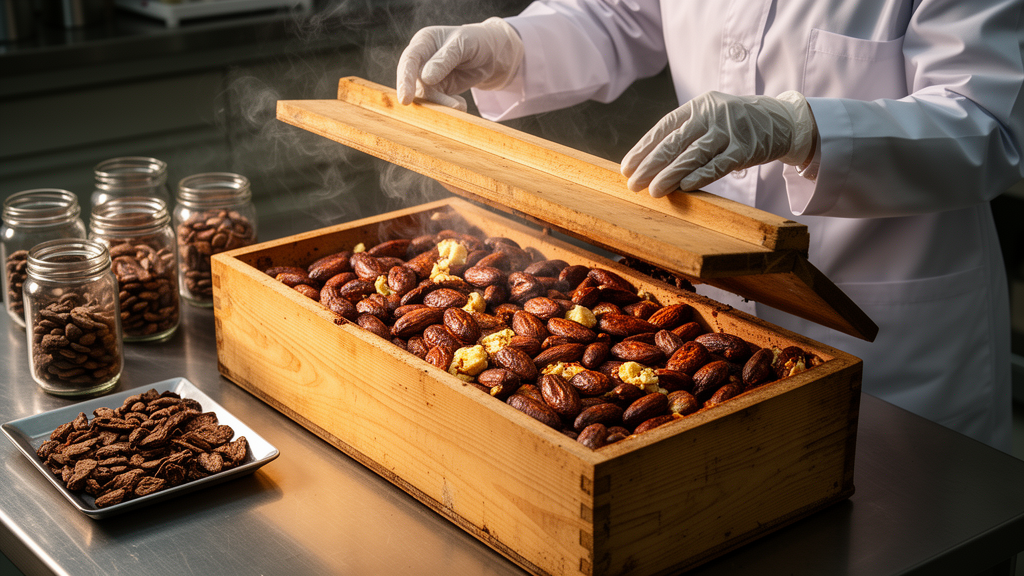
Cocoa has been a global obsession for more than five centuries, ever since Hernán Cortés presented samples of the fruit to King Charles of Spain in 1528. Today, the crop supports more than six million farmers across the tropics, and the market is projected to reach a value of 200 billion US dollars by 2028. Yet a new review published in the journal Heliyon argues that the chocolate industry has been systematically throwing away one of cocoa’s most valuable assets: a vast reservoir of bioactive compounds that could position the humble bean as a source of nutraceutical and pharmaceutical ingredients, not merely a precursor to confectionery.
The review, led by Daniela Burgos-Toro, David Portillo-Benavides, Mónica P. Cala, José Manuel Guillamón and Miguel Fernández-Niño, dissects the biochemistry of cocoa fermentation with unprecedented depth. The authors compiled and analyzed 370 peer-reviewed articles from five electronic databases, building a comprehensive dataset of bioactive compounds detected during spontaneous cocoa bean fermentations around the world. Their central claim is provocative: fermentation, the step that gives chocolate its flavor, is simultaneously the step that destroys many of the molecules most associated with health benefits, and it is time to redesign the process from the ground up.
The transformation of cocoa beans into chocolate begins when ripe pods are opened to reveal seeds surrounded by a sugar-rich pulp, an ideal culture medium for environmental microorganisms. Yeasts, lactic acid bacteria and acetic acid bacteria drive an ecological succession that produces ethanol, lactic acid and acetic acid in sequence, killing the bean embryo and releasing plant enzymes such as carboxypeptidases and aminopeptidases. These enzymes generate the peptides and reducing sugars that later become flavor precursors during roasting, when Maillard, caramelization and oxidation reactions create the nutty, fruity and caramel notes consumers expect. But the same microbial and enzymatic activity degrades flavonoids, methylxanthines, phenolic acids, vitamins and tannins, many of which are linked to astringency and bitterness and are therefore sacrificed for taste.
The numbers are striking. Polyphenols make up between 12 and 18 percent of the dry weight of unfermented cocoa beans, yet their concentration is reduced by 10- to 100-fold during fermentation. Flavanols such as catechin and epicatechin can decrease by up to 60 percent after 168 hours of fermentation, and by as much as 90 percent during subsequent drying. The enzymes polyphenol oxidase and peroxidase, released from the embryo during the first days of fermentation, accelerate this breakdown. Anthocyanins, the pigments responsible for the purple color of fresh beans, are hydrolyzed and oxidized to quinones, producing the characteristic brown color of fermented cocoa while eliminating molecules associated in epidemiological studies with reduced risk of cardiovascular disease, diabetes and cancer.
Not everything is lost, however. The review’s dataset reveals that fermentation is not simply a degradation process but an active modulator of the bioactive profile. Microbial metabolism releases polyphenols bound to plant structures through pectinolytic enzymes, synthesizes bioactive amines such as serotonin, tryptamine, tyramine and dopamine, and produces GABA, a neurotransmitter with reported antihypertensive and neuroprotective activities whose concentration actually increases during fermentation. Inoculation with Lactobacillus strains has been shown to boost GABA production significantly compared with spontaneous fermentations, through the action of glutamate decarboxylase, an enzyme characteristic of this group of lactic acid bacteria.
The authors also catalog an impressive array of compounds that persist through processing. Methylxanthines such as theobromine, caffeine, theophylline, xanthine and paraxanthine survive fermentation and roasting, contributing to the mild stimulant effects, vasodilation and bronchodilation associated with cocoa consumption. Some flavan-3-ols, notably epigallocatechin, remain after drying and roasting and reach the final consumer. More than 60 vicilin-derived peptides are produced during the first 24 hours of fermentation, and while most contribute to flavor, some have shown potential antidiabetic, antihypertensive and anti-Alzheimer activities in cell-based studies. The lipidome of fine-flavor cocoa, dominated by palmitic, oleic and stearic acids, remains stable throughout fermentation, and recent work coupling lipidomic analysis with machine learning has predicted bioactive potential for previously unannotated lipids.
To redesign fermentation rationally, the authors turn to the wine industry as a model, since both processes are non-sterile, multi-microbial fermentations in which bacteria and fungi interact to drive biochemical transformations. In winemaking, Saccharomyces and non-Saccharomyces yeasts produce tryptophol, 2-phenylethanol, tyrosol, melatonin, serotonin and hydroxytyrosol, a phenolic compound recognized by the European Food Safety Authority as a protector of blood lipids against oxidative damage. Sequential inoculation of S. cerevisiae with S. uvarum or S. eubayanus has been shown to increase tryptophan-derived molecules in wine, and mixed inocula of Saccharomyces and non-Saccharomyces yeasts produce significantly higher extracellular levels of melatonin than single fermentations. In cocoa, combining S. cerevisiae with Hanseniaspora thailandica increases ethyl acetate and acetate esters, while Pichia kudriavzevii improves color development and aromatic profiles, and Kluyveromyces marxianus enhances pectin degradation.
Beyond microbial consortia, precision fermentation is becoming a reality through engineering and computation. Companies are deploying large-capacity fermentation rooms with boxes exceeding 500 kilograms of beans, monitored for temperature, aeration and humidity. In Tumaco, Colombia, the ASPROCAT association introduced a fermenter-dryer prototype that reduced processing time by 66 percent while achieving a final pH of 4.67 and moisture content of 7.37 percent, meeting international storage standards. Ohmic heating technology has shortened the latency phase of starter microorganisms, and three-dimensional temperature monitoring now provides detailed views of thermal behavior within controlled fermenters. Mathematical models built with software such as MODDE Pro predict the effects of various factors on cocoa metabolomics, while kinetic models using the Levenberg-Marquardt optimization approach and genetic algorithms precisely identify how temperature affects cell growth and the production of ethanol and acetic acid. Machine learning combined with an electronic nose can even identify the fermentation degree and quality of beans in real time.
The review also highlights the untapped value of fermentation by-products. Cocoa honey, the liquid sweat drained during fermentation, yields approximately 100 to 150 liters per ton of beans and is rich in polyphenols, flavonoids, methylxanthines, vitamin C, organic acids and flavor precursors. Globally, 16 million tons of cocoa waste are produced annually, containing cellulose, phenolics, pectin and alkaloids extractable for functional foods, animal feed, biofuels and biopolymers. Producers have already begun creating ice cream, jellies, wines and vinegar from cocoa honey, and fermented liquors with alcohol content up to 14 percent have been produced using S. cerevisiae AWRI726. The authors argue that greener extraction alternatives, such as deep eutectic solvents and ionic liquids, could make these valorization strategies feasible for small-scale producers in remote regions, provided that low-cost purification methods replace expensive instrumentation like HPLC and GC chromatography.
The authors are careful to distinguish between evidence types, noting that many reported bioactivities, from the antioxidant and anti-inflammatory effects of vanillic and ferulic acids to the antineoplastic activities of butyric and heptadecanoic acids, have been demonstrated for isolated compounds in vitro or in animal models, often at doses unrelated to the trace concentrations found in cocoa products. Clinical validation in humans remains essential before any nutraceutical claims can be made. Nevertheless, the review establishes a conceptual framework that separates plant-derived bioactives naturally present in cocoa, microbial metabolites synthesized during fermentation, and compounds whose abundance or bioavailability is modified through microbial and enzymatic transformations. As systems biology, genome-scale metabolic modeling and multi-omics integration mature, the authors envision precision fermentation strategies that tailor bioactive preservation and recovery alongside flavor, transforming cocoa from a chocolate precursor into a versatile platform for functional ingredients, sustainable waste valorization and improved socio-economic outcomes for the farming communities at the heart of the industry.
Subject of Research: Cocoa fermentation bioactive compounds
Article Title: Beyond chocolate: Redesigning cocoa fermentation for enhanced recovery and modulation of bioactive compounds
Article References: Burgos-Toro, D., Portillo-Benavides, D., Cala, M. P., Guillamón, J. M., & Fernández-Niño, M. (2026). Beyond chocolate: Redesigning cocoa fermentation for enhanced recovery and modulation of bioactive compounds. Heliyon, 12(16), Article e45596. https://doi.org/10.1016/j.heliyon.2026.e45596
Image Credits: AI Generated
DOI: 10.1016/j.heliyon.2026.e45596
Keywords: cocoa, fermentation, bioactive compounds, polyphenols, methylxanthines, starter cultures, nutraceuticals, precision fermentation, food science, microbiome, Beyond, chocolate
News Source: Drew Townsend. (October 17, 2026). Scientists Redesign Cocoa Fermentation to Unlock Hidden Health Compounds Beyond Chocolate. Scienmag.