Radical cystectomy with urinary diversion is the standard treatment for muscle-invasive bladder cancer, yet patients often face substantial recovery challenges post-surgery. Previous research has identified common issues; however, the prevalence and predictors of these challenges remain underexplored. This study was aimed at assessing the frequency and nature of post-operative challenges experienced by bladder cancer patients and at identifying clinical and demographic factors associated with higher unmet needs.
Participants from three Kaiser Permanente regions who underwent cystectomy with either ileal conduit or neobladder diversion between 2013 and 2015 completed surveys at 6 and 18 months post-surgery. Items were derived from prior qualitative research and clinician input. Multivariable linear and negative binomial regressions were used to examine associations between surgery type and patient characteristics and challenges.
Among 269 respondents at 6 months and 201 at 18 months, 80% and 68% reported at least one challenge, respectively. Common issues included accidents/leaks, sleep disturbances, and managing necessary urinary diversion supplies. Patients with ileal conduits reported more body habitus-related challenges, which increased over time. At 18 months, younger age, male sex, and advanced AJCC stage were associated with a higher number of challenges. Surgery type and complications were not significantly associated with challenge burden.
Recovery from cystectomy and urinary diversion is marked by persistent challenges which vary by diversion type and patient characteristics. These findings highlight the extent to which challenges continue over time, and may help inform the development and future evaluation of tailored supportive interventions for bladder cancer survivors.
Radical cystectomy, the surgical removal of the bladder, remains one of the most demanding operations in urologic oncology. Because the bladder stores and expels urine, its removal requires the creation of a new pathway for urine to leave the body, a procedure known as urinary diversion. The two most common options are the ileal conduit, in which a short segment of intestine is used to channel urine to an opening on the abdominal wall where it drains into an external appliance, and the orthotopic neobladder, in which a reservoir constructed from bowel tissue is connected to the urethra so that patients can theoretically void in a more natural manner. Both approaches are effective at controlling the cancer, but each imposes a distinct set of physical, practical, and psychological demands on patients during the months and years that follow surgery.
Much of the existing literature on recovery after cystectomy has focused on objectively measurable outcomes such as surgical complications, hospital readmissions, and survival. Studies of readmission patterns, for example, have shown that a meaningful proportion of patients return to the hospital in the first weeks and months after the operation, and large multi-institutional analyses have compared ninety-day morbidity between the two diversion types. Health-related quality of life has also been examined, including in randomized trials comparing robotic-assisted with open surgical techniques. What has been less well characterized is the day-to-day experience of patients themselves: how often they encounter specific problems such as leakage, disturbed sleep, or difficulty obtaining supplies, and which patients are most likely to struggle. The new survey-based study addresses this gap by quantifying the prevalence of these challenges and identifying the characteristics associated with a heavier burden.
The study drew on the integrated health care delivery setting of Kaiser Permanente, recruiting patients from three geographic regions who had undergone cystectomy between 2013 and 2015. This kind of population-based approach has an important advantage over single-surgeon or single-center series, because it captures a broader cross-section of patients, including those who might not be treated at high-volume academic centers. Prior work comparing Kaiser Permanente members with the general population suggests that findings from such systems can be reasonably generalizable, although integrated delivery systems may differ somewhat from fragmented care environments in how supportive services are organized and delivered.
The survey instruments themselves were grounded in earlier qualitative work. The research team had previously conducted focus groups and interviews with patients recovering from cystectomy, and those conversations generated the concrete, patient-centered items that appear in the current questionnaires. This lineage matters, because challenges reported in surveys can otherwise reflect clinician assumptions rather than the issues patients actually consider most troublesome. By building the measurement tools from patient narratives and refining them with clinician input, the investigators aimed to capture recovery difficulties as patients experience them, from leaks and accidents around the diversion to sleep disruption and the logistical burden of managing supplies.
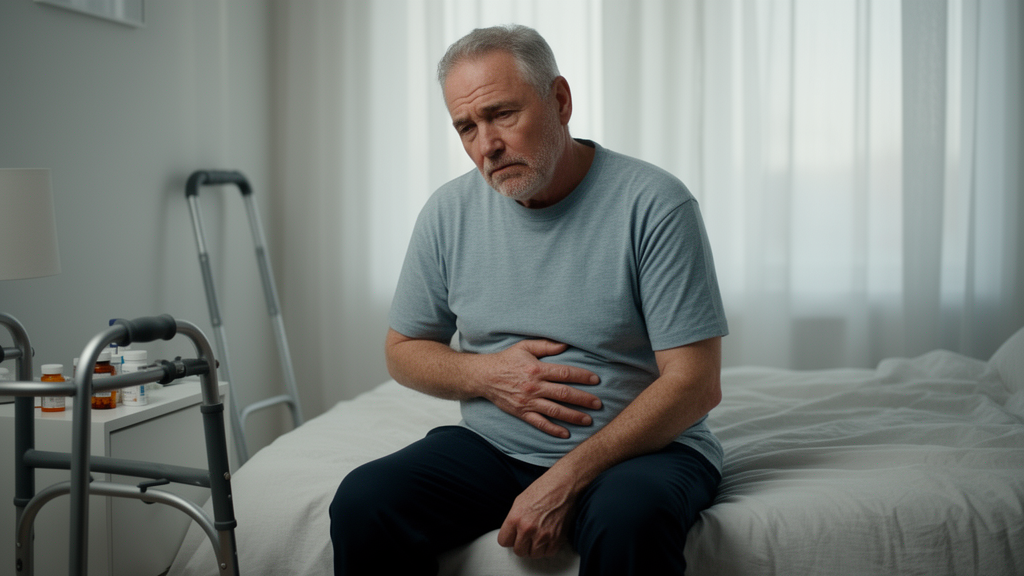
The headline finding is striking: four out of five patients reported at least one challenge six months after surgery, and more than two-thirds still reported challenges a full year and a half later. This persistence is clinically meaningful. It suggests that recovery after cystectomy is not a short-term process that resolves within the first few months, but rather an extended adaptation period during which patients continue to confront practical and physical obstacles. The most frequently reported problems, accidents and leaks, sleep disturbances, and supply management, are precisely the kinds of issues that may not surface during routine oncology follow-up visits, which tend to prioritize surveillance for cancer recurrence. Patients may also hesitate to raise such concerns, viewing them as embarrassing or as an expected price of survival.
The divergence between diversion types is one of the more nuanced results. Patients with ileal conduits reported more challenges related to body habitus, meaning concerns about the appearance and physical presence of the urostomy appliance on the abdomen, and these concerns grew rather than faded over time. This pattern may reflect the ongoing visibility of an external appliance in daily life, clothing choices, intimacy, and self-image. Notably, however, when the investigators examined the overall number of challenges, surgery type itself was not significantly associated with burden, nor were postoperative complications. This suggests that the total volume of difficulties patients face is shaped less by which diversion they received or by whether they experienced surgical complications, and more by who they are as individuals.
The demographic and clinical predictors identified at eighteen months deserve particular attention. Younger patients reported more challenges, a finding that may seem counterintuitive but is consistent with a broader literature on cancer survivorship in which younger age is often associated with greater disruption, possibly because younger patients have longer expected lifespans during which they must live with the diversion, higher expectations for physical function and social participation, and active work and family roles that make practical difficulties more consequential. Male sex was also associated with a higher number of challenges, and advanced American Joint Committee on Cancer stage predicted greater burden, plausibly reflecting more extensive disease, more aggressive treatment pathways, and possibly more complex surgeries.
These findings arrive amid growing recognition that bladder cancer survivors carry substantial unmet informational and supportive care needs. Systematic reviews have documented gaps in the support available to patients with muscle-invasive bladder cancer across the illness trajectory, and consensus efforts within the urologic community have emphasized improving the patient journey and quality of care. Prior studies have also examined how unmet needs vary by age, sex, and treatment choice, and how self-efficacy and quality of life can be bolstered through enhanced nursing care for patients living with a urostomy. Digital resources designed specifically for bladder cancer survivors and their caregivers represent one avenue for addressing informational needs at scale.
For clinicians, the practical implication is that supportive care after cystectomy should be planned as a longitudinal endeavor rather than a perioperative afterthought. The persistence of challenges at eighteen months argues for structured follow-up that extends well beyond the early recovery window, with attention to stoma and appliance issues, sleep, and the practical logistics of supply management. The identification of younger men with advanced-stage disease as a higher-burden group offers a starting point for risk stratification, allowing care teams to target education, ostomy nursing support, and peer connections toward patients most likely to need them.
For researchers, the study illustrates the value of measuring patient-reported challenges with instruments grounded in qualitative patient input, and of following patients long enough to observe how burdens evolve. The finding that body habitus concerns increased over time among ileal conduit patients suggests that some difficulties may emerge or intensify after the initial recovery period, underscoring the need for assessments at multiple time points. Future intervention studies can build on this foundation by testing whether tailored supportive programs, whether delivered through specialized nursing, digital tools, or peer support, reduce the prevalence and severity of these persistent challenges and improve the day-to-day lives of bladder cancer survivors.
Subject of Research: Recovery challenges and unmet supportive care needs after cystectomy and urinary diversion for bladder cancer
Article Title: Recovery after cystectomy and urinary diversion: patient experiences and challenges
Article References: Bulkley, J. E., O’Keeffe-Rosetti, M., Leo, M. C., Gilbert, S. M., Harrison, T. N., Kwan, M. L., Danforth, K. N., & McMullen, C. K. (2026). Recovery after cystectomy and urinary diversion: patient experiences and challenges. Supportive Care in Cancer, 34(11), Article 1113. https://doi.org/10.1007/s00520-026-11342-1
Image Credits: AI Generated
DOI: 10.1007/s00520-026-11342-1
Keywords: bladder cancer, cystectomy, urinary diversion, cancer survivorship, supportive care, quality of life, Recovery, urinary, diversion, patient, experiences, challenges
News Source: Nathaniel Bowman. (October 17, 2026). Eight in Ten Bladder Cancer Patients Still Struggle a Year and a Half After Major Surgery. Scienmag.