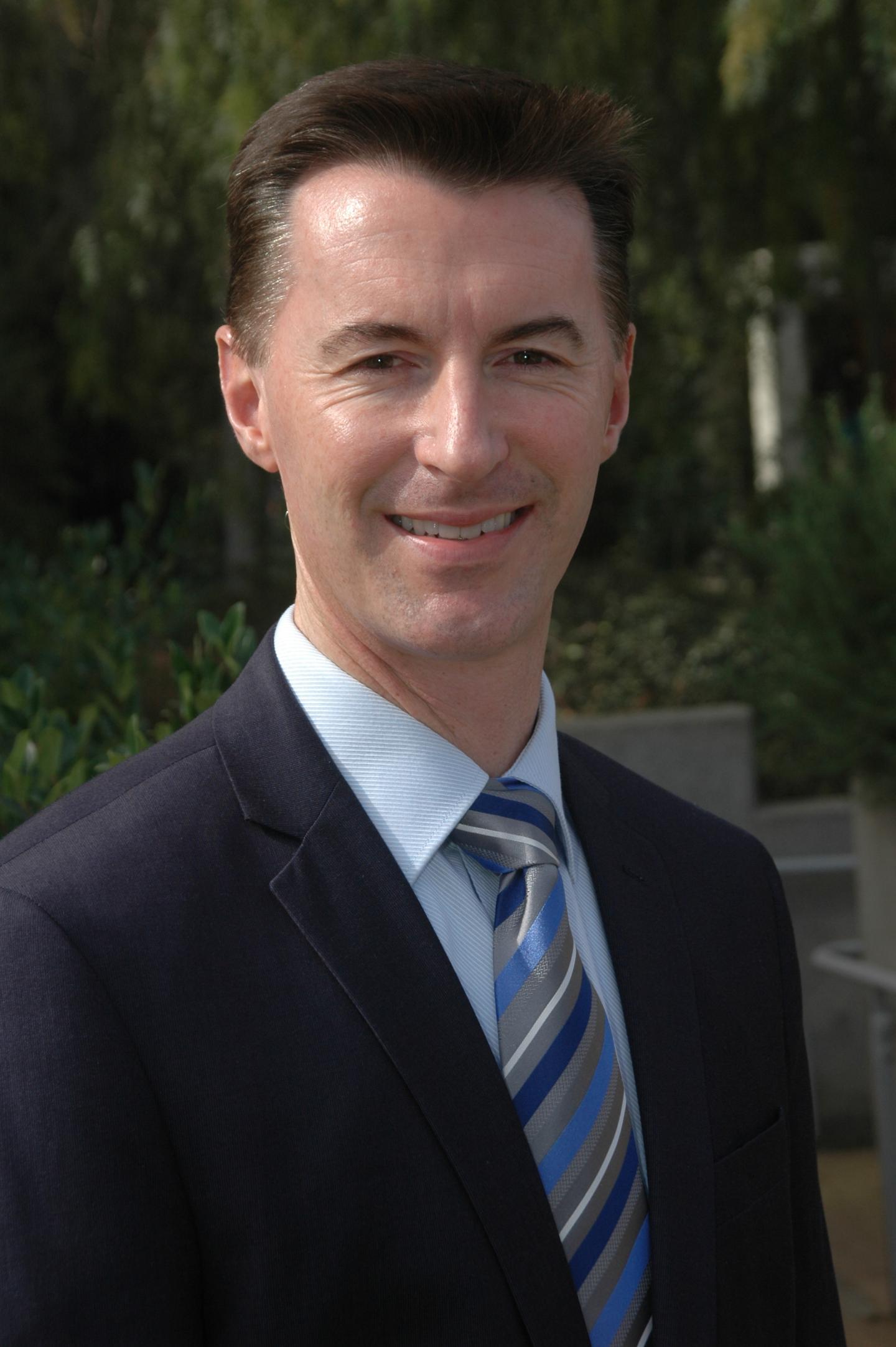
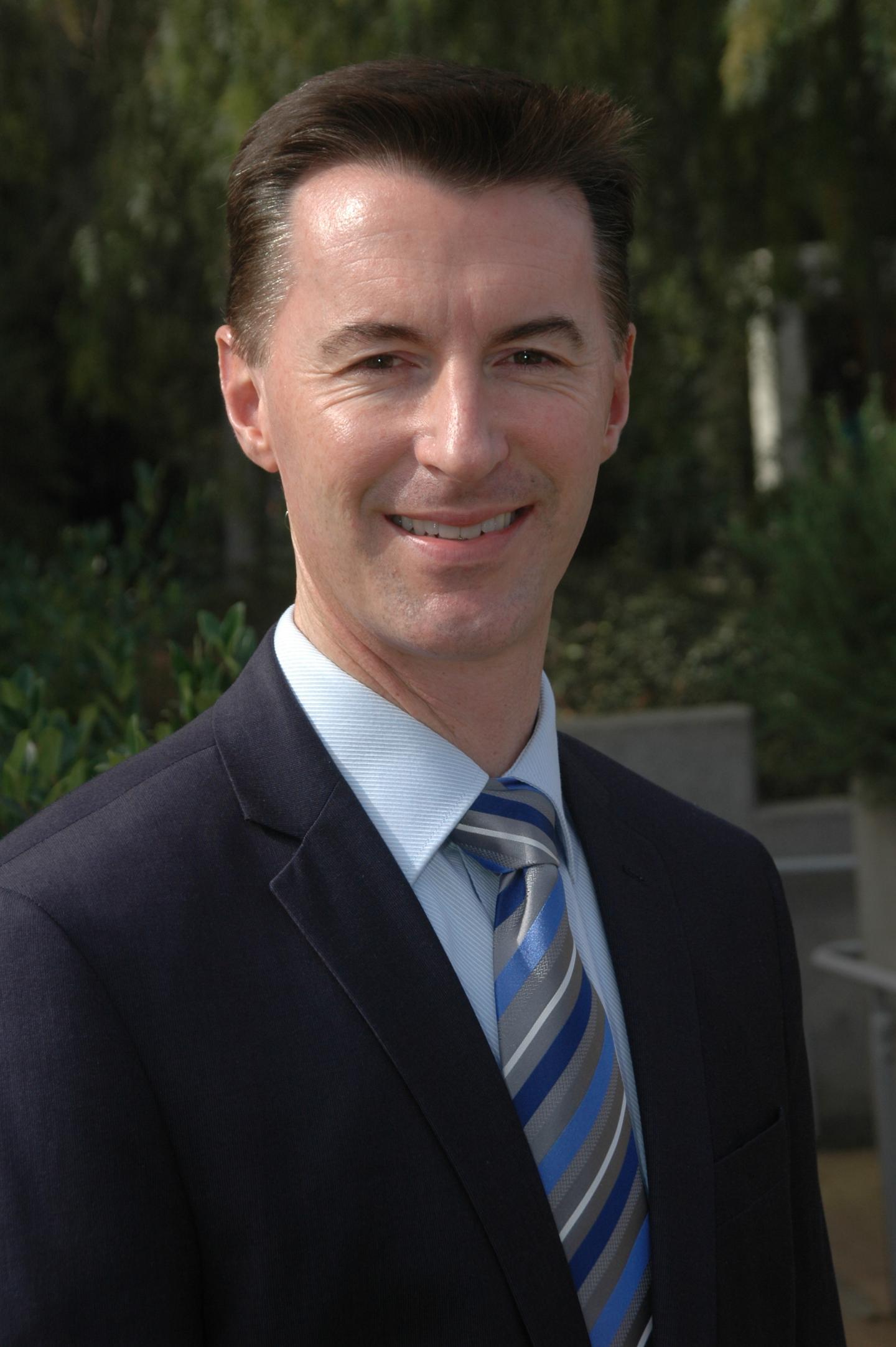
Credit: UC Riverside School of Medicine.
RIVERSIDE, Calif. – A biomedical scientist at the University of California, Riverside has received a $1.83 million grant to identify how the loss of a protective barrier in the intestine contributes to inflammatory bowel disease (IBD).
IBD is a chronic inflammatory disease of the intestine that includes Crohn's disease and ulcerative colitis. A protective protein that plays a key role in this disease is "T-cell protein tyrosine phosphatase" or TCPTP.
TCPTP protects the intestinal epithelial barrier function, which ensures bacteria in the gut do not pass into the rest of the body. TCPTP is encoded by a gene associated with IBD, as well as celiac disease and Type 1 diabetes. TCPTP activity is reduced in some patients with these diseases, meaning a compromised intestinal epithelial barrier function.
Declan McCole, Ph.D., an associate professor of biomedical sciences in the School of Medicine received the four-year grant from the National Institutes of Health to identify how loss of TCPTP activity contributes to barrier defects found in IBD, and to correct these defects.
"These defects result in increased intestinal permeability – a major contributor to chronic inflammatory diseases of the intestine such as IBD," McCole said. "Although TCPTP mutations increase the risk of developing IBD, there are no therapeutic strategies aimed at correcting the consequences of these mutations."
The grant will allow his lab to better understand how barrier function in intestinal epithelial cells is affected by reduced TCPTP activity. In such cells, the lab plans to identify novel molecular signaling pathways that are altered by TCPTP loss. Working with Yinsheng Wang, a professor of chemistry at UC Riverside, McCole's team will use molecular biology approaches to investigate barrier defects in TCPTP-deficient cells.
In addition, McCole's lab will attempt to correct intestinal barrier defects in TCPTP-deficient cells, and in cells harboring TCPTP mutations, by interrupting a key pathway, the Janus kinase (JAK) signaling pathway. These inhibitors are currently being tested in clinical trials on IBD patients.
"When TCPTP activity is compromised, errors occur in remodeling cell junctions – the structures that regulate barrier function," McCole said. "The goal of the study is to discover the mechanisms by which loss of TCPTP activity in patients contributes to intestinal barrier defects in IBD. In addition, we hope to identify if strategies to inhibit JAK signaling may prove particularly effective in patients with TCPTP genetic mutations."
McCole will be joined in the research at UCR by his lab members Moorthy Krishnan, an assistant project scientist, Ali Shawki, a postdoctoral research fellow, biomedical sciences graduate students Anica Sayoc and Stephanie King, as well as lab technician, Rocio Alvarez. Other collaborators involved in the project are Tijana Talisman of City of Hope, and Grant Butt, University of Otago, New Zealand.
The University of California, Riverside is a doctoral research university, a living laboratory for groundbreaking exploration of issues critical to Inland Southern California, the state and communities around the world. Reflecting California's diverse culture, UCR's enrollment is now nearly 23,000 students. The campus opened a medical school in 2013 and has reached the heart of the Coachella Valley by way of the UCR Palm Desert Center. The campus has an annual statewide economic impact of more than $1 billion.
###
Media Contact
Iqbal Pittalwala
[email protected]
951-827-6050
@UCRiverside
http://www.ucr.edu