Head and neck squamous cell carcinomas, or HNSCCs, remain among the most challenging cancers to catch early. These tumors arise from the mucosal lining of the oral cavity, pharynx, and larynx, and according to GLOBOCAN estimates, roughly 890,000 new cases were diagnosed in 2018 alone, leading to approximately 450,000 annual deaths. That accounts for 4.5% of all cancer mortality worldwide. Most patients are diagnosed at an advanced stage, and while HPV-positive cases can be prevented through vaccination, HPV-negative tumors, particularly those linked to smoking and alcohol, require aggressive multimodal treatment. Now, a team of researchers at Semmelweis University in Budapest has identified a molecular marker that may help flag which tumors are destined to behave badly.
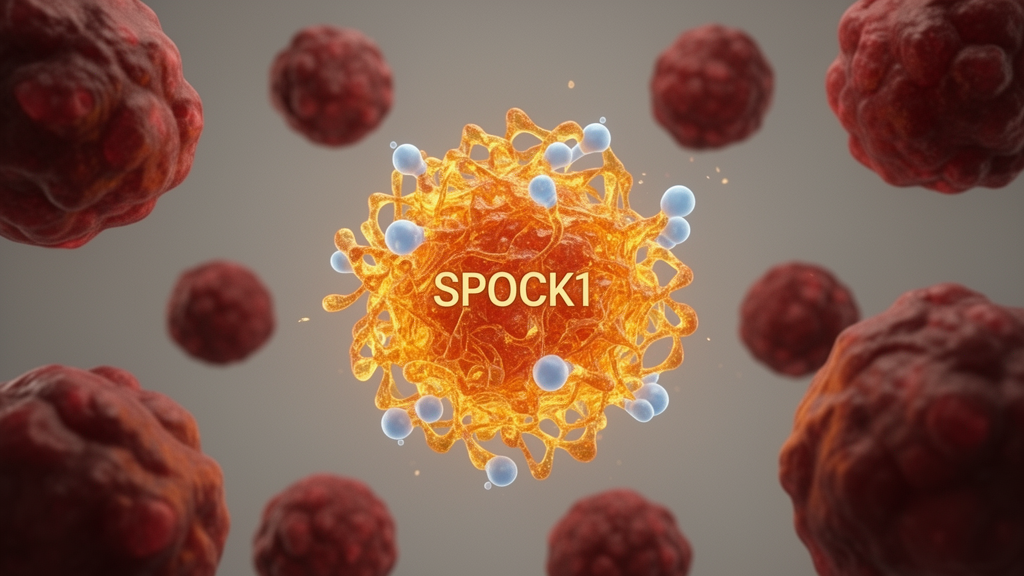
The marker in question is SPOCK1, also known as testican-1, a heparan sulfate and chondroitin sulfate proteoglycan first identified in human seminal plasma. SPOCK1 is an extracellular matrix protein with multiple functional domains, and when overexpressed in various cancers, it has been shown to promote cell cycle progression and tumor cell growth by upregulating the PI3K/AKT signaling pathway. It has also been implicated in elevated invasion and migration in gastric cancer, glioma, pancreatic cancer, and prostate cancer. Recent studies have highlighted its role in activating cell migration and matrix metalloproteinases, which can support epithelial-to-mesenchymal transition, or EMT, a process by which cancer cells gain motility and invasive properties.
The research group, led by Tibor Krenacs and Kornel Danos, had previously demonstrated in mouse, rat, and human liver models that SPOCK1 is upregulated during hepatocarcinogenesis, with high levels observed in hepatocellular carcinomas and cirrhotic liver. They also detected SPOCK1 upregulation in ovarian cancer in relation to poor disease outcome. In the oral cavity of transgenic mice, elevated SPOCK1 expression mediated EMT in a cyclosporin-A induced gingival overgrowth model, suggesting that SPOCK1 may influence the malignant transformation and progression of oral epithelial tissues. These observations prompted the team to investigate whether SPOCK1 could serve as a prognostic biomarker in HNSCC.
To test this hypothesis, the researchers employed a dual approach. First, they analyzed publicly available transcriptomic datasets of 500 HNSCC patients using the Kaplan-Meier Plotter open-source database management software. This in silico analysis revealed that SPOCK1 mRNA expression was markedly higher in oral carcinomas than in normal oral mucosa, with a log-rank p value of 5.76e-06. More importantly, elevated SPOCK1 expression was consistently associated with significantly reduced overall survival, with a hazard ratio of 1.57 and a log-rank p value of 0.001. The adverse prognostic role was particularly pronounced in tumors with high neoantigen levels, where the log-rank p value reached 0.00085, compared to tumors with low neoantigen levels, where the association was not statistically significant.
Second, the team conducted an in situ protein-level analysis on tissue samples from 97 HNSCC patients diagnosed and treated at Semmelweis University between 2012 and 2015. The cohort comprised 79 men and 18 women, with a mean age of 60.3 years. The most common anatomical location was oropharyngeal tumors, accounting for 37.1% of cases. The researchers created tissue microarrays using duplicate or triplicate cores of 2 mm diameter from representative tumor areas and performed standardized immunohistochemistry with a monoclonal mouse anti-SPOCK1 antibody. All slides were digitized using a Panoramic scan instrument equipped with a Carl Zeiss objective.
Protein expression was quantified using the H-Score system, which considers both staining intensity and the percentage of positive tumor cells. The researchers evaluated SPOCK1 expression through two independent methods: eye-control testing by three assessors and a machine-learning-based automated image analysis tool called DensitoQuant. The immunohistochemical reactions showed a characteristic granular peri- and paranuclear pattern, suggesting that SPOCK1 protein mainly localized to the Golgi region and mitochondria of tumor cells, with practically no stromal positivity. This localization is consistent with SPOCK1 being a secreted proteoglycan processed through the Golgi apparatus.
The results from both scoring approaches converged on the same conclusion. Cox regression analysis based on visual scoring demonstrated a significant association between SPOCK1 expression and overall survival, with a p value of 0.002 and a relative risk of 1.017. The log-rank test showed significant survival detriment when cases were dichotomized at the upper quartile of H-Scores, with a p value of 0.002. The machine-learning-based evaluation similarly confirmed the association, with Cox regression yielding a p value of 0.008 and the log-rank test a p value of 0.044. These findings align with the mRNA-level data and reinforce the role of SPOCK1 as a clinically relevant negative prognostic biomarker in HNSCC.
The mechanistic implications of SPOCK1 overexpression in HNSCC are speculative but grounded in pathways established in other cancers. In the majority of HNSCC cases, the PI3K-AKT pathway is activated, promoting proliferation, EMT, and tumor cell invasion. HNSCC progression has been linked to ongoing dedifferentiation toward a cancer stem cell state accompanied by partial or hybrid EMT, responsible for enhanced tumor cell migration and metastatic spreading. SPOCK1 expression has been linked to EMT support in several studies, and further evidence came from work showing that pre-miR-150 can downregulate SPOCK1 to reduce the aggressiveness of HNSCC cells. The development of an invasive EMT-prone phenotype in HNSCC can probably be mediated through the activation of TGF-β1, EGFR, and NOTCH signaling, as well as hypoxia-driven HIF-1α expression.
The clinical context of HNSCC treatment adds weight to these findings. While HPV-positive HNSCC can be prevented by vaccination, HPV-negative cases at advanced stage require multimodal radio- and chemotherapy besides surgery. Epidermal growth factor receptor-positive cases have been treated using radiotherapy combined with anti-EGFR antibodies such as cetuximab, though resistance frequently develops due to EGFR mutations. Immune checkpoint inhibitors like pembrolizumab and nivolumab have been approved in cisplatin-refractory recurrent or metastatic HNSCC. Beyond its potential prognostic role, SPOCK1 may be offered as a potential target for developing novel treatment options, particularly if reliably detected in the serum for liquid biopsy-based monitoring of residual tumors.
The researchers acknowledge the limitations of their study, including the moderate number of patients collected in a single department and the lack of complete HPV data for all cases, which prevented correlation of SPOCK1 expression with virus infection status. Whole-section versus tissue microarray validation to more accurately consider tumor heterogeneity, and validation of automated versus pathologist-read testing, might also be required. Nevertheless, the convergence of manual and algorithm-based approaches, combined with the consistency between mRNA and protein-level findings, suggests that SPOCK1 overexpression may specify a group of oral cancers with aggressive tumor biology. Further validation in larger, multicenter HNSCC cohorts accompanied by complete HPV, p16, smoking, and alcohol exposure data is needed before SPOCK1 can be reliably integrated into clinical decision-making for head and neck cancer patients.
Subject of Research: SPOCK1 overexpression suggests poor prognosis in head and neck squamous cell carcinomas
Article Title: SPOCK1 overexpression suggests poor prognosis in head and neck squamous cell carcinomas
Article References: Jakob, N. P., Majoros, M., Uri, I., Szakadati, H., Birtalan, E., Baghy, K., Kelemen, Z., Tamas, L., Danos, K., & Krenacs, T. (2026). SPOCK1 overexpression suggests poor prognosis in head and neck squamous cell carcinomas. Pathology & Oncology Research, 32, Article 1612448. https://doi.org/10.3389/pore.2026.1612448
Image Credits: AI Generated
DOI: 10.3389/pore.2026.1612448
Keywords: SPOCK1, head and neck squamous cell carcinoma, prognostic biomarker, immunohistochemistry, epithelial-to-mesenchymal transition, PI3K/AKT pathway, liquid biopsy, tissue microarray, DensitoQuant, Kaplan-Meier Plotter, HPV-negative HNSCC, overall survival
News Source: Nathaniel Bowman. (October 16, 2026). SPOCK1 protein emerges as a grim prognostic marker in head and neck cancers. Scienmag.