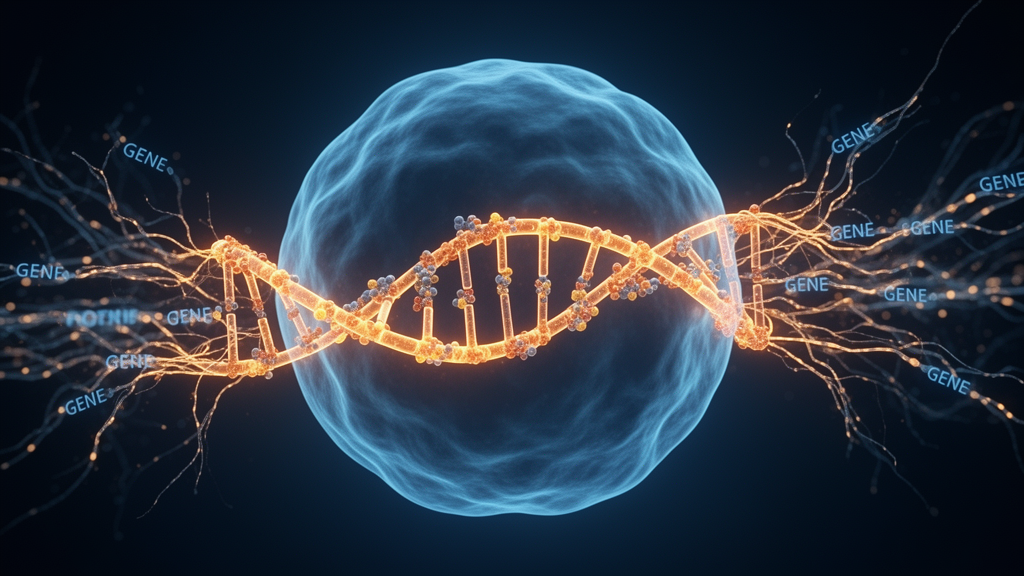
A bold theoretical framework published in Frontiers in Systems Biology proposes that the same higher-order regulatory architecture that keeps living systems coherent across millions of years of evolution is also the thing that fails, in characteristic and predictable ways, when chronic disease takes hold. The paper, the second part of a two-part series by independent researcher Andreas Nicolaides, lays out six falsifiable predictions that follow from what the author calls the CHORA Hypothesis, short for Common Higher-Order Regulatory Architecture. The claim is provocative: health and entrenched systemic disease are not opposites but alternative regimes of one and the same biological-coherence-sustaining architecture.
The hypothesis builds on a puzzle that standard frameworks of evolutionary biology and biomedicine have each engaged only through auxiliary additions. Evolutionary theory explains change through variation, inheritance, and selection, yet the deepest patterns in the record, such as the near-total conservation of certain regulatory circuits across animals with wildly different ecologies, the catastrophic rather than gradual failure of particular developmental systems, and the concentration of major evolutionary transitions at specific hierarchical levels, sit awkwardly with a purely gradient-selection account. Biomedicine faces a mirror-image problem: cancer, autoimmune disease, neurodegeneration, and age-related decline converge on shared signatures of regulatory dysfunction despite having entirely different proximate causes, a convergence that a component-level account of disease does not predict.
The CHORA Hypothesis answers both puzzles with a single move. It holds that a common, hierarchically structured regulatory architecture operates as an integrated level of organisation across cells, tissues, organisms, and generations, and that the germline is the principal conduit through which this architecture is propagated. Crucially, the same architectural features that sustain coherence also determine the modes of its failure. The new paper translates these four commitments into six predictions, each assessed against alternative accounts and against both postdictive evidence, which the hypothesis organises under one roof, and prospective evidence that future work could test.
The first prediction is perhaps the most striking: perturbations to architecturally central components should fail catastrophically rather than gradually. The evidence here is strong and convergent. In developmental biology, gene regulatory network kernels that stabilise body-plan organisation, such as the heart-specification kernel conserved across bilaterians, are wired with recursive positive feedback so that interference with any constituent gene produces developmental catastrophe, not a slightly compromised organism. In the germline, disruption of core piRNA-pathway components yields transposable-element derepression, DNA damage, and cascading collapse rather than mild decline. And in centromere maintenance, loss of the CENP-A protein produces chromosome mis-segregation with no graded intermediate, because centromere identity is a binary property of the chromatin region. A gradient-selection account would expect viable intermediates, since its trajectories require small, fitness-improving steps; their persistent absence across vast phylogenetic distances is what the architectural account predicts and what the standard framework must explain with added machinery.
The second prediction concerns where evolutionary change happens. Major lineage reorganisations should concentrate at mid-hierarchical regulatory components, neither the locked kernels nor the most peripheral elements. This unifies two well-established but rarely connected patterns: the punctuation and stasis of the fossil record, and the finding by Davidson and Erwin that the components most often modified during body-plan reorganisation are the intermediate sub-circuits connecting kernels to peripheral outputs. Because kernel-level change is unavailable and peripheral change alone is inconsequential at the body-plan level, the account predicts extended intervals of accumulating peripheral variation with no visible reorganisation, interrupted by relatively rapid transitions corresponding to mid-hierarchical regulatory change. Notably, the account does not require punctuated equilibria’s strongest claim; gradual variation at peripheral components is expected throughout, including during stasis.
Predictions three and four concern the germline-soma axis. The third holds that perturbation of components coupled between germline and soma by a documented signalling mechanism should produce structured, bidirectional intergenerational consequences, and that no such effects should follow where no coupling mechanism exists. The clearest documented case is in the nematode C. elegans, where parental somatic tissue establishes an H3K4me3-based epigenetic memory in the germline that is later read out in descendant somatic tissue to confer transgenerational stress resistance. The fourth prediction is more dramatic: partial disruption of germline regulatory architecture should produce lineages that remain reproductively viable for several generations before crossing a threshold beyond which transmission fails, a pattern the author terms the Mortal Germline. This signature, documented across piRNA, nuclear RNAi, heterochromatin, germ-granule, and telomere-maintenance systems in C. elegans, differs sharply from both immediate sterility and gradual decline, and is invisible to selection until collapse is already under way because what is eroded is not an expressed fitness component but the architecture sustaining viable transmission itself.
The somatic analogue of this prediction may be the paper’s most clinically resonant move. Where the same architectural components are active in somatic tissues, their compromise should produce within-organism versions of the across-generation erosion pattern. Observations of transposable-element derepression in ageing somatic tissues driving chronic inflammation and cellular senescence fit this expectation: the loss of mobile-element surveillance that produces germline collapse across generations produces, in somatic contexts, the cumulative inflammatory signatures that drive age-related pathology. Loss of heterochromatin integrity in cancer exhibits the same architectural signature. On this reading, ageing and germline mortality are parallel expressions of one architectural fragility, not separate cellular-failure modes.
Prediction five reframes what entrenched pathology is. In chronic conditions, the feedback architectures sustaining the dysregulated regime should be the same architectures that, under different upstream conditions, stabilise coherent function. The mechanistic record supports this: the same bistable positive-feedback loop that maintains differentiated fibroblast identity also stabilises the persistently activated state of fibrosis and tumour stroma; the homeostatic feedbacks that normally resolve inflammation can, when displaced, sustain a chronic regime; the machinery driving normal wound healing drives pathological epithelial-mesenchymal transition in metastasis; and the redundancy that makes normal cells robust is what makes cancer cells drug-resistant. The therapeutic implication is direct: effective intervention in entrenched disease may require destabilising the pathological regime and re-establishing upstream conditions for the healthy one, rather than removing a pathological component. Combination targeted therapy in oncology and tolerance-induction approaches in autoimmunity already gesture at this regime-shift logic, even where the framing is not made explicit.
The sixth prediction holds that distinct systemic pathologies should converge on three shared signatures of architectural breakdown: loss of hierarchical regulatory constraint, inappropriate activation of context-restricted developmental states, and self-sustaining dysregulated regimes. The hallmarks-of-cancer and hallmarks-of-ageing frameworks identify substantially overlapping signatures, including genomic instability, epigenetic alteration, deregulated nutrient sensing, and cellular senescence, and recent integrative work extends these overlaps to immune dysfunction and neurodegeneration. Network-medicine analyses find that disease modules in the human interactome partially overlap, with a small number of shared modules implicated across many otherwise distinct conditions. The architectural account goes further than these frameworks by predicting convergence even where the underlying molecular machinery differs, because what is shared is the mode of architectural failure rather than the substrate.
The systemic-health implications follow directly. Developmental origins of adult disease, documented from Barker’s early observations through the Dutch Hunger Winter and Överkalix cohort studies, become intelligible as perturbation of conserved architectures whose integrity also sustains coherent function across the life course. Ageing, on this account, is not generic maintenance failure but the gradual degradation of the same architectures whose lineage-scale conservation sustains evolutionary coherence, which explains why seemingly distinct late-life conditions co-occur and converge. The author is careful to position the framework as complementary rather than hostile to evolutionary medicine: adaptive accounts explain why vulnerabilities persist in populations, while architectural accounts explain how and why they take the specific forms they do. The paper also acknowledges its limits candidly. The hypothesis is advanced by abductive inference, its most speculative commitment being that the surveyed molecular architectures are expressions of a single organisational level, and key concepts such as architectural centrality and coupling currently lack agreed quantitative measures. Whether the framework proves adequate is an empirical question, but the proposal is definite, and the six predictions, each with explicit verdict criteria specifying what would count against it, are what make it answerable to evidence.
Subject of Research: The CHORA hypothesis linking a conserved higher-order regulatory architecture to evolutionary coherence and systemic disease
Article Title: Coherence, transformation, and breakdown in living systems: part II — predictions and implications for systemic health
Article References: Nicolaides, A. (2026). Coherence, transformation, and breakdown in living systems: part II — predictions and implications for systemic health. Frontiers in Systems Biology, 6, Article 1910994. https://doi.org/10.3389/fsysb.2026.1910994
Image Credits: AI Generated
DOI: 10.3389/fsysb.2026.1910994
Keywords: CHORA hypothesis, biological coherence, systems biology, gene regulatory networks, germline, transgenerational inheritance, ageing, chronic disease, evolutionary biology, network medicine, epigenetics, regulatory architecture
News Source: Gavin Prescott. (October 16, 2026). One Regulatory Architecture May Explain Both Evolution and Disease. Scienmag.