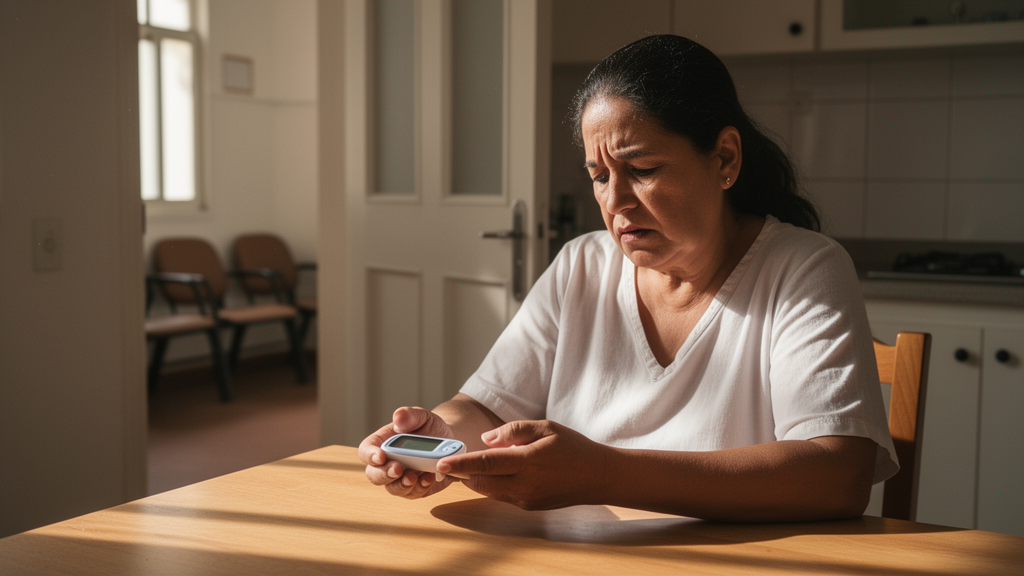
When the COVID-19 pandemic collided with chronic disease, one of the clearest casualties was mental health. A new cross-sectional study conducted at the National Hospital of Itauguá in Paraguay has found that nearly nine out of ten patients with diabetes attending an endocrinology clinic reported symptoms of anxiety, while more than seven in ten reported symptoms of depression. The research, published in the journal Pharmacia, offers one of the most detailed portraits yet of the psychological burden carried by people living with diabetes in Latin America during the pandemic, a region where roughly 62 million people have diabetes mellitus according to the Pan American Health Organization.
The study team, led by researchers working in collaboration with the Universidad del Pacífico, interviewed 94 patients with diabetes between October and November 2021, at the height of global concerns about the interplay between the pandemic and chronic illness. Most participants were women, representing 69.2 percent of the sample, and nearly two-thirds were between 31 and 59 years of age. The overwhelming majority, 88.3 percent, had type 2 diabetes, while 83 percent were receiving treatment for their condition. Every interview took place face to face in the hospital’s Endocrinology outpatient clinic, with strict biosafety protocols including mandatory masks, hand disinfection, and social distancing.
What makes the findings striking is their sheer magnitude compared with earlier research. Pre-pandemic studies in Iran and Peru had reported anxiety prevalence figures between 57 and 65 percent among patients with diabetes, and pandemic-era investigations in Saudi Arabia, Morocco, and the Netherlands produced estimates ranging from under 5 percent to around 44 percent. The Paraguayan figure of 87.6 percent sits at the very top of that spectrum. Similarly, the 72 percent prevalence of depressive symptoms exceeds the 60.7 percent reported in Saudi Arabia during the pandemic and towers over estimates of 15 to 23 percent recorded in Qatar, Brazil, and other settings. The authors attribute this variability to differences in screening instruments, study populations, and the socioeconomic and healthcare contexts of each country.
The measurement tool itself deserves attention. Rather than deploying lengthy psychiatric interviews, the researchers used the Goldberg Anxiety and Depression Scale, an 18-item questionnaire validated for use in non-psychiatric clinical settings and shown to be reliable in diabetic populations. The instrument splits into two nine-item subscales, one for anxiety and one for depression, each scored from zero to nine. A score of four or more on the anxiety subscale flags the probable presence of an anxiety disorder, while a score of two or more on the depression subscale signals depressive symptoms. The scale shows strong psychometric credentials, with sensitivity of 82 percent for anxiety and 85 percent for depression, and specificity of 91 percent for both subscales. Crucially, it can be administered by non-specialist personnel, a property with real significance for resource-limited health systems.
On the statistical side, the team went beyond simple descriptive counts, which they identified as a weakness in much of the prior pandemic literature. They estimated prevalence ratios using generalized linear models of the Poisson family with a log link function and robust variance, first in simple regression and then in multiple regression models that adjusted for the variables significant in the first pass. This approach allowed the investigators to isolate which sociodemographic and clinical characteristics remained independently associated with poor mental health outcomes, rather than merely noting raw differences between groups.
The regression results revealed a consistent and somewhat sobering pattern. Divorced patients carried a substantially elevated prevalence of depression, with a 41 percent higher prevalence ratio of 1.41 and a 95 percent confidence interval of 1.15 to 1.73 in the multiple regression. Conversely, having type 2 diabetes was associated with a 27 percent lower prevalence of depression compared with type 1 disease, a prevalence ratio of 0.73 with a confidence interval of 0.58 to 0.93. The authors suggest that the daily demands imposed by type 1 diabetes, which requires insulin administration and constant glycemic vigilance, may exact a heavier psychological toll, although they also note that some studies in Brazil have reported the opposite pattern during the pandemic.
For anxiety, the picture was different in instructive ways. In the adjusted analysis, three factors remained independently associated: being between 31 and 59 years of age reduced the prevalence of anxiety, with a prevalence ratio of 0.71, while being divorced raised it, with a ratio of 1.31, and receiving diabetes treatment raised it further, with a ratio of 1.69. That last finding is perhaps the most counterintuitive. Patients who were actually receiving treatment were more anxious than those who were not, and the authors propose a plausible mechanism rooted in the pandemic itself: fear of medication shortages, the financial burden of purchasing drugs, the perceived risk of contracting the infection when leaving home to obtain medications, and restricted access to routine medical care all conspired to make the act of staying on treatment a source of chronic worry.
The age effect adds another layer of nuance. Middle-aged patients, those between 31 and 59, showed lower anxiety than younger adults, a result consistent with some pre-pandemic studies in Malaysia. The researchers suggest that the pandemic disrupted education and personal development activities that generate anxiety, and that patients in this age range had already completed such formative milestones, buffering them somewhat. Divorce, by contrast, emerged as a risk factor for both depression and anxiety, echoing earlier findings from Malaysia and China. The authors point to the loss of spousal support, both emotional and practical, in maintaining the healthy lifestyle that diabetes management demands, from diet to exercise to medication adherence.
The public health implications are difficult to ignore. Mental health shapes how people think, feel, handle stress, relate to others, and make decisions, and patients with diabetes who also experience depression or anxiety frequently struggle to adhere to their care plans, including treatment regimens and dietary recommendations. Worse still, diabetes was already known to triple the probability of intensive care admission and the risk of death among those infected with COVID-19, meaning that a psychological crisis layered on top of metabolic disease created a compounding vulnerability. The study’s authors argue that health systems in Paraguay and comparable Latin American countries should integrate standardized mental health screening into routine diabetes care, using validated instruments such as the Goldberg scale that non-specialist health workers can administer, particularly as preparation for future health emergencies.
As with any cross-sectional study, the caveats matter. The design cannot establish causality, the convenience sample of 94 patients from a single hospital limits generalizability, and factors such as illness duration, resilience, insomnia, food insecurity, and post-traumatic stress were not measured. Statistical power may also have been constrained by the small sample size. Yet the study fills a genuine gap in a country where such data had been absent, and its face-to-face methodology avoided the digital access barriers that plagued online-survey research during lockdowns. The authors call for longitudinal studies with larger, probabilistically selected samples to establish causal relationships and to test whether integrated mental health interventions can improve outcomes for this population. For now, the message is unambiguous: in Paraguay during the pandemic, the burden of diabetes was borne not only in blood glucose readings but in the minds of the patients themselves, and health systems that ignore that reality do so at their patients’ peril.
Subject of Research: Prevalence and determinants of depression and anxiety among diabetic patients in Paraguay during the COVID-19 pandemic
Article Title: Prevalence and factors associated with depression and anxiety in diabetic patients in a national hospital in Paraguay during the COVID-19 pandemic
Article References: Prevalence and factors associated with depression and anxiety in diabetic patients in a national hospital in Paraguay during the COVID-19 pandemic. (n.d.). https://doi.org/10.3897/pharmacia.73.e194899
Image Credits: AI Generated
DOI: 10.3897/pharmacia.73.e194899
Keywords: diabetes, depression, anxiety, COVID-19, mental health, Paraguay, Goldberg scale, type 2 diabetes, cross-sectional study, public health, Latin America, prevalence ratio
News Source: Glenn Wilkins. (October 15, 2026). Nine in Ten Diabetic Patients Show Anxiety in Paraguay Pandemic Study. Scienmag.