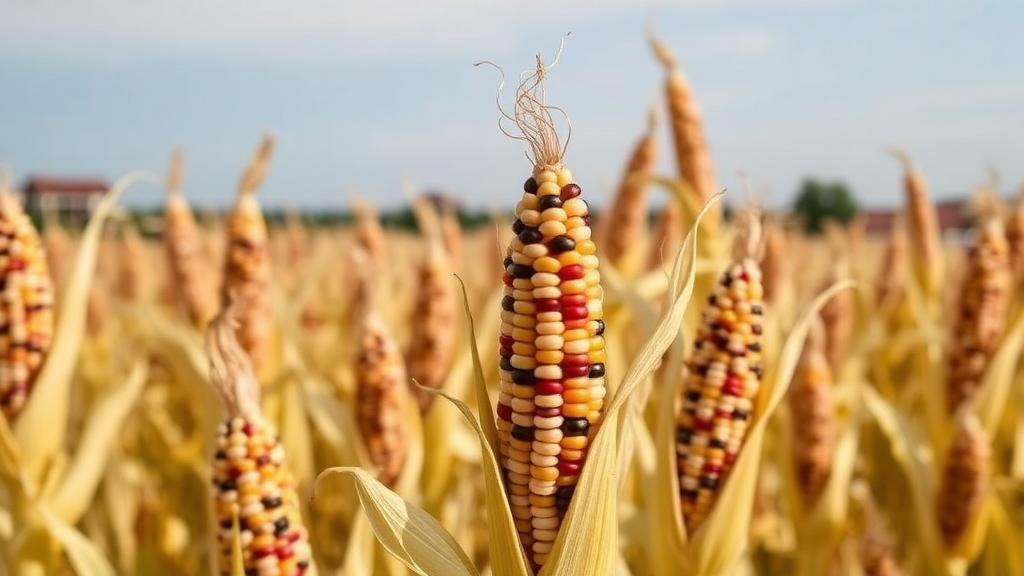
Maize is one of the most important crops on Earth, supplying at least 30 percent of food calories to more than 4.5 billion people together with rice and wheat, and in countries such as Malawi, Zambia and Lesotho it contributes over half of the daily caloric intake. Yet the crop is exceptionally vulnerable to drought, particularly during the two-to-three-week flowering window that determines final grain yield. A new review published in Frontiers in Plant Physiology argues that the key to climate-proofing maize may lie not in new genes but in the crop’s ability to remember past stress, a capacity encoded in epigenetic marks and metabolic adjustments that scientists are only beginning to decode.
The review, authored by researchers at the University of Kashmir and the Sher-e-Kashmir University of Agricultural Sciences and Technology of Kashmir, synthesizes crop-specific epigenetic and metabolic mechanisms governing drought priming and memory persistence in maize. Stress memory refers to the capacity of plants to remember prior encounters with environmental stress and mount faster, stronger or more efficient responses when stress recurs. An initial exposure primes the organism, triggering molecular, biochemical and physiological changes that persist beyond the immediate stress period. The authors focus primarily on within-generation, somatic memory, in which prior drought exposure modifies the response of the same plant to subsequent drought events during its lifetime, while distinguishing this from intergenerational and transgenerational effects whose adaptive significance in maize remains actively debated.
At the molecular level, the memory circuitry involves an integrated system of histone modifications, DNA methylation and non-coding RNAs. Under drought conditions, natural antisense transcript gene pairs in maize exhibit elevated levels of the activating marks H3K36me3, H3K9ac and H3K4me3, with reduced levels of the repressive mark H3K27me3, indicating an open chromatin configuration at stress-responsive loci. Genome-wide studies integrating transcriptomic and histone data in maize subjected to drought and recovery have identified three categories of stress-memory genes: transcriptional memory genes with stable expression changes after recovery, epigenetic memory candidate genes retaining chromatin modifications without expression changes, and delayed memory genes with postponed responses. The persistence of activating histone marks across drought-recovery-redrought cycles suggests that some chromatin changes outlast the stress itself, although causal links to functional memory phenotypes remain to be demonstrated.
DNA methylation dynamics present a more complex picture. Drought-tolerant inbred lines have been shown to maintain more stable methylomes than drought-sensitive lines under water stress, with increased methylation levels and sequence-dependent inheritance patterns. In contrast, other studies found no evidence of consistent stress-induced methylation changes, observing instead low-rate stochastic variation in both control and stressed plants. One well-documented case links targeted demethylation to drought adaptation: in drought-tolerant maize, demethylation occurs in the CpG island of the ZmGST2 promoter under drought stress, facilitating gene expression and enhancing resistance through improved reactive oxygen species scavenging and root growth, while the drought-sensitive line fails to undergo this demethylation. Beyond 5-methylcytosine, the DNA modification N6-methyladenine shows dynamic patterns correlating with heat stress responses in maize, though its role in drought memory has yet to be determined.
Perhaps the most distinctive feature of maize epigenetics is its transposable element landscape. Approximately 85 percent of the maize nuclear DNA consists of transposable elements, which are far from inert junk. Specific TE families generate transcripts only under stress, with activated elements often containing small regions lacking DNA methylation while fully methylated copies are rarely expressed. Between four and nine different TE families were associated with upregulation of stress-responsive genes under each stress condition tested, affecting up to 20 percent of stress-upregulated genes. Nearly 20 percent of distal accessible chromatin regions in the maize genome are located within annotated transposable elements, suggesting that TEs can create novel regulatory elements that rewire transcriptional responses. A miniature inverted-repeat transposable element inserted in the promoter of the ZmNAC111 transcription factor gene is significantly associated with natural variation in maize drought tolerance, repressing gene expression via RNA-directed DNA methylation and H3K9 dimethylation, and transgenic maize overexpressing ZmNAC111 shows enhanced drought tolerance and improved water-use efficiency.
Downstream of these epigenetic mechanisms lies a metabolic memory engram encompassing proline biosynthesis, carbon-nitrogen reallocation and photosynthetic adjustments. Proline is one of the most consistently observed osmoprotectants accumulating in maize under drought, although its accumulation alone is not necessarily indicative of drought resistance. Exogenous proline supplementation dramatically alleviates drought-induced reductions in growth, with shoot and root fresh weights increasing by 97 percent and 247 percent respectively under drought plus proline compared to drought alone, while hydrogen peroxide and malondialdehyde are reduced by 38 percent and 67 percent. However, direct measurements of the expression and activity of the proline biosynthetic enzymes P5CS and P5CR in primed versus unprimed maize remain limited, and specific kinetic parameters such as shifts in maximum velocity or the Michaelis constant for glutamate remain unknown, a gap the review identifies as a high priority for verifying the biochemical basis of metabolic memory.
Carbon-nitrogen integration during priming adds another layer of complexity. In a two-year field study, mild drought combined with medium-to-high nitrogen maintained maize yields through enhanced leaf antioxidant capacity, with carbohydrate metabolism, nitrogen metabolism and hormone balance explaining 44 percent, 19 percent and 7 percent of the variation in 100-grain weight respectively. Combining drought priming with moderate nitrogen application in summer maize promoted proline accumulation and enhanced nitrogen metabolism enzyme expression, with root length density, surface area density and dry weight density increasing by 31.6 percent, 22.5 percent and 13.9 percent respectively. Melatonin-treated maize seedlings under drought exhibited coordinated regulation of carbon and nitrogen metabolism, with higher photosynthesis, sucrose biosynthesis, nitrogen assimilation and protein biosynthesis capacities. These findings indicate that nitrogen availability modulates metabolic responses to water deficit and that priming agents may act through integrated carbon-nitrogen pathways.
Photosynthetic regulation provides the final mechanistic link between metabolic memory and whole-plant resilience. Phosphoenolpyruvate carboxylase, or PEPC, occupies a central role in C4 photosynthesis, and its regulation under drought offers an important connection between metabolic memory and physiological function. Studies on transgenic rice expressing maize C4-PEPC provide proof-of-concept evidence for potential epigenetic regulation of PEPC during drought, with rapid promoter demethylation and upregulation of PEPC kinase through calcium-, nitric oxide- and hydrogen peroxide-mediated signaling. However, because these observations were obtained in a transgenic C3 rice system rather than native C4 maize, they should not be interpreted as direct evidence for drought memory mechanisms in maize. PEPC activity is also regulated post-translationally via reversible phosphorylation, with dephosphorylation shifting the enzyme from hyperbolic to sigmoidal kinetics and increasing sensitivity to malate inhibition. Direct analysis of PEPC phosphorylation state or altered allosteric constants specifically induced by drought priming in maize is lacking, making reversible phosphorylation a plausible but unverified mechanism that may contribute to metabolic memory.
Translating these molecular insights into field practice, seed priming represents the most immediately applicable strategy for exploiting endogenous stress memory. Hydropriming, typically 18 to 24 hours of soaking in water, improves germination, seedling vigor and root proliferation under drought, although yield benefits are modest. Calcium chloride osmopriming demonstrates stronger field validation, with field trials reporting improved root development, grain yield and economic returns under vegetative and terminal drought. Melatonin priming at 200 to 500 micromolar consistently improves germination above 92 percent, seedling growth, proline accumulation and antioxidant enzyme activities. Emerging approaches include nanopriming, with iron oxide nanoparticles at 75 milligrams per liter improving photosynthetic water-use efficiency by 64 percent and cob length by 59 percent, and CuO@SiO2 priming increasing grain yield by 9 to 17 percent under drought. Biopriming with Rhizobium and Pseudomonas improves agronomic and physiological parameters under terminal drought, offering an eco-friendly and commercially feasible option.
Parallel advances in epigenomics have enabled identification of heritable epigenetic variations associated with drought adaptation. Methylation-sensitive amplified polymorphism offers a cost-effective PCR-based method for initial epigenetic diversity surveys, while whole-genome bisulfite sequencing provides single-base resolution maps of DNA methylation across the entire genome, identifying thousands of differentially methylated regions that vary among inbred lines, populations and stress treatments. Many DMRs are heritable across generations, suggesting stable epialleles that could be targets of selection, and they are frequently located near or within transposable elements. However, few validated epigenetic loci have been causally and reproducibly associated with drought adaptation across multi-environment field trials, representing a critical evidence gap between epigenetic correlation and causation. The review concludes that drought stress memory in maize emerges from the coordinated interaction of epigenetic regulation, metabolic reprogramming and physiological acclimation rather than from any single mechanism, and that closing the remaining gaps in enzyme kinetics, phosphoproteomics and multi-environment field validation will be essential for developing cultivars and management strategies that exploit endogenous stress memory to improve drought resilience under increasingly variable climatic conditions.
Subject of Research: Epigenetic and metabolic mechanisms of drought stress memory and seed priming strategies in maize
Article Title: Epigenetic and metabolic regulation of drought stress memory in maize: from molecular mechanisms to field-applicable priming strategies
Article References: Epigenetic and metabolic regulation of drought stress memory in maize: from molecular mechanisms to field-applicable priming strategies. (n.d.). https://doi.org/10.3389/fphgy.2026.1894927
Image Credits: AI Generated
DOI: 10.3389/fphgy.2026.1894927
Keywords: maize, drought stress memory, epigenetics, histone modifications, DNA methylation, transposable elements, seed priming, proline, C4 photosynthesis, PEPC, climate resilience, crop physiology
News Source: Alan Morgan. (October 15, 2026). How Maize Remembers Drought: Epigenetic Memory and Seed Priming Could Shield the World’s Vital Cereal Crop. Scienmag.