…
…
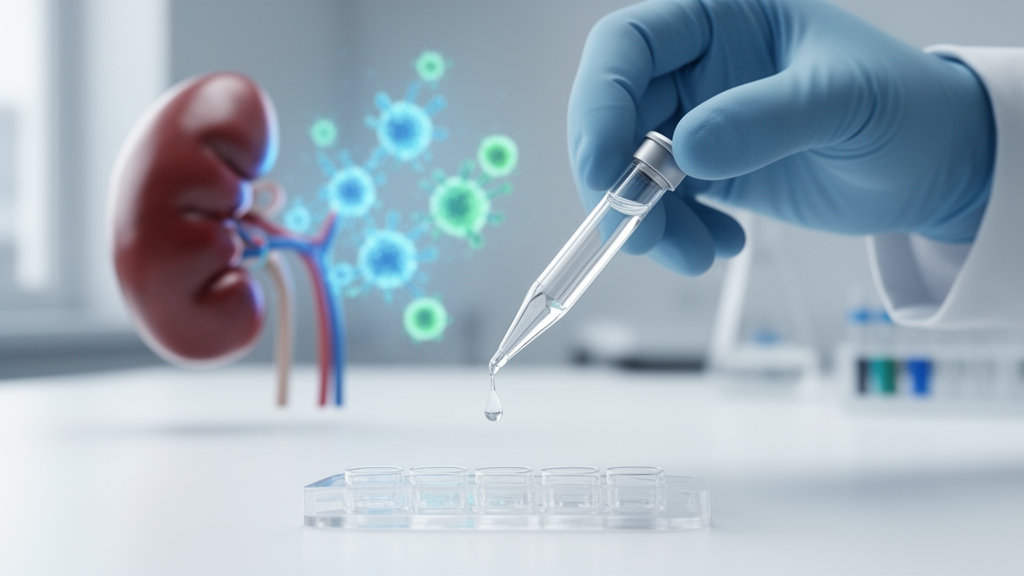
The concept of using urine as a diagnostic window into the transplanted kidney rests on a simple biological premise: when immune cells are recruited into renal tissue, they secrete signaling proteins that are small enough to pass through or be produced locally within the urinary tract, and these proteins can be measured in voided urine long before structural damage becomes apparent. CXCL10, also known as interferon-gamma-inducible protein 10, is one of the most intensively studied members of this class of biomarkers. It belongs to the C-X-C chemokine family and is released by tubular epithelial cells, endothelial cells, and infiltrating leukocytes in response to interferon signaling, which is a hallmark of both T-cell-mediated rejection and viral infections. Because the same chemokine is upregulated across several distinct pathological processes, its diagnostic role is not to provide a specific diagnosis on its own, but rather to act as a sensitive alarm that something inflammatory is happening somewhere in the reno-urinary system, thereby directing clinicians toward the appropriate confirmatory tests.
This distinction between screening and diagnosis is central to understanding why the reported area under the curve values matter. An area under the curve of 0.786 for the CXCL10/creatinine ratio indicates good, though not perfect, discrimination between patients with and without inflammatory processes. By comparison, serum creatinine, the traditional mainstay of allograft monitoring, performed essentially at chance level with an area under the curve of 0.499 in this stable population. This near-random performance is not a failure of creatinine as a marker per se, but rather a reflection of the study design: all participants were clinically stable with functioning grafts, and the inflammatory processes being sought, such as subclinical rejection or viral DNAuria, were by definition not severe enough to impair graft function measurably. Proteinuria fared somewhat better at 0.636, likely because tubular injury and interstitial inflammation can increase protein excretion, but it still fell well short of the chemokine measurement.
The finding that BK polyomavirus DNAuria was detected with the highest accuracy, an area under the curve of 0.936, deserves particular attention. BK polyomavirus nephropathy is a feared complication of modern immunosuppression, and once established it can cause irreversible scarring and graft loss. Current practice relies on periodic plasma PCR screening, but viruria typically precedes viremia in the natural history of BK infection, meaning that viral DNA shedding into urine is an earlier signal. A urinary chemokine that rises in parallel with viral replication in the urothelium offers a biologically coherent early warning system. The interferon-driven epithelial response to polyomavirus infection produces abundant CXCL10 locally, which explains why the chemokine discriminates viral DNAuria so much more sharply than it discriminates rejection, where the inflammatory infiltrate is more contained within the interstitium and the chemokine may reach the urinary space less efficiently.
The lower, though still clinically useful, area under the curve of 0.703 for subclinical rejection reflects this anatomical and biological reality. Subclinical rejection, defined here by the Banff 2022 classification on surveillance biopsies taken from patients with stable graft function, represents a diagnostic gray zone in transplantation. These episodes of cellular or antibody-mediated inflammation occur without a rise in serum creatinine, and their clinical significance has been debated for decades. Some longitudinal studies suggest that untreated subclinical rejection contributes to interstitial fibrosis and tubular atrophy over the years, gradually eroding graft survival, which is the rationale for protocol biopsy programs. However, protocol biopsies are invasive, costly, and not universally adopted, so a non-invasive triage tool that identifies which stable patients actually harbor silent inflammation could make surveillance far more efficient.
The two-cutoff strategy presented in the study illustrates how such a tool might function in practice. When the CXCL10/creatinine ratio was below 3 ng/mmol, a threshold met by 59% of the cohort, the negative likelihood ratio was 0.36, and the probability of subclinical rejection fell from the baseline prevalence of 15.8% to 5.4%. In practical terms, this means that for a majority of stable recipients, a single urine measurement could substantially lower the suspicion of silent rejection and support deferring the biopsy. It is worth emphasizing that a negative likelihood ratio of 0.36 is useful but not definitive; it reduces probability meaningfully without eliminating it, which is why the authors describe the 3 ng/mmol threshold as a rule-out rather than a rule-out with certainty. Roughly one in twenty patients below this cutoff still had subclinical rejection, a residual risk that clinicians would need to weigh against the invasiveness of biopsy.
At the opposite end of the distribution, the rule-in cutoff of 10 ng/mmol was exceeded by only 12% of patients, but within this small group the positive likelihood ratio of 12.92 meant that the absence of any inflammatory pathology was observed in just 2% of cases. This asymmetry between the two cutoffs is typical of biomarkers whose distribution is skewed, with most healthy or quiescent patients clustering at low values and a tail of patients with markedly elevated levels. The practical consequence is that the test functions best as a two-gated funnel: low values deprioritize biopsy, intermediate values leave clinical judgment unchanged, and high values essentially mandate further workup, whether that workup is a biopsy, viral PCR testing, or urine culture and microscopy.
Normalizing the chemokine to urinary creatinine is an important methodological detail that strengthens the validity of the findings. Absolute chemokine concentrations in spot urine samples vary with urine dilution, which fluctuates with hydration status, time of day, and kidney concentrating ability. Expressing CXCL10 per millimole of creatinine adjusts for this dilutional variability, since creatinine is excreted at a relatively constant rate. This approach mirrors the logic used for albumin-to-creatinine ratio in proteinuria assessment and makes single-void measurements far more reproducible than absolute concentrations would be. It also facilitates comparison across patients and across time points in a way that raw concentrations cannot.
The cohort itself provides useful context for interpreting the results. With 405 patients recruited from a single center over roughly a decade, the study represents one of the larger systematically biopsied populations examined for this purpose at a defined posttransplant timepoint. The median recipient age of 55 years, the 58% proportion of deceased donor grafts, and the 22% prevalence of high immunological risk are broadly representative of contemporary kidney transplant populations in Europe. The predominance of basiliximab induction and tacrolimus-based triple maintenance therapy reflects standard of care, meaning the findings are likely applicable to similar programs, though centers using alternative immunosuppressive strategies, such as belatacept-based regimens, may see different inflammatory profiles.
The biopsy findings themselves are informative. Eighty-four percent of surveillance biopsies showed no rejection, while 6% revealed T cell-mediated rejection, 9% antibody-mediated rejection, and 1% mixed episodes. The combined rejection prevalence of roughly 16% in asymptomatic patients one year after transplantation underscores why non-invasive screening is attractive: a substantial minority of stable patients harbor histological inflammation that would otherwise go undetected. Notably, de novo donor-specific antibodies were rare in this cohort at 2.7%, which is lower than in many published series and may reflect the center’s rigorous antibody monitoring and pretransplant risk stratification, potentially also explaining the relatively favorable rejection distribution.
Several confounders and limitations merit consideration when extrapolating these results. Urinary CXCL10 is not specific to any single pathology; urinary tract infections, ischemia-reperfusion injury earlier in the graft’s life, cytomegalovirus, and other systemic infections can all elevate levels. The study addressed this by defining and accounting for the major competing inflammatory processes, including significant leukocyturia and relevant JC polyomavirus DNAuria, and by incorporating these variables into the multivariable model for rejection. Nevertheless, the possibility that unmeasured inflammatory conditions contributed to elevated chemokine levels cannot be excluded. Additionally, the retrospective design means that urine samples were collected as part of routine care and stored, which is efficient but introduces the possibility of selection bias if patients with missing samples differed systematically from those included.
The question of external validation is perhaps the most important caveat flagged by the investigators. The cutoffs of 3 and 10 ng/mmol were described as arbitrary and derived from this single cohort. Assay variability is a real concern in chemokine measurement, as different immunoassay platforms can yield different absolute values for the same sample, meaning that thresholds established with one kit may not transfer directly to another laboratory’s workflow. Multicenter validation studies with diverse populations, different immunosuppression protocols, and standardized sample handling would be needed before these thresholds could be adopted broadly. Until then, the findings should be viewed as hypothesis-generating evidence supporting the concept rather than as a validated clinical decision rule.
Looking ahead, the most promising application of urinary CXCL10 may lie in longitudinal rather than single-timepoint monitoring. Because the assay is performed on urine, a sample that is already collected routinely at outpatient visits, repeated measurements are feasible without added burden to patients. A trajectory of rising chemokine levels over consecutive visits could be more informative than any single value, potentially distinguishing transient inflammatory episodes from persistent processes that warrant biopsy. Combining CXCL10 with other urinary markers, such as CXCL9 or fragments of complement proteins, might also improve specificity for rejection versus viral infection, addressing the main weakness of any single-chemokine approach. For the moment, the study adds solid evidence that at the one-year mark, when clinical parameters are quiet but histological inflammation may still be active, a simple urine test can meaningfully reshape the diagnostic pathway for stable kidney transplant recipients.
Subject of Research: Urinary CXCL10 for detection of rejection and infection at 1-year posttransplant
Article Title: Urinary CXCL10 for detection of rejection and infection at 1-year posttransplant
Article References: Urinary CXCL10 for detection of rejection and infection at 1-year posttransplant. (n.d.). https://doi.org/10.3389/ti.2026.17130
Image Credits: AI Generated
Keywords: Urinary, CXCL10, detection, rejection, infection, year, posttransplant, scientific research
News Source: Kristina Jarvis. (October 15, 2026). Urinary CXCL10 for detection of rejection and infection at 1-year posttransplant. Scienmag.