Deep inside caves, where sunlight never reaches and eyes have all but vanished across millions of years of evolution, the sense of touch becomes a lifeline. A systematic review published in Subterranean Biology reveals that cave-dwelling invertebrates depend heavily on tactile cues for orientation, foraging, communication, and defense, yet the scientific literature on this topic remains strikingly sparse and unevenly distributed. The study, led by researchers including Rodrigo Lopes Ferreira, combed through Web of Science, Scopus, and Google Scholar following the PRISMA protocol and identified only 31 eligible studies published up to January 2026, a number so small that it exposes how little is actually known about how life perceives its world in permanent darkness.
The findings are a wake-up call for sensory biology. Descriptive studies dominated the literature, accounting for 82 percent of the reviewed work, while functional experiments and molecular or neurobiological investigations were consistently underrepresented. Most research focused on chemosensory organs and exocrine glands, particularly antennae, which house a diversity of sensilla involved in detecting odors, gustatory compounds, and environmental cues. Yet behavioral, physiological, and mechanistic aspects of chemoreception were rarely investigated, meaning that the presence of a sensory structure does not necessarily demonstrate its role in chemical perception. In several cases, the sensory function of described organs remains uncertain even according to the original authors.
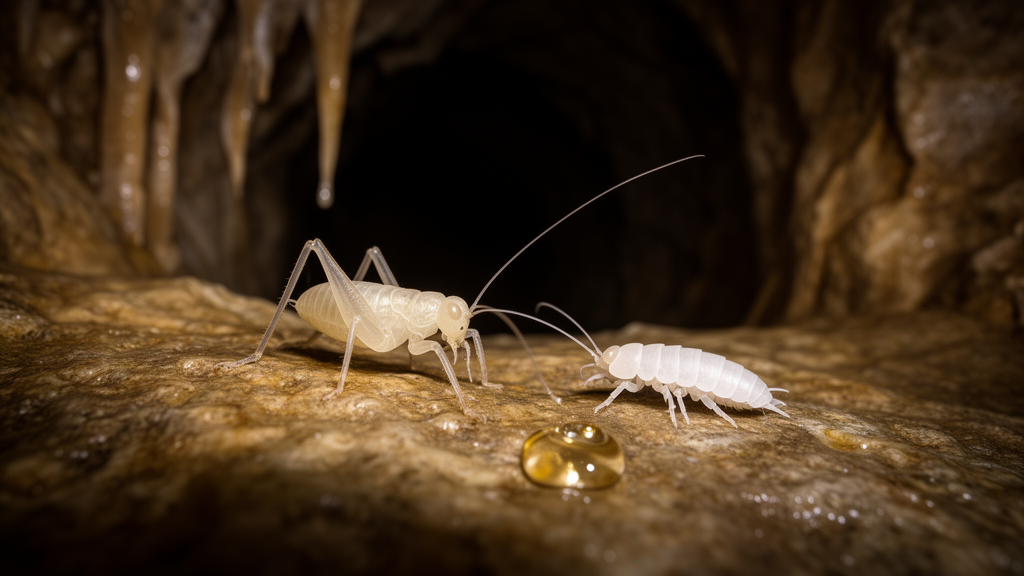
Subterranean environments impose a peculiar set of selective pressures. Permanent darkness, microclimatic stability, and limited trophic resources have driven diverse lineages to evolve convergent adaptations, including the reduction of eyes and pigmentation, elongation of appendages, enhanced non-visual sensory structures, reduced metabolic rate, and increased starvation resistance. Obligate subterranean species, known as troglobionts and stygobionts, exhibit morphological specializations that reflect evolutionary responses to these conditions. Enhanced detection of non-visual stimuli, particularly prey-related chemical cues, is commonly observed and is often associated with modifications that improve olfactory and gustatory reception, especially in the antennae and mouthparts.
The evidence for such adaptations spans a remarkable range of taxa. Cave-dwelling crayfish show elongation of antennules, cave leiodid beetles display modifications of the Hamann’s organ, diplopods rely on exocrine glands for intraspecific chemical communication and defense, carabid beetles exhibit variation in the abundance and morphology of sensilla, and decapods show increased numbers of setae associated with eye reduction. These examples suggest that selective pressures in subterranean environments favor the enhancement of non-visual sensory structures, particularly those involved in chemoreception, which are critical for fitness in aphotic habitats.
Yet the review uncovered a paradox. Functional studies were significantly less frequent in obligate subterranean species, indicating that ecological specialization and limited accessibility constrain mechanistic investigations. Troglobionts are fragile, sensitive to handling, and subject to conservation constraints, making laboratory experiments technically demanding. Molecular and neurobiological studies were exclusively represented among troglobionts, with no studies using this approach identified for troglophiles or trogloxenes, a pattern the authors caution should be interpreted cautiously given the limited number of studies available.
Taxonomic coverage was strongly biased toward Coleoptera, which received the greatest attention by a substantial margin. Within insects, Diplura and, to a lesser extent, Blattaria, Orthoptera, Opiliones, Plecoptera, and Grylloblattodea were also represented. Among non-insect arthropods, Arachnida showed moderate representation, particularly Opiliones and Ricinulei. Within aquatic invertebrates, Malacostraca was comparatively well represented, with Decapoda contributing the highest proportion, followed by Amphipoda, Isopoda, Mysida, and Thermosbaenacea. Overall, most arthropod groups, particularly aquatic taxa, remained poorly represented, revealing a structural model-system bias in subterranean biology.
Geographic distribution was equally uneven. Research effort was concentrated in Europe and the Americas, with Europe accounting for 35 percent of the available literature, led by France with six studies, Brazil and Mexico with six each, and Spain with two. Asia, Oceania, and Antarctica contributed only a handful of studies, and no studies were recorded from the African continent, highlighting a complete absence of representation in a region that may harbor substantial subterranean biodiversity. This pattern likely reflects historical and structural factors associated with the development of biospeleology, as Europe played a central role in consolidating subterranean biology and hosting some of the earliest studies on sensory adaptations in cave-dwelling organisms.
Temporal analysis revealed no significant changes in the distribution of research approaches over time, with descriptive studies remaining predominant throughout the entire period. Functional studies were reported primarily in earlier decades, whereas molecular and neurobiological studies appeared only in more recent decades, suggesting a gradual diversification despite the absence of a statistically significant temporal shift. The gradual increase in molecular and neurobiological studies since the 2010s hints at an initial shift toward more mechanistic approaches to subterranean chemoreception, though the field remains dominated by morphological description rather than experimental function.
The authors argue that future studies should prioritize integrated and comparative experimental approaches at the intraspecific and functional levels, including assessments of adaptive advantages in foraging, predator avoidance, intraspecific communication, and mate selection. Mechanistic approaches integrating chemical characterization of relevant cues with physiological, neurobiological, and biochemical investigations are needed to establish the sensory function of putative chemosensory structures and to elucidate how chemical information is detected, processed, and translated into behavioral and ecological responses. Without such work, the field risks distorting broad inferences about the evolution of chemosensory systems in darkness.
The review demonstrates that current knowledge of chemical ecology in cave-dwelling invertebrates is shaped by pronounced methodological, taxonomic, and geographic biases. Cave-dwelling animals remain valuable models for investigating how chemically mediated interactions evolved under permanent darkness and resource limitation, but unlocking their secrets will require integrative functional and molecular studies across a broader diversity of subterranean taxa and regions. As the authors conclude, the need for such research has never been clearer, and the hidden sensory world of caves is waiting to be understood.
Subject of Research: Chemical ecology in cave-dwelling invertebrates: research trends and knowledge gaps
Article Title: Chemical ecology in cave-dwelling invertebrates: research trends and knowledge gaps
Article References: Chemical ecology in cave-dwelling invertebrates: research trends and knowledge gaps. (n.d.). https://doi.org/10.3897/subtbiol.58.208199
Image Credits: AI Generated
DOI: 10.3897/subtbiol.58.208199
Keywords: chemical ecology, cave invertebrates, troglobionts, chemoreception, Subterranean Biology, systematic review, sensory biology, Chemical, ecology, cave-dwelling, invertebrates, research
News Source: Gavin Prescott. (October 15, 2026). Darkness Rewrites the Senses: Cave Invertebrates Rely on Chemical Cues, but Research Lags Behind. Scienmag.