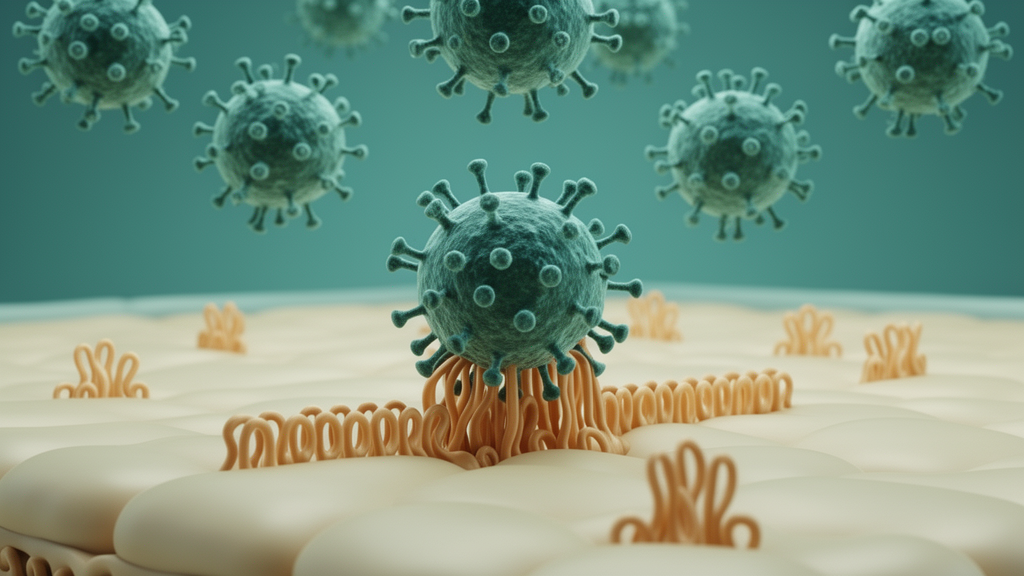
Coronaviruses circulating in wildlife remain a persistent source of pandemic concern, and few reservoirs sit closer to human life than the hedgehog. European and Asian hedgehog merbecoviruses, collectively known as EriCoVs, have circulated at high prevalence across Eurasia for years, yet their entry receptor remained unknown. Now a study published in Nature Microbiology has identified hedgehog aminopeptidase N (APN) as a functional receptor for diverse EriCoV strains, resolving a long-standing question in merbecovirus receptor evolution and providing a framework for assessing the zoonotic potential of these widespread viruses.
EriCoVs belong to the merbecovirus subgenus, which includes the Middle East respiratory syndrome coronavirus (MERS-CoV) and several bat-borne relatives that have spilled over into humans, camels, pangolins and minks. The European lineage was discovered in 2013 in European hedgehogs (Erinaceus europaeus) in Germany, and a related Asian lineage (HKU31) was subsequently found in Amur hedgehogs (Erinaceus amurensis) in China. Most viral sequences have been detected in faecal or rectal samples, consistent with an enteric tropism and a likely faecal–oral transmission route, although available studies have not demonstrated a clear association between infection and animal health. Until now, no authentic EriCoV isolate had been reported, and the pathogenicity, host range and zoonotic potential of these viruses remained poorly understood.
Coronavirus host range and transmissibility are primarily determined by interactions between viral receptor-binding domains (RBDs) and cellular receptors. Seven proteins have been established as functional coronavirus receptors, including angiotensin-converting enzyme 2 (ACE2), dipeptidyl peptidase-4 (DPP4) and aminopeptidase N. Among these, the use of both ACE2 and APN has been independently acquired by diverse coronaviruses with distinct RBDs, highlighting recurrent convergent evolution in receptor usage. Although DPP4 has long been considered the canonical merbecovirus receptor, recent studies revealed that several merbecovirus lineages co-opted ACE2 usage independently. However, EriCoVs do not use either ACE2 or DPP4 for entry, leaving their receptor usage unresolved and representing a critical gap in understanding receptor evolution in this subgenus.
To investigate EriCoV receptor usage, the researchers analysed publicly available EriCoV genomes and spike glycoprotein sequences, focusing on RBD regions. Phylogenetic analyses showed that Asian and European EriCoVs form sister lineages, distant from bat-borne merbecoviruses, indicating long-term divergence in hedgehogs across Eurasia. Notably, EriCoV RBD sequences cluster with those of the ACE2-using bat viruses NeoCoV and PDF-2180, implying potential shared ancestry. Yet only 2 of 14 ACE2-interacting NeoCoV residues are conserved in EriCoV, suggesting distinct receptor usage. The team then examined whether EriCoVs utilize alternative known coronavirus receptors, retrieving sequences of ACE2, DPP4, TMPRSS2 and APN from Amur hedgehog RNA-seq datasets. Protein-coding sequences of E. amurensis turned out to be identical to E. europaeus APN, allowing the Amur hedgehog APN to represent both species.
Functional assays demonstrated that Amur hedgehog APN, but not other tested receptors, supported detectable RBD binding and viral entry evaluated by vesicular stomatitis virus (VSV) pseudoviruses for two representative strains: RU15-1 (European) and MO1 (Asian). Flow cytometry and pull-down assays confirmed specific EriCoV RBD binding to Amur hedgehog APN but not to human APN. Biolayer interferometry displayed relatively low binding affinity and rapid dissociation of soluble Amur hedgehog APN binding to immobilized RU15-1 or MO1 RBD. Mutation of the APN catalytic site (H383A) only slightly reduced RBD binding or pseudovirus entry, indicating that receptor function is independent of peptidase activity. Consistently, Amur hedgehog APN promoted spike-mediated cell–cell fusion for most strains, especially upon trypsin treatment for proteolytic activation. Taken together, hedgehog APN serves as a functional receptor for both Asian and European EriCoVs through specific interaction with their RBDs.
To assess spillover risk, the researchers evaluated the receptor function of 93 mammalian and avian APN orthologues, all with validated expression. Overall, EriCoVs exhibited restricted APN tropism. European and Asian strains efficiently recognize Amur hedgehog APN and the closely related African pygmy hedgehog (Atelerix albiventris) APN. In contrast, APNs from shrews belonging to the same order (Eulipotyphla) were not recognized. APNs from tigers, leopards and domestic cats supported detectable RBD binding for some strains, whereas rat APN was recognized only by one European strain. APNs from natural or opportunistic predators, such as badgers, did not support receptor function. To define determinants underlying this restriction, the researchers constructed domain-swapped chimeras between human and Amur hedgehog APNs. Replacement of domain 2 in Amur hedgehog APN with the human counterpart abolished binding, whereas reciprocal substitution restored binding. Fine mapping narrowed the critical region to residues 288–331 of human APN, among which the α2 helix contains a restrictive N319 glycosylation in human APN but not in Amur hedgehog APN. The absence of this glycosylation in felid APNs may partially explain their receptor compatibility.
To elucidate the structural basis of EriCoV receptor recognition, the researchers determined cryogenic electron microscopy (cryo-EM) structures of EriCoV spikes and RBD–APN complexes. The RU15-1 apo spike adopts a closed, three-RBD-down conformation stabilized by glycan-mediated contacts. Considering the closed spike, the team chose RU15-1 RBD and Amur hedgehog APN for receptor-complex analysis, which yielded 443,002 particles from 3,559 micrographs. Approximately 38% of particles represented the target complex, and symmetry expansion with local refinement yielded a 3.55-Å reconstruction of the RU15-1 RBD-bound APN monomer. RU15-1 residues P523, A526, Y528, F529 and Y539 contact APN residues A283, P286, L309, P314, F415, P418 and H419, forming an extensive hydrophobic interface. Additional hydrogen bonds are formed by RU15-1 Y539 and R522 with APN L309 and F415, respectively. Notably, K310 in Amur hedgehog APN corresponds to a glycosylation site in human APN that may sterically hinder viral binding. Mutations R522A, Y528A, G530A and Y539A markedly reduced Amur hedgehog APN binding.
Three APN-binding modes had been documented among alpha- and deltacoronaviruses. EriCoVs, as betacoronaviruses, adopt a previously uncharacterized laterally shifted APN-binding mode, targeting a central region of APN domain 2. In contrast, footprints of other modes involve not only domain 2 but also variable contributions from domain 1 or 4. This convergent APN usage resembles the various ACE2-binding strategies among coronaviruses. Merbecoviruses engage receptors through a shared RBM β-sheet surface, but RBM indels and sequence variation remodel the interface, driving receptor specificity. Residues identified as determinants of receptor compatibility clustered within or near the RBD footprint. Substitutions A283K, P286S and K310N markedly reduced RU15-1 RBD binding, consistent with predictions of introducing steric clashes or disrupting hydrophobic contacts. Combining structural analysis with computational predictions, the researchers identified combinations of five to six substitutions that were sufficient to convert human APN into a functional EriCoV receptor, though these mutations did not substantially impair pseudovirus entry mediated by 229E and PDCoV spikes, consistent with their distinct binding interfaces.
Beyond receptor recognition, proteolytic activation represents an additional critical determinant of EriCoV entry. Analysis of the EriCoV spike in pseudoviruses revealed inefficient S1/S2 processing during biogenesis, a feature common to enteric coronaviruses without a furin cleavage site. Correspondingly, trypsin markedly enhanced pseudovirus entry and spike-mediated cell–cell fusion. Trypsin and its TPCK-treated version efficiently cleaved RU15-1 spikes and markedly enhanced entry, whereas elastase and plasmin produced limited or inhibitory effects at higher concentrations. Co-expression of TMPRSS2, especially the hedgehog version, enhanced EriCoV pseudovirus entry, particularly for Asian strains. Protease inhibition experiments revealed flexible and context-dependent protease usage: entry was sensitive to cysteine protease inhibitors E64d, CA-074 and Z-FY-CHO, and upon hedgehog TMPRSS2 co-expression became partially sensitive to camostat and the more selective TMPRSS2 inhibitor MM3122. In contrast, the furin inhibitor MI-1851 had no detectable effect. Replication-competent VSV encoding EriCoV spikes amplified readily in human colorectal Caco-2 cells upon Amur hedgehog APN expression, with Asian strains inducing more extensive syncytium formation than European strains. The pan-coronavirus fusion inhibitor EK1C4 peptide potently suppressed viral amplification under all tested conditions.
To develop EriCoV-specific countermeasures, mice were immunized with MO1 and RU15-1 RBDs, yielding 54 MO1-reactive and 67 RU15-1-reactive monoclonal antibodies. Neutralizing evaluation revealed potent activities among 36 of 54 (67%) MO1-targeting and 8 of 67 (12%) RU15-1-targeting antibodies. APN blockade assays demonstrated a close correlation between neutralization and inhibition of RBD binding to Amur hedgehog APN. Two RU15-1 antibodies, BD23-0177 and BD23-0163, additionally neutralized MO1. Cryo-EM structures revealed that BD23-0177 recognizes the RU15-1 RBM tip, sterically blocking APN engagement, whereas BD23-0027 targets a rear-left epitope on the MO1 RBD tip, likely neutralizing MO1 by clashing with the APN N362 glycan. Notably, BD23-0177 recognizes a relatively conserved RU15-1/MO1 RBD epitope, accounting for its broader neutralization. Separately, mice were immunized with Amur hedgehog APN mRNA, yielding 83 antibodies, over half of which strongly neutralized EriCoV pseudovirus entry. Two neutralizing antibodies (BD24-0134 and BD24-0154) do not recognize human APN and blocked RU15-1 and MO1 entry and propagation in cells expressing hedgehog APNs. Primary African pygmy hedgehog kidney cells confirmed that endogenous APN is essential for viral entry. These neutralizing antibodies represent promising countermeasures for outbreak preparedness, given the negligible cross-neutralizing activity elicited by prior SARS-CoV-2 infection or vaccination.
The findings expand the receptor repertoire of merbecoviruses and provide a structural and functional framework for risk assessment and countermeasure development. Intriguingly, the three merbecovirus receptors—ACE2, DPP4 and APN—are all ectopeptidases expressed on both epithelial surfaces of the respiratory and gastrointestinal tracts. The repeated exploitation of ectopeptidases may reflect common evolutionary advantages, such as accessibility, tissue distribution and favourable structural properties for virus–receptor interactions. Despite structural and sequence homology between NeoCoV and EriCoV, their distinct receptor usage implies receptor switching during their evolutionary divergence, with recombination, RBM insertions/deletions and antigenic drift as likely contributors. These findings also illustrate the limitations of predicting coronavirus receptor usage solely from sequence similarity or structural modelling. Outside hedgehogs, only a limited number of APN orthologues—most notably from felids—support detectable receptor function, suggesting that current EriCoVs face substantial barriers to cross-species transmission. However, limited compatibility with felid APN indicates that modest changes at the receptor-binding interface could lower the host barrier. Hedgehogs can also harbour other coronaviruses, raising the possibility of future recombination events that could drive EriCoV evolution. Continued surveillance of viral sequence changes in hedgehogs, felids and other ecologically relevant species will therefore be critical for mitigating future spillover risks.
Subject of Research: Virology
Article Title: Convergent use of aminopeptidase N receptor by hedgehog merbecoviruses
Article References: Liu, P., Zhu, Q., Liu, J., Ma, Z., Mou, G., Yu, Y., Liu, C., Ma, C., Si, J., Yang, X., Huang, M., Liu, Y., Sun, Y., Yu, X., Sun, Y., Liu, T., Yu, L., Wang, Q., Ma, H., … Yan, H. (2026). Convergent use of aminopeptidase N receptor by hedgehog merbecoviruses. Nature Microbiology. https://doi.org/10.1038/s41564-026-02478-1
Image Credits: AI Generated
DOI: 10.1038/s41564-026-02478-1
Keywords: merbecovirus, EriCoV, hedgehog coronavirus, aminopeptidase N, viral receptor, convergent evolution, cryo-EM, spillover risk, neutralizing antibodies, coronavirus entry, Convergent, aminopeptidase
News Source: Drew Townsend. (October 15, 2026). Hedgehog coronaviruses converge on aminopeptidase N as their entry receptor. Scienmag.