Credit: Pixabay
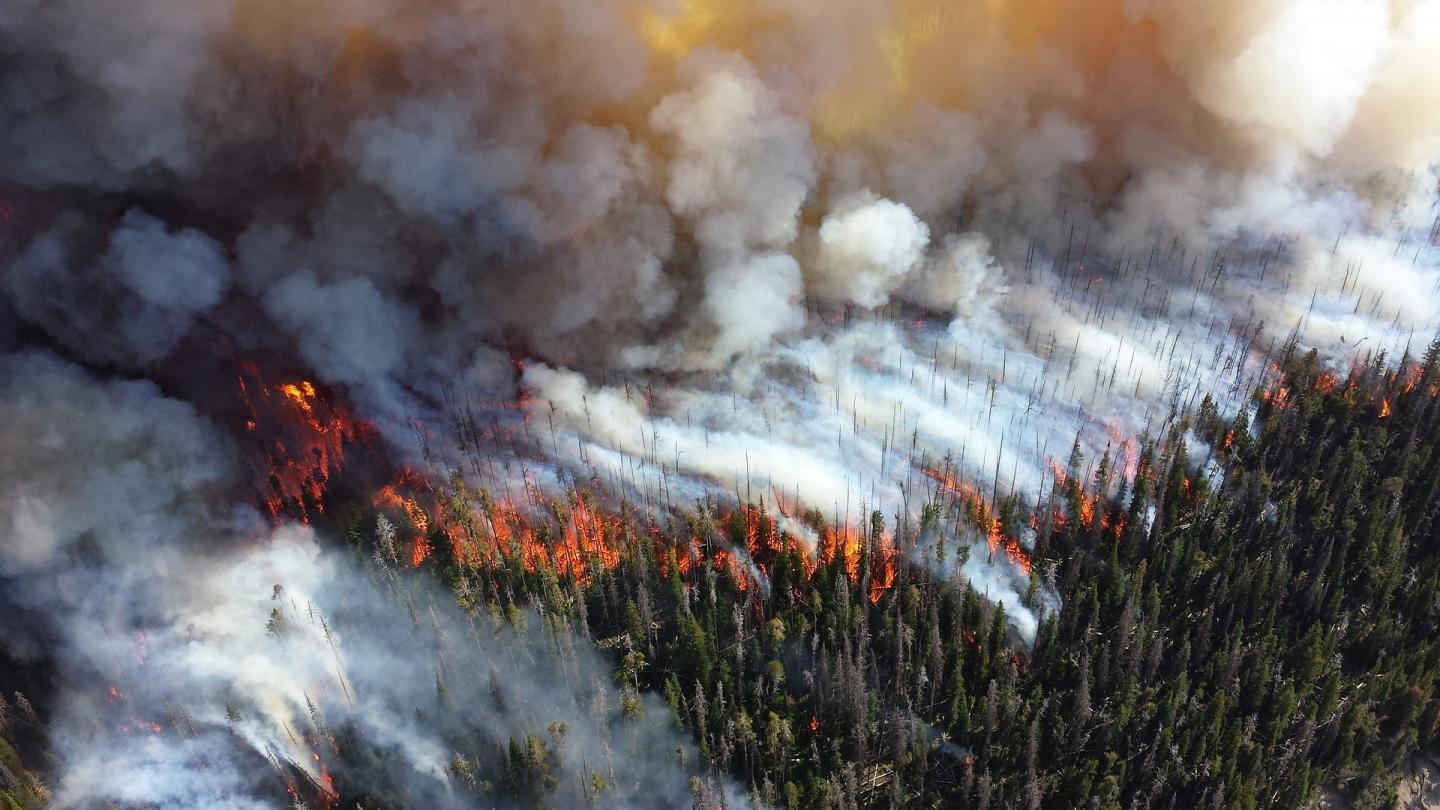
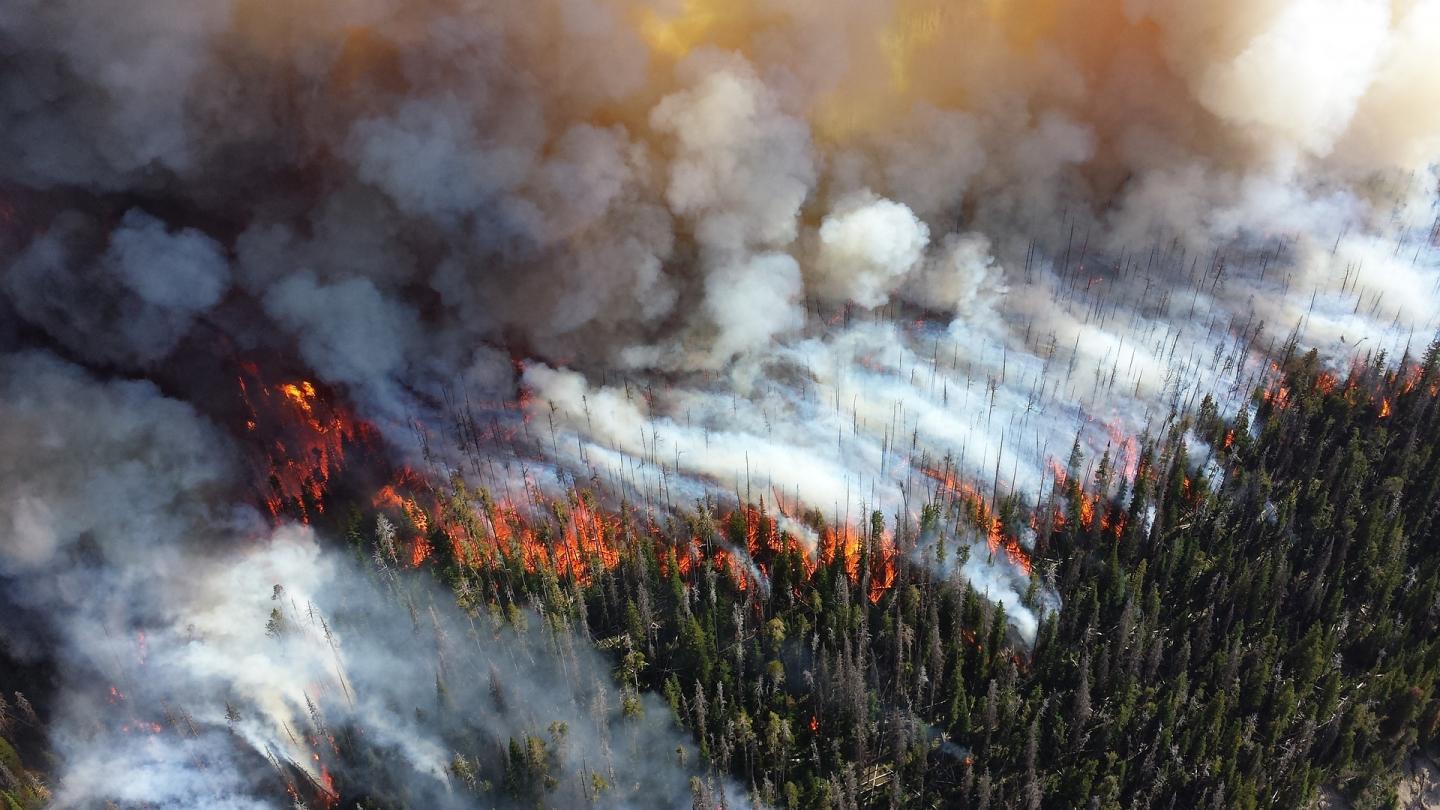
FORT COLLINS, Colo. – When people see smoke on the horizon, what do they do? Besides (hopefully) calling fire authorities, they post to social media, of course.
The fact that people reliably flock to social media to discuss smoke and fire was the inspiration for a new study by Colorado State University atmospheric scientists. Driven to innovate ways to improve the air we breathe, the scientists have shown that social media, Facebook in this case, could prove a powerful tool.
A study in Atmospheric Chemistry and Physics led by research scientist Bonne Ford, who works in the lab of Associate Professor Jeff Pierce, shows striking correlation between numbers of Facebook users posting about visible smoke, and commonly used datasets for estimating harmful smoke exposure. These include satellite observations, chemical transport models and surface particulate matter measurements.
In fact, they found that Facebook did a better job pinpointing smoke exposure than satellite data, which takes pictures of smoke from above Earth.
"We have monitoring systems, but monitors can be sparse in different places," Ford said. "In our group, we've been trying to combine a whole bunch of methods, models and observations to look at smoke exposure. And we thought, 'it would be really great if people could just tell us when they are exposed to smoke. Well, what about social media?'"
The idea for the Facebook study grew out of an interdisciplinary meeting in 2015. Organized by CSU Distinguished Professor A. R. Ravishankara of the Department of Chemistry, the meeting convened regional scientists, government officials and emergency management authorities working to improve smoke monitoring.
Partnering with a research scientist at Facebook — paper co-author Moira Burke — the scientists culled de-identified, city-level aggregated Facebook data across the U.S. and Canada during the period of June 5-Oct. 27, 2015. They counted Facebook users who posted about wildfire smoke, using, for example, terms like "haze," "smoke" and "fire," but not "cigarette." These posts were counted automatically at the city level; researchers did not read any individuals' posts. Thus Facebook was the ideal test case for tracking when and where people posted about fires in their area, without identifying who was posting.
The researchers made daily maps that counted Facebook posts and compared them with data maps of standard smoke monitoring systems. They found strong correlation particularly with surface monitors, which sense airborne particulate matter with diameters of 2.5 microns or less, so-called "PM2.5" which is a standard measure of smoke and other inhalable particles in the air. Breathing PM2.5 particles is considered to have potential health ramifications, which is why scientists are interested in studying their whereabouts and impacts.
Pierce said that while satellites see smoke from above, the data can mislead. "Sometimes, the satellites can't tell what altitude the smoke is at," he said.
They hope their study could be useful in thinking about new methods to assess smoke exposure, and thus, provide better beacons for health risks assessment, Ford said. "We're going to work on seeing if we can use this Facebook data to improve exposure estimates we're already doing."
Pierce and Ford collaborate with others across campus in the Partnership for Air Quality, Climate and Health, a union of multidisciplinary researchers working to assess air pollution and improve air quality.
###
Media Contact
Anne Manning
[email protected]
970-491-7099
@ColoStateNews
Related Journal Article
http://dx.doi.org/10.5194/acp-17-7541-2017