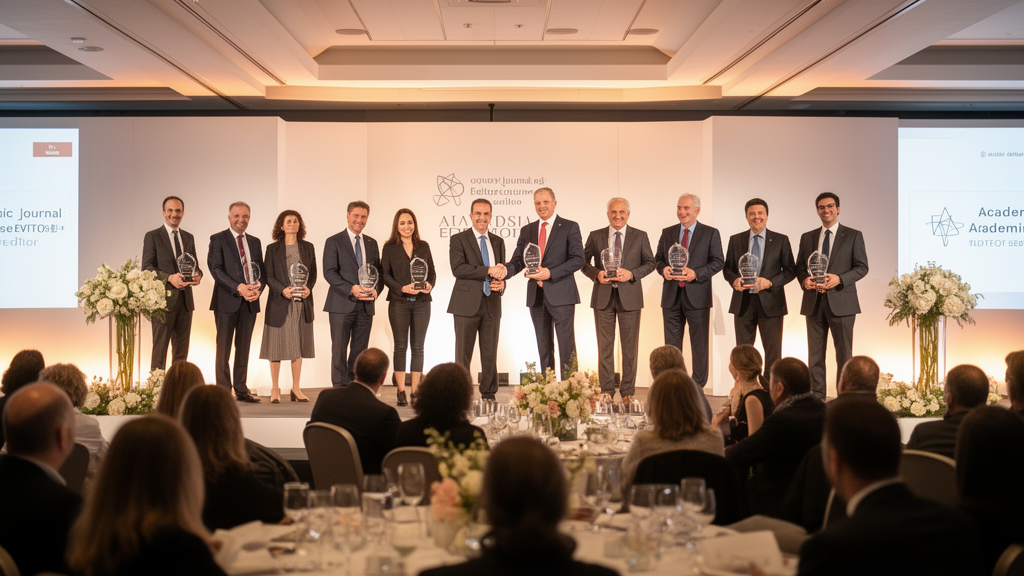
The editors of the Journal of Pharmaceutical Investigation have been recognized in the Springer Nature Editor of Distinction Awards for 2026, an annual program that celebrates the researchers who keep scholarly journals functioning at the highest standard. Ten editors affiliated with the journal received the Springer Nature Editorial Contribution Award, and nine of them also received the Springer Nature Author Service Award, a dual recognition that reflects the breadth of work required to run a modern scientific publication. The honorees are Chulhun Park, Gayong Shim, Han-Joo Maeng, Hyun-Jong Cho, Jee-Heon Jeong, Jong Oh Kim, Kwangmeyung Kim, Wooram Park, Yoo Kyung Kang, and Yoon-Jee Chae.
The Editorial Contribution Award is given for meticulous assessment of submissions and rigorous management of the peer review process, with an explicit emphasis on safeguarding the scientific accuracy of the published record. In practical terms, that means evaluating whether a manuscript’s experimental design supports its conclusions, whether the statistical analysis is appropriate to the data, and whether the claims made in the abstract and discussion are proportionate to the evidence presented. For a journal situated at the intersection of pharmaceutics, drug delivery, and investigative pharmacology, those judgments carry particular weight, because published findings in this field often inform subsequent laboratory work, formulation development, and eventually clinical translation.
Peer review remains the central quality-control mechanism of science, and the editors who administer it occupy a role that is easy to underestimate. When a manuscript arrives at a journal such as the Journal of Pharmaceutical Investigation, the handling editor must decide whether it falls within scope, whether its preliminary novelty justifies external review, and which reviewers possess the precise combination of expertise to evaluate it. A paper describing a novel nanoparticle carrier, for example, may require one reviewer versed in polymer chemistry, another in pharmacokinetics, and a third in the regulatory and toxicological considerations that determine whether such a system could ever reach patients. Selecting that panel, and then weighing sometimes conflicting reports, is a skilled editorial act rather than an administrative one.
The Author Service Award, received by nine of the ten honorees, recognizes a complementary dimension of editorial work: improving the author experience and ensuring that peer review is efficient, constructive, and fair. This aspect of the job has grown in importance as researchers face intense pressure to publish and as journals compete for high-quality submissions. An editor who returns decisions promptly, writes clear decision letters, and mediates productively between authors and reviewers can shorten publication timelines substantially while raising the quality of the final paper. Conversely, slow or opaque handling can delay careers and frustrate even excellent research.
Springer Nature’s description of editorial teams notes that their work ranges from developing networks of authors and peer reviewers to helping authors improve their papers and advocating for their journal communities. Each of those functions addresses a known weakness in the scholarly publishing ecosystem. Reviewer networks are difficult to build and maintain because peer review is unpaid labor performed by busy scientists; editors who cultivate a reliable pool of qualified reviewers perform a service that keeps the entire system from stalling. Helping authors improve papers, meanwhile, shifts the editorial role from gatekeeping alone toward mentorship, particularly valuable for early-career researchers submitting to an international journal for the first time.
The concentration of this year’s awards at a single journal is notable. The Journal of Pharmaceutical Investigation, published by Springer Nature, is a Korean-based journal covering pharmaceutical formulation, drug delivery systems, pharmacokinetics, and related investigative sciences. Several of the honored editors are associated with leading Korean research institutions, and the list reflects the strength of the Korean pharmaceutical sciences community in areas such as nanomedicine, targeted delivery, and translational formulation research. The overlap between the two award categories, with nine names appearing on both lists, suggests that the same individuals are being credited both for scientific rigor in review management and for the quality of their interactions with authors, a combination that is demanding to sustain simultaneously.
Scientific accuracy in the published record is the phrase at the heart of the Editorial Contribution Award citation, and it deserves scrutiny. The reliability of the literature depends on layered checks: authors’ own integrity, institutional oversight, journal screening for problems such as image manipulation or plagiarism, and finally peer review. Editors sit at the point where those layers converge. They are often the first to notice inconsistencies in data presentation, inappropriate image handling, or reviewer reports that appear to be generated without genuine engagement with the manuscript. The growth of research-integrity concerns across scientific publishing, including retractions and paper mills, has made this vigilance more consequential, and awards that highlight it signal to the community that accuracy is a valued and rewarded form of labor.
The awards also illuminate the economics and incentives of scholarly publishing. Editors of academic journals are typically practicing scientists who perform editorial duties alongside their research, teaching, and administrative obligations. The work is largely invisible to the wider community: readers see polished articles, not the rounds of review, revision, and verification behind them. Recognition programs such as the Editor of Distinction Awards serve partly to make that invisible labor legible, and partly to encourage institutions to count editorial service when evaluating researchers. For early- and mid-career scientists, formal acknowledgment of editorial work can matter in promotion decisions, where such service has historically been undervalued relative to publications and grants.
For the pharmaceutical sciences specifically, the quality of editorial oversight has downstream consequences beyond academia. Research on drug delivery vehicles, excipients, bioavailability enhancement, and pharmacokinetic modeling eventually feeds into development decisions in industry and regulatory frameworks in agencies worldwide. Papers that overstate the performance of a delivery system, or that report pharmacokinetic data without adequate controls, can misdirect subsequent research efforts and waste resources. Editors who enforce rigorous standards help ensure that the literature functions as an accurate cumulative record, which is the premise on which the entire translational pipeline from bench to clinic depends. In that sense, the work being honored is not merely administrative but constitutive of the field’s scientific reliability.
The 2026 Editor of Distinction Awards thus offer a snapshot of what sustainable scholarly publishing requires: scientists willing to devote substantial unpaid time to assessing the work of their peers, journals that invest in the author experience, and publishers that formally recognize both. The ten honorees of the Journal of Pharmaceutical Investigation, spanning expertise across pharmaceutics and drug delivery research, exemplify the model. Their dual recognition for editorial contribution and author service underscores a point that publishing researchers have long made: rigor and courtesy are not competing virtues but mutually reinforcing ones, and the journals that thrive are those whose editors practice both. Congratulations are due to Chulhun Park, Gayong Shim, Han-Joo Maeng, Hyun-Jong Cho, Jee-Heon Jeong, Jong Oh Kim, Kwangmeyung Kim, Wooram Park, Yoo Kyung Kang, and Yoon-Jee Chae, and to the broader editorial community whose daily, largely unseen work keeps the scientific record trustworthy.
Subject of Research: Recognition of pharmaceutical sciences journal editors for peer review and author service in scholarly publishing
Article Title: Springer Nature Editor of Distinction Awards 2026
Article References: Springer Nature Editor of Distinction Awards 2026. (n.d.). Original publication
Image Credits: AI Generated
DOI: Not provided
Keywords: Springer Nature, Editor of Distinction Awards, Journal of Pharmaceutical Investigation, peer review, scholarly publishing, editorial service, pharmaceutical sciences, drug delivery, research integrity, author experience, scientific publishing, awards
News Source: Louis Brooks. (October 15, 2026). Springer Nature Honors Standout Editors of Pharmaceutical Research Journal for 2026. Scienmag.