Credit: The Westmead Institute for Medical Research
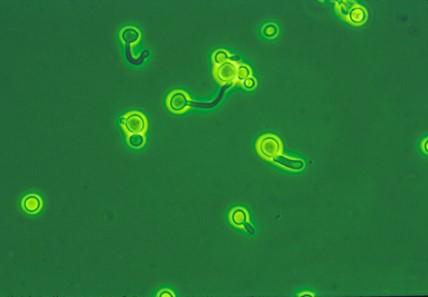
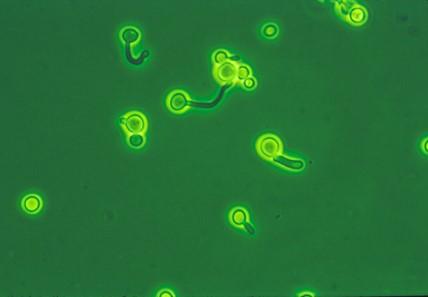
Thousands of patients suffering from invasive fungal infections in intensive-care units or after organ transplantation will benefit from the latest insights into diagnostic and therapeutic interventions, published today in the prestigious journal The Lancet Infectious Diseases.
Fungal infections invading the bloodstream, lungs or other organs can cause prolonged illness and in extreme cases can lead to permanent disability or even death.
A new review paper has outlined the gold standard for identifying at-risk patients who are critically ill, or in receipt of organ transplants, for preventing, diagnosing and treating invasive fungal infections, potentially saving countless lives across both the developed and developing world.
Senior author, Professor Tania Sorrell from the Westmead Institute for Medical Research and the Marie Bashir Institute for Infectious Diseases and Biosecurity, said that invasive fungal infections can have serious consequences for patients and their families.
"These new insights into diagnosing and treating invasive fungal infections are significant because early and correct treatment clearly leads to better outcomes for the patient.
"These infections are uncommon but potentially life-threatening. Blood infections such as candidaemia and lung infections such as aspergillosis have high mortality rates of up to 85% in critically ill and immune-compromised patients," Professor Sorrell said.
Professor Sorrell added that invasive fungal infections, overall, are a major problem in both developed and developing nations, killing more than 1.5 million people annually. The cost to the global healthcare system runs into billions of dollars each year.
"This is an important problem in Australia, but an even more serious issue in developing countries where mortality is unacceptably high despite the best available therapies and care.
"The research that has informed the recommendations in this paper will play an important role in educating doctors in both developed and developing countries about these diseases and outlining available diagnostic and therapeutic options in different medical contexts.
"It will allow clinicians to tailor their approach to managing these infections in different countries or when working with specific at-risk populations.
"This is vital, because rapid and accurate diagnosis, together with the right treatment, will significantly increase the chances of recovery for a patient.
"A significant proportion of these infections are preventable. We are also working to improve capability to identify patients at high risk of contracting these infections.
The Westmead team is now expanding their research in prevention, new diagnostic strategies, and therapeutic approaches towards infectious diseases of significant public health importance.
The paper, which was written collaboratively by Australian and Brazilian researchers, was published in The Lancet Infectious Diseases today as one of a first-of-its-kind series on fungal infections: http://www.thelancet.com/journals/laninf/article/PIIS1473-3099(17)30304-3/fulltext
The series is intended to provide new insights into the breadth of serious fungal diseases and as a call to world health bodies to prevent millions of infections each year.
Research collaboration
Authors of papers in the series have been brought together from 6 continents to address fungal infections in AIDS, cancer, the critically ill, post- organ transplantation, after TB, major abdominal surgery and two "neglected tropical diseases" called mycetoma and chromoblastomycosis.
Collaborators in the work on invasive fungal infections in the critically ill are based in:
Australia:
Westmead Institute for Medical Research
The Centre for Infectious Diseases and Microbiology Laboratory Services, Westmead
Peter MacCallum Cancer Center, Melbourne
Royal Melbourne Hospital at the Peter Doherty Institute
Marie Bashir Institute for Infectious Diseases and Biosecurity, University of Sydney
Brazil:
Department of Medicine, Division of Infectious Diseases, Escola Paulista de Medicina, Universidade Federal de São Paulo,
Central Laboratory Division (LIM03) and Laboratory of Medical Mycology (LIM53), Hospital das Clínicas da Faculdade de Medicina da Universidade de São Paulo
###
Media Contact
Leesa Maroske
[email protected]
61-286-273-030
@TheWestmead
http://www.westmeadinstitute.org.au/
Related Journal Article
http://dx.doi.org/10.1016/S1473-3099(17)30304-3