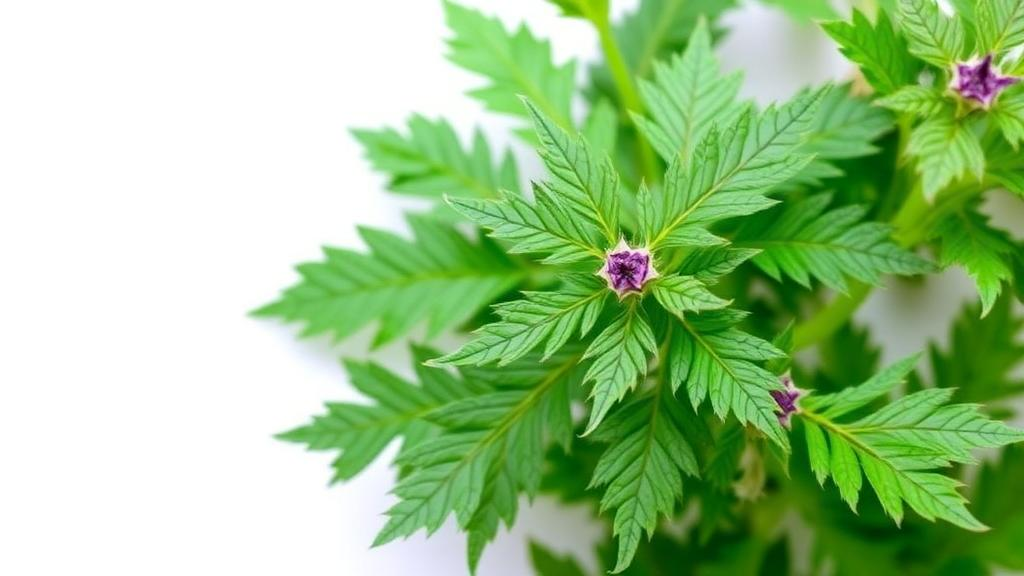
The stinging nettle, Urtica dioica, has been a fixture of traditional medicine cabinets for centuries, valued as everything from a spring tonic to a remedy for joint pain, despite the painful sting that gives the plant its name. Now a team of researchers in Algeria has put that folk reputation to the test with one of the most thorough laboratory characterizations of the species to date, and the results suggest the humble weed deserves serious scientific attention. Working with nettle harvested from the semi-arid Bir Hadada region south of Setif in eastern Algeria, the scientists prepared five different extracts from the aerial parts of the plant—leaves, flowers, and stems—and measured their phytochemical composition alongside their antioxidant and anti-inflammatory activities, both in test tubes and in living animals. The study, published in the journal Plant Biosystems, reveals that the choice of solvent dramatically changes what chemistry is pulled out of the plant, and consequently how biologically active each preparation turns out to be.
The team, led by Hadia Kellil of Abbes Laghrour University of Khenchela together with colleagues from Ferhat Abbas University of Setif 1 and partner institutions, used a classic fractionation strategy that exploits the differing solubilities of plant molecules. A crude methanolic extract served as the starting point, from which a chloroform fraction, an ethyl acetate fraction, and a residual aqueous phase were separated. A fifth preparation, a decoction extract, mimicked the traditional practice of boiling nettle in water, the way herbalists and home cooks have prepared the plant for generations. By comparing these five preparations side by side, the researchers could ask a deceptively simple question with major practical implications: which way of extracting nettle delivers the most useful medicine?
The phytochemical profiling told a clear story about where the plant’s power resides. The ethyl acetate fraction and the chloroform fraction were the richest in total phenolics, containing 44.27 and 42.26 milligrams of gallic acid equivalents per gram of extract respectively, and also led on flavonoids, with 3.83 and 2.46 milligrams of quercetin equivalents per gram. The methanolic extract, by contrast, carried the greatest load of tannins, at 26.34 milligrams of tannic acid equivalents per gram. These numbers matter because phenolic compounds and flavonoids are the molecules most often credited with the antioxidant behavior of medicinal plants, donating electrons or hydrogen atoms to neutralize reactive species before they can damage lipids, proteins, and DNA in living tissue.
Antioxidant capacity was then assessed using a battery of four complementary assays, a deliberate design choice that reflects a growing consensus in the field. No single test can capture the full complexity of antioxidant action, since each probe responds to a different mechanism and a different class of radical or oxidant. The researchers employed the DPPH radical scavenging assay, which tracks the ability of extracts to quench a stable synthetic free radical; the ferric reducing power assay, which measures the capacity to donate electrons; the beta-carotene bleaching inhibition assay, which models the protection of lipids against oxidative attack; and a ferrous ion chelation assay, which tests whether compounds can bind transition metals that would otherwise catalyze the formation of the most destructive radicals in biological systems.
The results of this four-pronged analysis were strikingly solvent-dependent. In the DPPH assay, the chloroform fraction emerged as the standout performer, with an IC50 value of 93.88 micrograms per milliliter, followed by the aqueous phase at 150.89 micrograms per milliliter. Those same two preparations also showed notable inhibition of beta-carotene bleaching, reaching about 37 percent, indicating a genuine capacity to shield fatty molecules from peroxidation. Reducing power was highest in the ethyl acetate fraction and the aqueous phase, while the decoction extract and the methanolic extract proved the most effective at chelating ferrous ions. Taken together, the data show that no single extract wins across the board; instead, different preparations excel at different lines of antioxidant defense, from direct radical scavenging to metal sequestration.
The anti-inflammatory findings were arguably the most dramatic. In vitro, the methanolic extract inhibited heat-induced protein denaturation by 90 percent, a laboratory model widely used as a first screen because protein denaturation is thought to contribute to inflammatory diseases ranging from rheumatoid arthritis to diabetes. More importantly, the team took the work into a living system, using the PMA-induced ear edema model in mice, in which a chemical irritant applied to the ear triggers acute inflammatory swelling. The methanolic extract reduced that swelling by up to 89.06 percent, an effect size that places it among the more impressive performances reported for plant extracts in this type of assay. The researchers note that the methanolic extract’s high tannin content may underpin this activity, since tannins are known to interact with proteins and modulate inflammatory cascades.
The in vivo experiments were conducted under ethical oversight consistent with the guidelines of the Algerian Association of Sciences in Animal Experimentation, and the mice used in the study were sourced from the Pasteur Institute of Algeria. The authors also align their work with the modern emphasis on the responsible use of animals in research, keeping the animal component focused on the single edema model that could validate the in vitro signals. That careful staging—chemistry first, test-tube biology second, animal validation last—is exactly the pathway that regulatory agencies and pharmacologists expect when a traditional remedy is being evaluated for modern drug development potential.
Why does geography matter here? The nettle in this study grew in a semi-arid climate, an environment characterized by water stress, intense sunlight, and temperature extremes. Plants under such conditions typically ramp up production of phenolic secondary metabolites as part of their own photoprotective and defensive machinery, since these molecules absorb ultraviolet radiation and quench the reactive oxygen species generated by drought and heat stress. That ecological logic appears to pay off for the Algerian nettle, whose phenolic yields compare favorably with figures reported for the species in more temperate settings. The finding adds to a growing body of evidence that the climate and habitat of a medicinal plant can materially shape its pharmacological value, a consideration that could inform future cultivation programs aimed at standardizing herbal raw materials.
The broader context is a plant with an already impressive dossier. Stinging nettle has been documented in prior research as an antioxidant, an antihistamine in allergic rhinitis trials, a modulator of blood pressure and oxidative stress in hypertensive rats, and a source of antimutagenic protein fractions. The European Medicines Agency’s herbal committee maintains a monograph covering the herb, reflecting its long and accepted role in European herbal medicine. What the new Algerian study adds is a systematic, head-to-head comparison of extraction strategies, giving formulators and researchers a practical map of which solvent system to choose depending on whether the target application calls for radical scavenging, lipid protection, metal chelation, or anti-inflammatory action. For a plant that many gardeners curse as a weed, the accumulating science paints a very different picture: a chemical arsenal fine-tuned by harsh environments and waiting to be harnessed.
The authors are careful not to overclaim. Their conclusions emphasize that Urtica dioica extracts are rich in phenolic compounds and possess significant antioxidant and anti-inflammatory properties, without asserting clinical efficacy in humans. The road from a mouse ear edema model to a validated therapeutic is long, and future work will need to identify the individual active molecules, establish safe and effective doses, and test the findings in well-designed human studies. Still, the study offers a compelling proof of concept and a methodological template for evaluating other traditional plants growing in marginal climates. In an era when inflammatory and oxidative stress-related diseases dominate global health burdens, and when the search for new bioactive scaffolds increasingly turns back to the plant kingdom, the sting in the nettle’s tail may turn out to be its greatest asset after all.
Subject of Research: Antioxidant and anti-inflammatory bioactivity of solvent extracts of Urtica dioica from a semi-arid climate
Article Title: Bioactive potential of various extracts of Urtica dioica (Urticaceae) in a semi-arid climate: phytochemical analysis and evaluation of antioxidant and anti-inflammatory properties
Article References: Bioactive potential of various extracts of Urtica dioica (Urticaceae) in a semi-arid climate: phytochemical analysis and evaluation of antioxidant and anti-inflammatory properties. (n.d.). https://doi.org/10.1007/s44473-026-00315-1
Image Credits: AI Generated
DOI: 10.1007/s44473-026-00315-1
Keywords: Urtica dioica, stinging nettle, polyphenols, flavonoids, tannins, antioxidant activity, anti-inflammatory activity, phytochemistry, DPPH assay, protein denaturation, ear edema model, semi-arid climate
News Source: Alan Morgan. (October 14, 2026). Stinging Nettle Extracts Show Potent Antioxidant and Anti-Inflammatory Power. Scienmag.