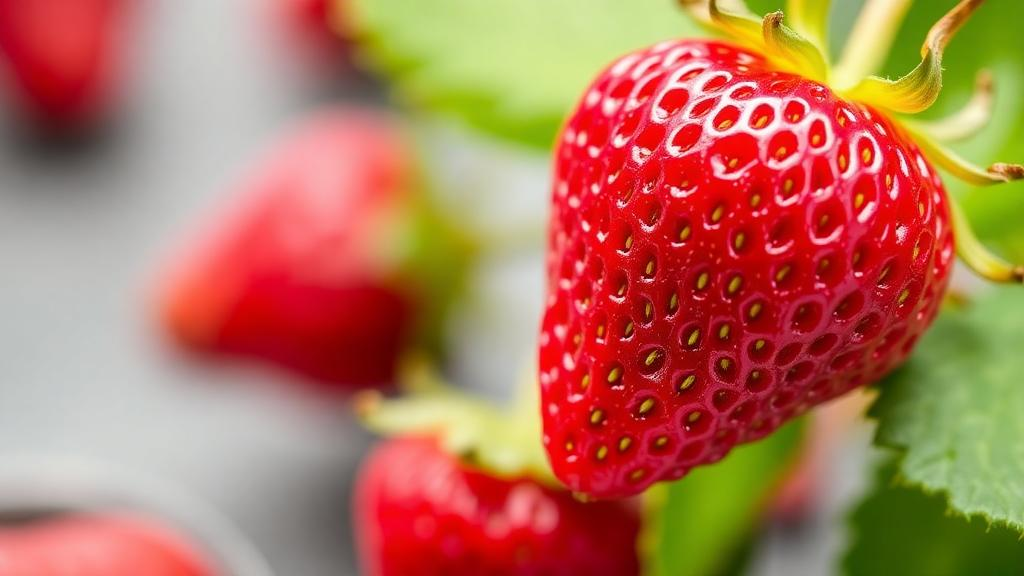
Strawberries are among the most perishable fruits on the market, with roughly 90 percent moisture content and active metabolism that limits fresh shelf life to about a week. Turning them into low-alcohol strawberry wine has long been proposed as a way to stretch the harvest, but the industry has been plagued by unstable aroma, inconsistent color, and unreliable quality. A new study published in Food Chemistry: X suggests a surprising reason why: the same strawberry cultivar harvested just two months apart can produce wines with measurably different chemistry, and red and white varieties respond to the seasons in fundamentally different ways.
Researchers at the Shandong Academy of Agricultural Sciences grew two cultivars of the garden strawberry Fragaria × ananassa side by side under identical greenhouse management at an experimental base in Shandong, China. The red-fruited ‘Jiandehong’ and the white-fruited ‘Tianshi’ were both harvested at full ripeness in January, the cold depths of the winter growing season, and again in March as temperatures climbed toward spring. Fruits from each harvest were analyzed for sugars, acidity, color, phenolic compounds, antioxidant activity, volatile aroma molecules, and electronic-tongue taste signatures—and then fermented into wine under carefully standardized conditions using the same commercial yeast strain.
The physicochemical contrast between the two cultivars was striking. January-harvested ‘Jiandehong’ berries boasted a soluble solids content of 12.00 degrees Brix, a sugar-acid ratio of 16.68, and total soluble sugars above 104 milligrams per gram of fresh weight. By March, those figures had fallen sharply: the sugar-acid ratio dropped by 24.3 percent, a shift the authors link to the large diurnal temperature swings of deep winter favoring sugar accumulation, followed by warmer spring conditions that accelerate acid respiration. The white ‘Tianshi’, by contrast, barely flinched. Its titratable acidity, sugar-acid ratio, and glucose levels showed no significant difference between January and March, revealing a metabolic stability that could make it a far more predictable raw material for winemakers.
Organic acid profiling told a similar story. Citric acid dominated in both cultivars, accounting for roughly 70 to 80 percent of total organic acids, followed by malic, quinic, and tartaric acids. But when March arrived, the red cultivar lost ground: total organic acids in ‘Jiandehong’ fell by 18.42 percent, with citric, malic, and quinic acids all declining significantly. The white cultivar pulled off an elegant compensatory maneuver—although its citric acid also dropped, malic and quinic acids accumulated in parallel, keeping total acidity essentially stable. March-harvested ‘Tianshi’ contained 41.23 percent more total organic acids than its red counterpart, highlighting what the researchers describe as superior acid-buffering capacity.
Phenolic compounds, the antioxidants that influence both health value and mouthfeel, shifted with the seasons in cultivar-specific patterns. March-harvested fruits of both varieties showed higher total phenolics and flavonoids, consistent with warmer temperatures activating the phenylpropanoid biosynthesis pathway. Ellagic acid, the dominant phenolic acid, peaked in March-harvested ‘Jiandehong’ fruit and its wine. Meanwhile, January-harvested ‘Tianshi’ accumulated exceptionally high levels of catechin and vanillin—the latter nearly ten times higher than in January red fruit—possibly linked to cold-induced acclimation and enhanced antioxidant defense. Anthocyanin content and ferric-reducing antioxidant power peaked in January red fruit, consistent with its deeper pigmentation.
The volatile aroma fingerprint revealed the study’s most dramatic cultivar differences. Gas chromatography-ion mobility spectrometry identified 88 volatile organic compounds across the samples, dominated by esters, aldehydes, ketones, and alcohols. In the red cultivar, the classic strawberry aroma markers—ethyl acetate, ethyl hexanoate, and ethyl butyrate—dropped significantly in March fruit, while aldehydes responsible for fresh, green notes, including (E)-2-hexenal, also declined markedly. The white cultivar showed no such seasonal erosion of its fruity ester profile. The authors suggest these shifts reflect harvest-time-dependent changes in the lipoxygenase pathway and in the enzyme systems that assemble esters.
Fermentation partially remodeled these fruit traits rather than simply preserving them. All wines reached similar alcohol levels between 6.51 and 6.82 percent by volume, yet their acid profiles diverged in cultivar-dependent ways. Red wines inherited their fruit’s acidity pattern, but white wines reversed it: despite the March fruit being slightly more acidic, the March white wine ended up 23.7 percent lower in total acidity than its January counterpart, possibly because higher malic acid in the fruit stimulated greater yeast degradation of that acid during fermentation. Notably, α-terpinolene, a terpene with an extremely low odor threshold, was elevated in both January-harvested wines, suggesting that cold-season harvest enriches terpene precursors that yeast enzymes later liberate.
Color measurements quantified what the eye would notice. The color difference between January and March red wines registered a ΔE value of 9.62—more than three times the threshold of visual discrimination—reflecting reduced anthocyanin stability under warmer spring conditions. The white wines varied negligibly, with a ΔE of just 1.74. Electronic-tongue analysis backed by multivariate modeling cleanly separated all four fruit types and all four wines, with sweetness responses tracking the sugar-acid ratio and sourness responses correlating strongly with titratable acidity and pH. Astringency responses in the wines were linked to catechin and p-coumaric acid levels, consistent with how flavan-3-ols bind salivary proteins.
The study’s authors are careful to note the limitations of a single year, two harvest dates, and no human sensory panel. Still, the practical implications are tantalizing. January-harvested white ‘Tianshi’ appears best suited for wines emphasizing catechin and vanillin with fresh, low-astringency character, while March-harvested red ‘Jiandehong’ yields wines rich in ellagic acid and fruity esters. For an industry where raw material cost often drives decisions and the emerging class of white strawberries is frequently overlooked, the message is clear: matching cultivar to harvest window is not a detail—it is a lever for steering the entire flavor architecture of the final wine.
Subject of Research: Effects of harvest time and cultivar on flavor compound metabolism in strawberries and their wines
Article Title: Harvest time differentially shapes flavor compounds in red and white strawberry cultivars ( Fragaria × ananassa ‘Jiandehong’ and ‘Tianshi’) and their wines via cultivar-specific metabolic responses
Article References: Liang, H., Wang, C., Yu, X., Zhao, Y., & Sun, J. (2026). Harvest time differentially shapes flavor compounds in red and white strawberry cultivars (Fragaria × ananassa ‘Jiandehong’ and ‘Tianshi’) and their wines via cultivar-specific metabolic responses. Food Chemistry: X, Article 104622. https://doi.org/10.1016/j.fochx.2026.104622
Image Credits: AI Generated
DOI: 10.1016/j.fochx.2026.104622
Keywords: strawberry, strawberry wine, harvest time, flavor chemistry, volatile compounds, phenolics, organic acids, white strawberry, fermentation, electronic tongue, Food Chemistry: X, metabolism
News Source: Bethany Barker. (October 14, 2026). When You Pick a Strawberry Changes Its Wine—and Red and White Varieties Respond Differently. Scienmag.