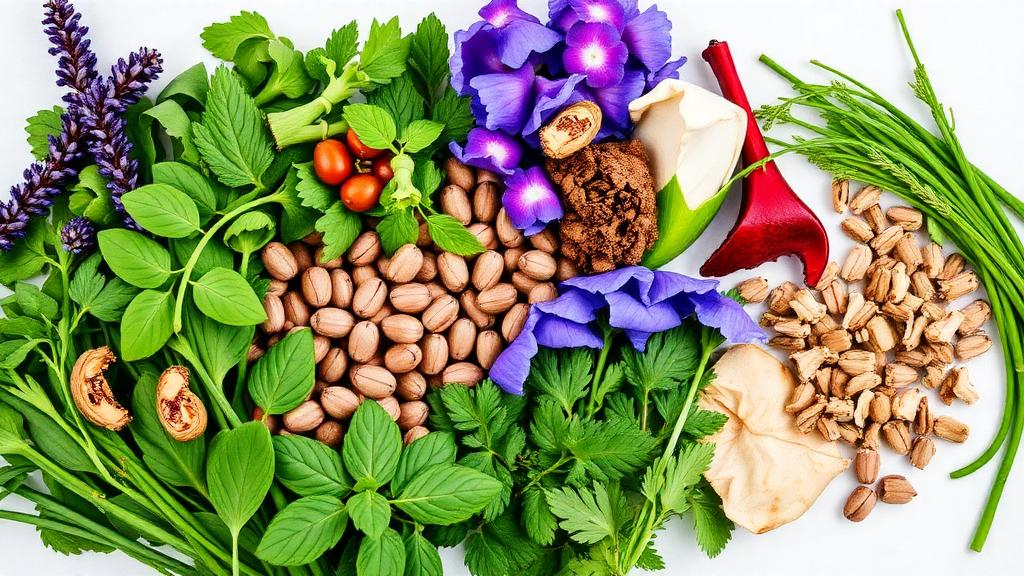
When COVID-19 swept through Bulgaria, the country’s deep-rooted tradition of medicinal plants did not push people away from mainstream medicine. Instead, according to a new cross-sectional study published in BMC Complementary Medicine and Therapies, most Bulgarian adults who fell ill reached for both at once. Researchers from the Medical University of Varna surveyed 513 adults between July 2022 and September 2023 and found that among those who had experienced symptomatic COVID-19 and treated it, more than half combined conventional therapy with herbal medicine, while only a small minority relied on herbs alone. The findings paint a picture of an integrative therapeutic culture in which phytotherapy functions as a companion to, rather than a replacement for, physician-guided care.
The study recruited participants through non-probability snowball sampling, a method in which initial respondents forward the survey through their own social networks. Of the 513 adults surveyed, 62.8 percent, or 322 people, reported having had COVID-19. Within that group, 84.8 percent, or 273 participants, had been symptomatic and had applied some form of treatment. This symptomatic subgroup formed the analytical core of the study, because treatment choices and motivations could only be meaningfully assessed among people who had actually been ill enough to intervene therapeutically.
The consultation behaviour of these symptomatic participants was strikingly conventional. A full 85.7 percent, or 234 individuals, consulted a physician about their illness, while only 14.3 percent, or 39 people, self-medicated without any medical consultation. This high rate of physician contact challenges a common assumption that heavy herbal medicine use correlates with distrust of the medical system. In Bulgaria, at least within this surveyed sample, the two practices appear to coexist comfortably, with patients seeking professional diagnosis and prescriptions while simultaneously supplementing their regimen with plant-based preparations drawn from family tradition, pharmacy shelves, or popular health culture.
When the researchers categorised therapeutic approaches among symptomatic participants, three distinct patterns emerged. Exactly one third, 33.7 percent or 92 people, relied exclusively on conventional therapy. The largest group, 52.0 percent or 142 participants, received combined conventional and herbal therapy. The remaining 14.3 percent, or 39 participants, fell into a category the authors labelled herbal self-medication, which included both those who used only herbal treatment throughout and those who initially treated themselves with herbal medicine before switching to conventional care. In other words, for every Bulgarian in the sample who used herbs instead of mainstream medicine, roughly three to four used herbs alongside it.
Motivations behind these choices revealed a pragmatic, prevention-oriented mindset. The most frequently selected motivation category, chosen by 44.0 percent of symptomatic participants, or 120 people, was combined conventional and herbal therapy aimed at preventing complications. Rather than framing herbs as an either-or alternative, respondents overwhelmingly described them as an added layer of protection stacked on top of prescribed treatment. This framing is consistent with Bulgaria’s ethnobotanical heritage, in which medicinal plants have long occupied a legitimate cultural space in household health management, and it suggests that public health messaging which dismisses herbal use outright may fail to resonate with a population that sees no contradiction between the two approaches.
One of the study’s most consequential findings was what it did not find. None of the examined demographic factors, including sex, age, education, and employment status, showed a statistically significant association with therapy choice. All comparisons yielded p values above 0.05, and the corresponding effect sizes, measured with Cramer’s V, were all below 0.11, indicating negligible associations. Herbal medicine use during COVID-19 in this sample was not the preserve of any particular age bracket, gender, educational level, or occupational group. The integrative habit cut across the demographic spectrum, which the authors suggest makes it a population-wide phenomenon rather than a subcultural one.
The relationship between motivation and therapeutic approach was far stronger, at least descriptively. The study reported a statistically significant association between the recoded motivation category and the therapeutic approach, with a chi-square statistic of 199.476 on four degrees of freedom, a p value below 0.001, and a Cramer’s V of 0.604, which conventionally indicates a very large effect. However, the authors were careful to flag an important methodological caveat: this association is likely inflated by conceptual overlap between the two variables, since the motivation categories were themselves defined partly in terms of the treatments used. Someone categorised as motivated by combined therapy to prevent complications is, almost by definition, someone who used combined therapy.
To test whether this overlap was distorting the results, the researchers performed a reclassification sensitivity analysis in which participants who had followed an initial herbal-to-conventional treatment sequence were reassigned from the herbal self-medication group to the combined-treatment group. The demographic findings and the therapeutic approach-motivation association both remained materially unchanged under this alternative coding, lending robustness to the core conclusions. A separate nominal finding, in which employment status showed an uncorrected association with the recoded motivation category, with a chi-square of 10.240 on four degrees of freedom and a p value of 0.037, did not survive Bonferroni correction for multiple comparisons, under which the corrected significance threshold was 0.00625. The authors treated it accordingly as non-significant.
The overall conclusion drawn by the Varna team is that herbal medicine played a substantial complementary rather than alternative role in COVID-19 management within this surveyed sample. The predominantly integrative model, combined with the very high rate of physician consultation, suggests that Bulgarian patients are not abandoning conventional care but quietly augmenting it. This has direct clinical implications: herbal products, though perceived as natural and benign, can interact with pharmaceutical agents, affect drug metabolism, or influence adherence to prescribed regimens. When patients do not disclose their herbal use, clinicians lose the information needed to counsel them safely, and the study’s authors argue that this disclosure gap is precisely where the risk lies.
Accordingly, the researchers recommend that healthcare providers and public-health communicators actively enquire about and document herbal medicine use, particularly when it is combined with conventional treatment, in order to support patient-centred counselling and safety monitoring. They further call for proactive, non-judgemental discussions between providers and patients about herbal practices, with particular attention to patients’ beliefs and attitudes, so that integration with conventional treatments happens safely rather than silently. The study also carries limitations worth noting: the cross-sectional design captures a single moment in time, the snowball sampling strategy limits generalisability to the broader Bulgarian population, and the data rely on self-reported illness and treatment. Even so, as one of the few detailed portraits of herbal medicine use during the pandemic in an Eastern European setting, the study offers a valuable counterpoint to narratives that pit traditional and conventional medicine against each other, showing instead a society that, in the face of a novel virus, used both hands to fight back.
Subject of Research: Herbal medicine use and integration with conventional therapy during COVID-19 in Bulgaria
Article Title: Herbal medicine use during COVID-19 in Bulgaria: integration patterns and motivations for treatment choice in a cross-sectional online survey
Article References: Herbal medicine use during COVID-19 in Bulgaria: integration patterns and motivations for treatment choice in a cross-sectional online survey. (n.d.). https://doi.org/10.1186/s12906-026-05642-6
Image Credits: AI Generated
DOI: 10.1186/s12906-026-05642-6
Keywords: herbal medicine, COVID-19, Bulgaria, complementary medicine, phytotherapy, self-medication, cross-sectional survey, ethnobotany, therapeutic behaviour, integrative medicine, medicinal plants, public health
News Source: Ophelia Keating. (October 14, 2026). Most Bulgarians Mixed Herbs With Conventional Care During COVID-19, Survey Finds. Scienmag.