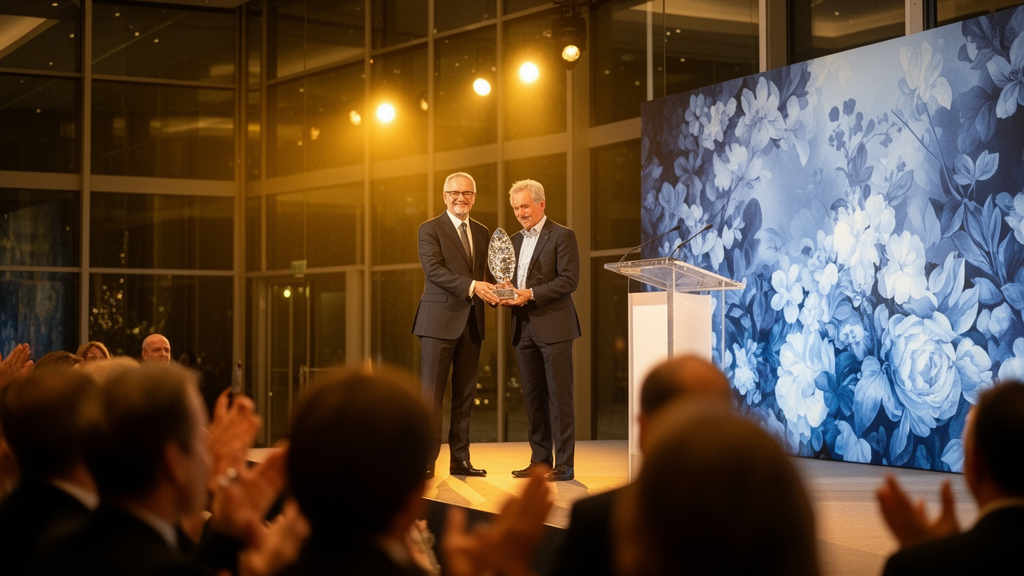
Springer Nature has announced the recipients of its Editor of Distinction Awards for 2026, an annual programme that recognises the editors whose behind-the-scenes labour keeps the scientific literature accurate, fair and trustworthy. Among the journals celebrating this year is BMC Pharmacology and Toxicology, part of the BMC family of open access titles, which has named thirteen editors for the Springer Nature Editorial Contribution Award and four editors for the Springer Nature Author Service Award. The announcement, published on the journal’s Springer Nature updates page, frames the honours as a tribute to work that rarely attracts public attention but sits at the very foundation of how research in pharmacology and toxicology reaches the scientific community.
The Editorial Contribution Award is described as being given for meticulous assessment of submissions and rigorous management of the peer review process, with the explicit aim of safeguarding the scientific accuracy of the published record. In practical terms, this means the awarded editors are being recognised for the unglamorous but decisive work of reading manuscripts closely, judging whether the experimental design and statistical reasoning support the authors’ conclusions, selecting and coordinating external peer reviewers, weighing conflicting referee reports, and issuing decisions that determine whether a paper is published, revised or rejected. In a field such as pharmacology and toxicology, where published findings can inform drug safety decisions and regulatory thinking, that gatekeeping role carries particular weight.
The thirteen recipients of the Editorial Contribution Award at BMC Pharmacology and Toxicology are Abdelwahab Omri, Anshuman Chandra, Catherine Sherwin, Giovanni Tarantino, Hualin Cai, Imran Khan, Jeffrey Raj, Josef Yayan, Koushik Debnath, Marcelo Arbo, Md Jakaria, Zhengwei Huang and Zhenwei Yu. The list spans a range of research backgrounds, reflecting the breadth of a journal that publishes on drug mechanisms, toxicological risk, experimental therapeutics and the pharmacological sciences more broadly. Each editor, according to the journal’s announcement, has contributed to the careful evaluation of submissions that the award is designed to honour.
The second honour, the Springer Nature Author Service Award, recognises exceptional service in improving the author experience and ensuring that the peer review process is efficient, constructive and fair. At BMC Pharmacology and Toxicology, that award goes to Anindya Bose, Josef Yayan, Simone Brogi and Zhenwei Yu. Two of the names, Josef Yayan and Zhenwei Yu, appear on both lists, marking them out as editors judged to have excelled both in protecting the accuracy of the published record and in making the process of publishing itself more humane and transparent for the scientists who submit their work.
The distinction between the two awards captures a tension that runs through modern scholarly publishing. On one side is the need for rigour: peer review exists to catch errors, challenge overreach and prevent flawed or even fraudulent findings from entering the literature. On the other side is the need for service: authors, many of them early-career researchers racing against grant deadlines and hiring cycles, depend on review processes that are timely, that return useful and respectful feedback, and that do not stall manuscripts in months of silence. Journals that manage to deliver both are increasingly rare, and Springer Nature’s decision to celebrate the two dimensions separately acknowledges that they demand different skills from editors.
The journal’s announcement places the awards in the context of the wider editorial ecosystem. Beyond assessing papers, it notes, editors build networks that connect authors with peer reviewers, help authors improve their papers before and during review, and advocate for their journal communities. That advocacy work has become more visible in recent years as journals compete not only for submissions but for the trust of researchers who have grown wary of predatory outlets, opaque editorial decisions and protracted review timelines. Editors who cultivate loyal reviewer networks and mentor authors through revision cycles effectively function as the human infrastructure of a journal, and the Editor of Distinction Awards is Springer Nature’s mechanism for making that infrastructure visible.
For BMC Pharmacology and Toxicology specifically, the recognition arrives within a publishing model that differs in important ways from that of traditional subscription journals. BMC titles operate under open access principles, meaning that published articles are freely readable by anyone, and the journal’s editorial processes are designed around transparency and speed as well as rigour. In such a model, the quality of editorial judgement becomes even more central, because the journal’s reputation among authors and readers rests directly on whether its published papers can be relied upon. An award that highlights meticulous assessment of submissions is, in effect, a public statement about the journal’s commitment to the integrity of what it publishes.
The pharmacology and toxicology community has particular reasons to care about editorial quality. Research in this field frequently involves dose-response studies, animal models, in vitro assays and emerging methodologies such as computational toxicology and network pharmacology, and the interpretation of such data requires specialised expertise that generalist reviewers may lack. Editors with domain knowledge are therefore essential for ensuring that methodological weaknesses, inappropriate statistical treatments or overconfident safety claims are caught before publication. Conversely, constructive editorial guidance can help authors strengthen borderline studies, improving the overall signal quality of the literature on drug efficacy and toxicity. The awards implicitly recognise that this dual function, filtering and improving, is skilled labour deserving of formal acknowledgement.
The 2026 awards also speak to a broader conversation within science about who does the work of peer review and whether that work is valued. Peer reviewers and academic editors are typically unpaid or minimally compensated, contributing their time on top of research, teaching and administrative duties. Surveys across the publishing industry have repeatedly documented growing reviewer fatigue, with demands on the reviewer pool outpacing the growth in manuscript submissions. Programmes such as the Editor of Distinction Awards do not change the economics of peer review, but they do offer a form of professional recognition that editors can carry into their careers, and they signal to research institutions that editorial service is a substantive scholarly contribution rather than an invisible after-hours obligation.
For the seventeen named editors, the awards formalise what their journal’s editorial office describes as tireless dedication to their research community. For the wider readership of BMC Pharmacology and Toxicology, the announcement serves as a reminder that every published paper is the product of a chain of human judgements, from the associate editor who first assesses a submission to the referees whose reports shape the final version. As scientific publishing continues to grapple with questions of integrity, reproducibility and trust, celebrating the people who perform those judgements with care is one small but meaningful way of reinforcing the norms on which the scientific record depends. Springer Nature says the annual programme will continue, with next year’s round of Editor of Distinction Awards expected to honour a new cohort of editors across its journal portfolio.
Subject of Research: Editorial recognition awards for peer review and author service in pharmacology and toxicology publishing
Article Title: Springer Nature Editor of Distinction Awards 2026
Article References: Springer Nature Editor of Distinction Awards 2026. (n.d.). Original publication
Image Credits: AI Generated
DOI: Not provided
Keywords: Springer Nature, BMC Pharmacology and Toxicology, peer review, Editor of Distinction Awards, editorial integrity, open access publishing, scholarly publishing, author experience, scientific record, pharmacology, toxicology, research community
News Source: Ophelia Keating. (October 13, 2026). Peer Review Champions Honoured in Springer Nature Editor of Distinction Awards 2026. Scienmag.