One of the simplest questions in quantum physics—what happens when a single atom meets a single particle of light—has turned out to conceal a structure of astonishing scale. A research team led by Professors Namkyoo Park and Sunkyu Yu of the Department of Electrical and Computer Engineering at Seoul National University College of Engineering, together with Professor Xianji Piao of the University of Seoul, has shown that this elementary interaction contains a semi-infinite network of interconnected quantum states, and they have built an entirely new graph theory to map it. Their study, published in the journal Science Advances on September 25, introduces a framework the researchers call the magnetic graph, in which every link between quantum states carries not only the strength of a connection but also the phase of the associated wave. The work promises a unified mathematical language for atom-light physics, a field that has long been fragmented across different coupling regimes, each demanding its own approximation scheme.
The physical system at the heart of the study is described by the quantum Rabi model, the most fundamental theoretical model of how atoms and light interact. When an atom absorbs a photon, its energy state changes; when it releases stored energy, it may emit a photon in return. This repeated exchange is the elementary building block underlying quantum information processing, quantum sensing, lasers, nonlinear optics, and a broad family of light-matter technologies. For decades, physicists have understood this exchange well in one limit: when the coupling between atom and light is weak, well-established approximations describe the dynamics with excellent accuracy. But those approximations begin to fail as the interaction grows stronger, and they collapse entirely in the ultrastrong and deep-strong coupling regimes, where the interaction strength becomes comparable to or greater than the intrinsic frequency of the light itself.
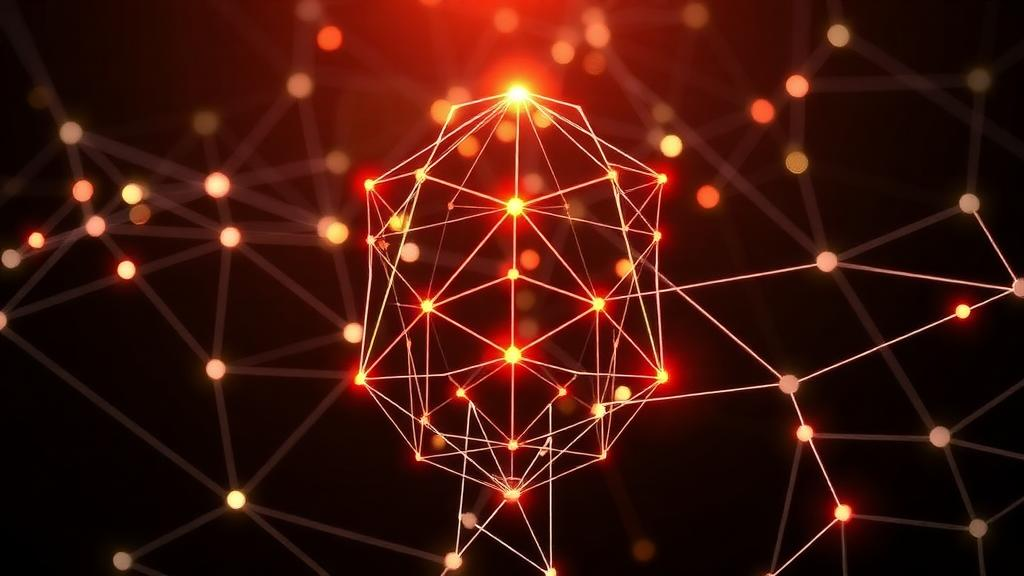
Because no single conventional theory could describe behavior across the entire range of coupling strengths, researchers have traditionally applied distinct approximation methods to different regimes, producing a fragmented theoretical landscape. The Seoul team recognized that a new mathematical language was needed—one capable of representing complex quantum states at a glance and tracing the full evolution from weak to deep-strong coupling within a single framework. Their inspiration came from graph theory, the branch of mathematics that allows subway maps, brain architecture, and social networks to be interpreted within one common formalism. Just as a subway map represents stations as points and routes as connecting lines, the new framework depicts quantum states as nodes and the possible transitions between them as links, converting an abstract quantum problem into a visualizable network.
The translation is more subtle than a simple analogy. In the team’s construction, each node of the graph corresponds to a specific combination of the number of photons in the field and the internal state of the atom—effectively a station where a particular quantum configuration resides. The likelihood that one quantum state will transition into another is encoded in the thickness of the connecting line, while the phase of the light wave is represented by the line’s color. Phase, a value indicating the position of a wave within one complete oscillation cycle, determines how waves interfere: two waves with identical frequency and amplitude can reinforce or cancel each other depending entirely on their relative phases. By encoding phase as color, the magnetic graph preserves information that ordinary connectivity graphs discard, and that preservation turns out to be essential.
Through this representation, the researchers made their central discovery: even the simplest atom-light quantum system conceals a semi-infinite graph in which two types of nodes are connected through an unlimited number of long-range links. A semi-infinite graph has a boundary in one direction but extends indefinitely in the other, meaning that although the physical system consists of nothing more than a single atom interacting with light, the quantum states accessible to that system form a vast network whose connectivity grows without bound. The finding reframes the quantum Rabi model, long treated as a compact two-body problem, as a gateway into an immense hidden structure. As the atom-light coupling strength increases, the connectivity between quantum states grows and their phase differences become more diverse, so stronger coupling literally enriches the geometry of the network.
Mapping the network was only the first step; the team also needed a way to compress its complexity into something measurable. They introduced a metric derived from the magnetic Laplacian, a mathematical tool that analyzes connectivity in a graph while incorporating both the strengths of its links and the phases those links carry. The resulting index condenses the entire intricate structure into a single number. Using this measure, the researchers successfully distinguished every regime of atom-light interaction—from weak coupling through ultrastrong to deep-strong coupling—along one continuous scale. This unified classification replaces the fragmented picture in which separate theoretical tools were required for different coupling strengths, offering physicists for the first time a single dial that reads out the character of the interaction regardless of how strong it is.
The team then probed why the structure of quantum states changes so dramatically once coupling becomes strong. For each of several subgraph sizes, they generated and analyzed 20,000 random configurations, building a statistical picture of how the network behaves. The results revealed that phase frustration is a key mechanism driving the reorganization of quantum states in the strong-coupling regime. Phase frustration occurs when waves traveling along different paths acquire incompatible phases and consequently cancel one another. It can be pictured as signals taking several different routes to the same destination but arriving out of step, interfering with one another and obstructing further movement. In the quantum graph, this incompatibility fundamentally reshapes which states the system can occupy and how it evolves.
The statistical findings carry a conceptual lesson that extends beyond the Rabi model: graph connectivity alone is insufficient to understand strongly interacting quantum systems. The phase information distributed throughout the network—and the frustration produced when phases cannot be made mutually compatible—can fundamentally alter the quantum states of the system. Any future theory or simulation of ultrastrong light-matter coupling must therefore track not just which states are linked, but the wave phases attached to those links. The magnetic graph framework provides exactly that capability, and it does so within a formalism familiar from network science, making the results accessible to researchers well outside traditional quantum optics.
The significance of the work is twofold. Scientifically, it exposes previously hidden structural complexity within one of the most elementary models of quantum physics and supplies a common mathematical framework for coupling regimes that have historically been treated separately. Technologically, it opens routes toward practical devices: the theory could contribute to the design and control of quantum computers, quantum simulators, and photonic neural networks. In particular, the vast state-space connectivity generated by even a single atom interacting with light may offer a compact physical basis for implementing artificial neural networks, where rich connectivity is precisely the resource that computation requires. Professor Namkyoo Park noted that the team has shown an immense connectivity structure is hidden even within the simplest quantum phenomenon, and said the researchers plan to continue investigating how artificial neural networks can be implemented by controlling the interaction between a single atom and light.
The research was supported by the National Research Foundation of Korea through the Basic Research Laboratory, Innovation Research Center, Pilot and Feasibility Grants, Young Researcher Program, Core Research Grants, and Midcareer Researcher Program, all funded by the Korean government, with additional support from the BK21 FOUR program of the Education and Research Program for Future ICT Pioneers at Seoul National University. The study relied on computational simulation and modeling, and the authors report no conflicts of interest. What began as an effort to tame the mathematical awkwardness of the quantum Rabi model has ended with a striking reframing of the field: the simplest interaction in quantum physics, when viewed through the right lens, is not simple at all but a boundless network waiting to be navigated, one colored line at a time.
Subject of Research: Graph-theoretic modeling of atom-light interactions across quantum coupling regimes
Article Title: Vast hidden network discovered in the simplest quantum interaction: SNU–University of Seoul team develops a new graph theory unifying quantum coupling regimes
Article References: Vast hidden network discovered in the simplest quantum interaction: SNU–University of Seoul team develops a new graph theory unifying quantum coupling regimes. (n.d.). Original publication
Image Credits: AI Generated
DOI: Not provided
Keywords: quantum Rabi model, graph theory, magnetic Laplacian, ultrastrong coupling, deep-strong coupling, atom-light interaction, phase frustration, quantum computing, photonic neural networks, quantum states, Science Advances, Seoul National University
News Source: Katie Riggs. (October 13, 2026). Hidden Graph Network Found in Simplest Quantum Interaction Unifies Atom-Light Coupling. Scienmag.