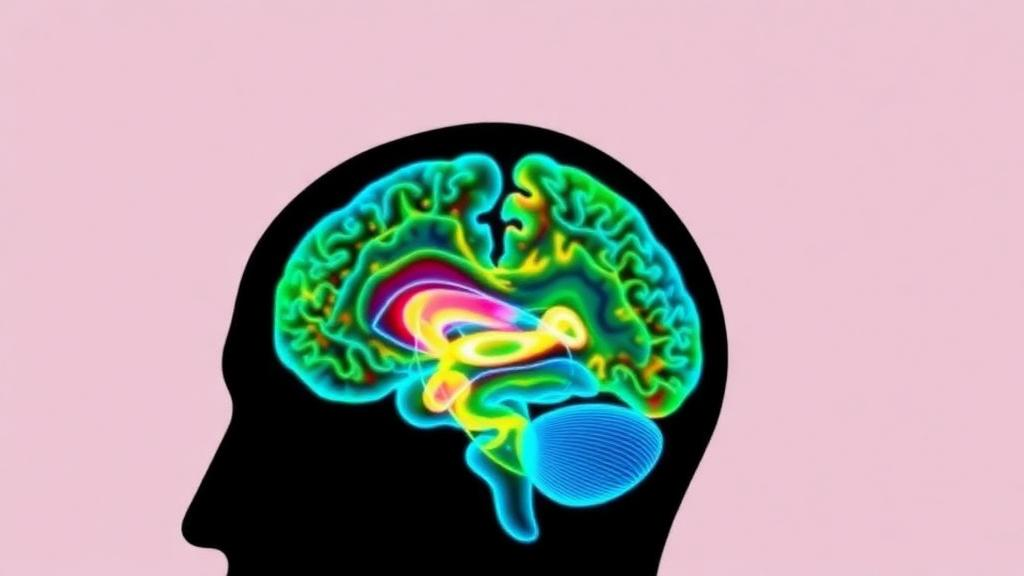
For the first time, scientists have watched lysergic acid diethylamide — better known as LSD — bind to its molecular target inside the living human brain while simultaneously tracking the drug’s sweeping effects on blood flow and brain-wide connectivity. The study, published in Nature Neuroscience by a team led from the Neurobiology Research Unit at Rigshospitalet in Copenhagen, used simultaneous positron emission tomography and magnetic resonance imaging to capture, in a single scanning session, both the molecular engagement of the psychedelic and the hemodynamic storm it unleashes. The work provides something the psychedelic research field has lacked: a direct, quantitative measure of how strongly LSD occupies its principal receptor in people, and how that occupancy relates to the drug’s subjective and physiological effects.
The central molecular player is the serotonin 2A receptor, or 5-HT2AR, long suspected to be the key gateway to psychedelic experience. To visualize it, the researchers used the radioligand [11C]Cimbi-36, a PET tracer that binds to the same receptor. Seven healthy volunteers, blinded to the dose of LSD they received, underwent baseline PET-MRI scans and then returned for scans after oral doses of LSD ranging from 25 to 200 micrograms. By comparing tracer binding before and after the drug, the team could calculate receptor occupancy — the fraction of 5-HT2AR sites actually commandeered by LSD at each dose. This dose-occupancy relationship, now established in humans for the first time for LSD, gives clinical developers a quantitative anchor for choosing doses in therapeutic trials.
The hemodynamic findings were equally striking. LSD increased global cerebral blood flow, measured with pseudo-continuous arterial spin labeling, and also increased flow through the internal carotid arteries, the main pipelines supplying the brain, measured with phase-contrast mapping MRI. The two measures tracked each other closely across participants: changes in global cerebral blood flow and changes in carotid artery flow showed a strong positive correlation, indicating that the drug’s effect on brain perfusion is driven, at least in part, by increased supply from the great vessels rather than by a purely local redistribution of flow within the brain. This matters because serotonin receptors are abundant on systemic blood vessels, and psychedelics have long been known to interact with the vascular system in complex ways.
Perhaps the most provocative result concerns functional connectivity. Using resting-state BOLD fMRI, the team computed a global measure of brain-wide correlation, often called GCOR, and found that LSD decreased it — a reduction in the overall synchrony of activity across the cortex. Intriguingly, this drop in global connectivity was negatively associated with the rise in cerebral blood flow: the more blood flow increased, the more global connectivity fell. The authors contrasted this with a separate cohort of 25 participants who received psilocybin, where the relationship ran in the opposite direction, with LSD and psilocybin producing opposing effects on global correlation. The finding suggests that although both drugs act primarily at the 5-HT2AR, they are not interchangeable pharmacologically, and that their distinct neurophysiological signatures may have been masked in earlier studies that relied on a single modality.
That distinction carries a methodological warning for the entire field. The BOLD signal that dominates human psychedelic neuroimaging is not a pure readout of neural activity; it entangles neural drive with blood flow, blood volume and oxygenation. If LSD raises cerebral blood flow globally while dampening global connectivity, then some of the connectivity changes reported in prior fMRI studies may reflect vascular confounds rather than altered neural communication. By measuring perfusion, arterial inflow and connectivity simultaneously in the same individuals, the Copenhagen team could begin to disentangle these threads — and their data suggest the entanglement is real and drug-specific, differing between LSD and psilocybin in ways that single-modality designs would miss entirely.
The pharmacokinetics added another layer of intrigue. When the researchers plotted subjective drug intensity against plasma LSD concentrations over time, they observed an anticlockwise hysteresis loop: subjective effects lagged behind and outlasted what plasma levels alone would predict. This temporal dissociation between drug concentration in the blood and the intensity of the experience points to atypical pharmacodynamic mechanisms — perhaps slow receptor kinetics, active metabolites, or downstream signaling cascades that persist after the parent compound has cleared. Notably, the team’s extended analyses showed that psilocybin, converted to psilocin in the body, did not display a comparable hysteresis pattern, with subjective intensity tracking plasma psilocin levels without a consistent temporal offset. The two psychedelics, it seems, operate on different clocks.
The road to these results was not smooth, and the study’s transparency about its difficulties is itself informative. Of 53 volunteers assessed for eligibility, 16 attended in-person screening and 12 were randomized, with 11 completing baseline assessment and receiving LSD. Only seven had complete peak-scan data included in the final analysis; two participants could not complete post-drug scans because of adverse effects, and two scans were lost to scanner failure. Psychedelic research of this intensity — hours inside a PET-MRI scanner at the peak of a drug experience — is logistically brutal, and the attrition underscores how rare and valuable complete multimodal datasets of this kind are. Two of the seven completers also returned for late-effect scans, offering a preliminary glimpse of how the drug’s cerebral effects evolve as the acute experience subsides.
Why does receptor occupancy matter so much for the clinical pipeline? Psychedelic-assisted therapies are advancing through late-stage trials for depression, anxiety and other conditions, yet dosing has remained largely empirical, guided by subjective intensity rather than by molecular target engagement. The new dose-occupancy curve allows researchers to connect the pharmacological dose, the fraction of receptors engaged, the cerebral blood flow response and the reported experience within a single quantitative framework. That framework can inform the design of safer trials, help interpret why different psychedelics produce different durations and qualities of effect, and support the development of compounds engineered to retain therapeutic benefit while minimizing cardiovascular and perceptual side effects.
The comparison with psilocybin also carries a broader scientific message: the class of drugs we call psychedelics is pharmacologically heterogeneous. LSD is an ergoline with a long duration of action and affinity for a wider panel of receptors, while psilocybin’s active metabolite is a tryptamine with a shorter, cleaner profile. The opposing effects on global connectivity observed here, together with the divergent hysteresis patterns and the distinct relationships between blood flow and connectivity, suggest that results from one compound cannot simply be generalized to the other. For a field racing toward regulatory approval, that nuance is not academic; it shapes expectations about which patients may benefit from which compound, and what physiological monitoring each requires.
What remains to be resolved is how these molecular and vascular effects translate into the therapeutic outcomes that matter. The study involved healthy volunteers at a range of doses, not patients, and its sample size — seven completers — is small by any standard, with some correlations reported without correction for multiple comparisons. The raw neuroimaging data have been deposited in the Cimbi database for qualified researchers, and the analysis code has been released publicly, inviting independent scrutiny and reanalysis. As psychedelic medicine matures, studies of this kind — direct, multimodal, and honest about their limitations — will be essential for converting a cultural renaissance into a rigorous clinical science, one receptor and one milliliter of blood at a time.
Subject of Research: In vivo PET-MRI measurement of LSD receptor occupancy, cerebral blood flow and brain connectivity in humans
Article Title: Investigating molecular and hemodynamic effects of LSD in the human brain
Article References: Investigating molecular and hemodynamic effects of LSD in the human brain. (n.d.). https://doi.org/10.1038/s41593-026-02462-2
Image Credits: AI Generated
DOI: 10.1038/s41593-026-02462-2
Keywords: LSD, psychedelics, serotonin 2A receptor, PET-MRI, cerebral blood flow, functional connectivity, psilocybin, receptor occupancy, pharmacokinetics, neuroimaging, 5-HT2AR, Nature Neuroscience
News Source: Cassandra Pierce. (October 12, 2026). LSD Caught in Action: PET-MRI Reveals How the Psychedelic Grips the Human Brain. Scienmag.