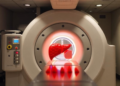
Histotripsy sounds almost too futuristic to be real: a technique that destroys tumors inside the body using nothing but precisely focused pulses of ultrasound, with no incisions, no needles, and no heat. Instead of burning or freezing tissue the way radiofrequency ablation and cryotherapy do, histotripsy relies on cavitation, the rapid formation and collapse of microscopic bubbles at the focal point of an ultrasound beam. Those collapsing bubbles generate extraordinary mechanical forces that tear cells apart, liquefying a targeted volume of tissue that the body then gradually resorbs. In 2023, the United States Food and Drug Administration cleared the first histotripsy system for liver tumors, and clinical enthusiasm has grown rapidly. But a new systematic review published in CVIR Oncology offers the most comprehensive accounting yet of what can go wrong, and its message is nuanced: the technology’s acute safety record is encouraging in selected settings, yet several serious adverse events, some unique to its cavitation mechanism, demand attention as adoption accelerates.
The review, led by Madeline I. Foo of Johns Hopkins Hospital and Alissa Hendricks-Wenger of Mayo Clinic Florida, together with colleagues including Eli Vlaisavljevich of Virginia Tech, one of the technique’s pioneering engineers, searched PubMed and SCOPUS for studies of histotripsy ablation of parenchymal tissues in vivo. From an initial pool of 1,270 publications identified on June 22, 2026, the team applied strict inclusion criteria: the work had to use histotripsy for in vivo ablation of parenchymal tissue, be peer-reviewed, and have full text available in English. Conference abstracts, preprints, reviews, and studies targeting non-parenchymal structures such as phantoms, abscesses, or thromboses were excluded. The final analysis included 141 studies, of which 114 were pre-clinical and 27 were clinical reports. Most animal work involved healthy tissue in murine or porcine models, while the clinical literature concentrated overwhelmingly on hepatic malignancies, with 25 of the 27 clinical studies focused on the liver. Assuming no overlaps beyond those identified, the clinical experience could encompass a maximum of roughly 607 unique patients, a reminder of how early the human evidence base still is.
The authors performed a formal meta-analysis only on clinical cohort studies of hepatic ablation, synthesizing the remaining findings qualitatively and grading severity with the Society of Interventional Radiology adverse event classification. The pooled numbers tell a broadly reassuring story with important caveats. The screen-failure rate, meaning patients deemed appropriate on clinical criteria who ultimately did not receive treatment, was 49 percent, reflecting how carefully candidates are still being selected. The overall incidence of serious adverse events, grade 3 or higher on the SIR scale, was 6 percent. The two most common serious complications were thrombotic events and acute kidney injury, each with a pooled incidence of roughly 4 to 6 percent. Pain, by contrast, was infrequently and inconsistently reported, but where it was measured, most patients experienced only mild to moderate discomfort with minimal analgesic requirements, and in a canine osteosarcoma limb-sparing trial, treated animals actually improved their weight-bearing on the treated limb over follow-up.
What makes the review particularly valuable is its attention to mechanism-specific risks. Because histotripsy works by mechanical fractionation rather than thermal coagulation, it creates injury patterns that thermal ablation does not. The rapid liquefaction of tissue releases intracellular electrolytes and macromolecules into the circulation, a process that may contribute to local and systemic injury. Cavitation events occur with a probabilistic distribution, which means that even an adequate-appearing treatment can leave viable cells behind, generate debris particles measuring up to 54 micrometers, small enough to act as embolic agents, and theoretically liberate tumor cell clusters that could disseminate. The review also distinguishes injuries along the ultrasound beam path: pre-focal damage between the transducer and the focus, post-focal injury deep to the treatment zone, and unintended effects within the prescribed treatment volume itself.
Some of the most sobering findings come from the pre-clinical literature. Three bowel perforations occurred in a murine study using a custom 1 MHz transducer with high treatment parameters and wide margins that encompassed bowel. In porcine pancreatic ablation with the Edison clinical system, two grade 3 events were reported, including septic peritonitis requiring euthanasia and gastrointestinal obstruction, with poor ultrasound visualization from overlying bowel gas associated with bowel damage in three of nine swine. Pulmonary injury appeared in a porcine study of transcostal hepatic treatment, where four of five subjects showed magnetic resonance evidence of right lower lobe lung injury, though no pneumothoraxes developed. A chronic rodent study found that mice developed alveolar septal rupture and pulmonary hemorrhage because the acoustic channel was long relative to their small bodies, an injury absent when the same protocol was applied to rats, underscoring how body size and acoustic-window geometry shape beam-path risk. Urinary tract studies reported rectoprostatic fistulas and urethral perforation in a canine prostate model, while a porcine ureter study showed only low-grade, reversible urothelial injury.
Clinically, the pattern of serious events differs in instructive ways. Gastrointestinal and pulmonary adverse events have so far appeared only in animals, while vascular injuries, acute kidney injuries, and disease progression have emerged only in humans. Acute kidney injury following hepatic histotripsy has become a recognized systemic complication: in a five-center review of 146 procedures, nine patients developed AKI, including two grade 5 events, and additional cases have surfaced in case reports and the FDA’s MAUDE registry. Vascular complications have included bleeding requiring embolization and transfusion, hepatic pseudoaneurysms within the treatment zone, and hemorrhagic shock, with one death on postoperative day 28 from fulminant hepatic failure in a vascular-injury series. Portal and hepatic vein thrombosis has emerged as one of the most common clinically significant events, with central tumor location and overlapping treatment zones identified as key risk factors, findings that align with pre-clinical work linking thrombosis to cavitation-induced endothelial injury. Notably, three anticoagulated large-animal studies found no significant hemorrhage after hepatic, renal, or prostate treatment, and pre-clinical work suggests prophylactic low-dose heparin can mitigate thrombotic risk without increasing bleeding.
Perhaps the most scientifically provocative section of the review concerns tumor biology. Across 41 publications with at least one week of follow-up, the majority of clinical and all veterinary studies reported stable or progressive systemic disease acutely, which is expected given the advanced stage of most treated patients. But five clinical reports described fourteen patients in whom untreated tumors regressed on follow-up imaging, sometimes with concordant decreases in tumor markers, a phenomenon consistent with the abscopal effect, in which local treatment sparks systemic immune activity against cancer elsewhere. Two pre-clinical studies support the idea that histotripsy can elicit statistically significant systemic tumor inhibition through immune-mediated mechanisms, likely because mechanical fractionation releases tumor antigens in a form the immune system can process. Against this hopeful backdrop stands a single clinical case report of hyperprogression: a patient with recurrent cholangiocarcinoma developed hyperacute, extensive metastatic disease within three months of treatment, with roughly fifty lesions appearing in the retroperitoneum and subcutaneous fat in an atypical pattern. Causality cannot be established from one case, and no animal study showed an acute increase in systemic disease burden compared with controls, but the authors argue it highlights the need for long-term oncologic surveillance and mechanistic investigation.
The review is candid about the limitations of the evidence it synthesizes. Histotripsy data span fewer than two decades, dominated by pre-clinical models with highly variable transducers and acoustic parameters, while clinical data cover only about six years and consist almost entirely of single-arm trials, feasibility studies, case series, and case reports. Multiple publications derive from overlapping cohorts, so the number of papers overrepresents the breadth of independent experience. The predominance of early-adopter centers and investigator-industry collaborations introduces potential publication and reporting bias, and learning-curve effects may inflate apparent adverse event rates while incomplete ascertainment, such as omitting laboratory tests needed to detect kidney injury, may lower them. Strikingly, the review found that pre-clinical studies routinely specified therapeutic parameters such as mechanism, transducer frequency, and acoustic delivery, while clinical studies often did not, with no clear reporting of the Edison system’s acoustic parameters, making it difficult to extrapolate animal safety data to human treatments.
The authors close with practical guidance and a call for rigor. Non-target injury is best minimized through careful patient selection, pretreatment planning, a clear acoustic window, continuous bubble-cloud visualization, respiratory management, precise transducer alignment, and therapy pauses when needed, with particular avoidance of susceptible structures such as lung and bowel. Standardized post-procedure imaging protocols should prospectively evaluate for thrombotic and embolic events, and clinical systems must report their therapeutic parameters in line with the established ablation reporting lexicon. The overall verdict is measured: early data suggest an acceptable acute safety profile in select settings, and most studies reported few adverse events, but the serious exceptions, thromboses, vascular injuries, kidney injuries, and the single hyperprogression case, form a framework for mechanism-specific vigilance. As histotripsy expands beyond subcostal liver targets toward pancreas, kidney, prostate, and extremity tumors, the review’s central message is that open adverse event reporting and rigorous, longer-term follow-up must keep pace with the technology’s undeniable appeal, ensuring that enthusiasm for a genuinely noninvasive cancer therapy is matched by equally rigorous science.
Subject of Research: Safety and adverse events of histotripsy, a cavitation-based focused ultrasound ablation technique, across pre-clinical and clinical studies
Article Title: Understanding histotripsy ablation safety: a systematic review of pre-clinical and clinical adverse events
Article References: Foo, M. I., Uzoukwu, C., Morhard, R., Falk, K. L., Wood, B. J., Frey, G., Ziemlewicz, T. J., Vlaisavljevich, E., Toskich, B. B., & Hendricks-Wenger, A. (2026). Understanding histotripsy ablation safety: a systematic review of pre-clinical and clinical adverse events. CVIR Oncology, 2(1), Article 33. https://doi.org/10.1007/s44343-026-00062-2
Image Credits: AI Generated
DOI: 10.1007/s44343-026-00062-2
Keywords: histotripsy, focused ultrasound, cavitation, tumor ablation, adverse events, liver cancer, thrombosis, acute kidney injury, abscopal effect, systematic review, interventional radiology, patient safety
News Source: Nathaniel Bowman. (October 12, 2026). Sound Waves That Shatter Tumors: New Review Maps the Safety Record of Histotripsy. Scienmag.