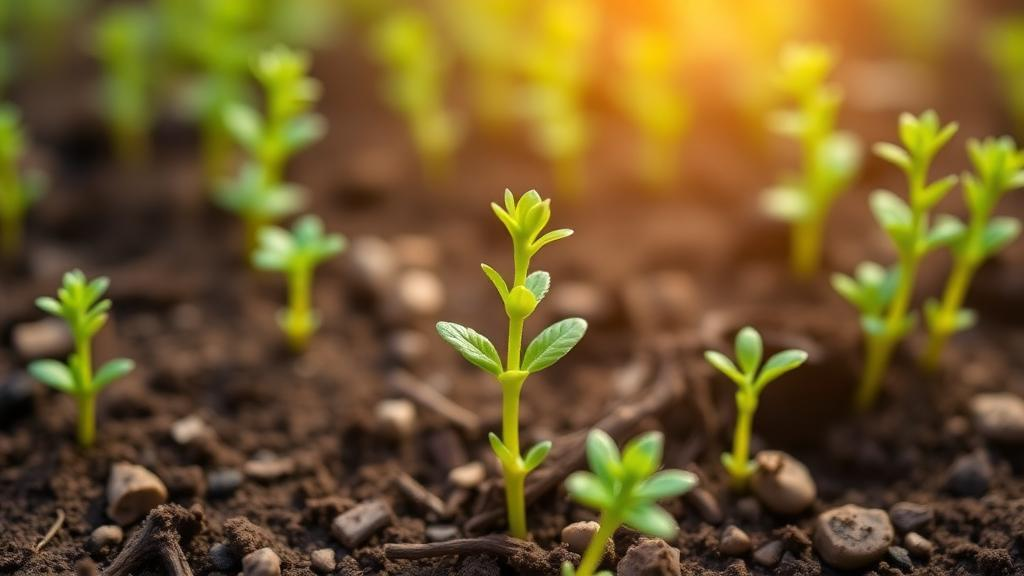
Licorice, the plant behind one of the world’s oldest and most widely used herbal medicines, may have just gained a powerful new ally in the fight against drought. In a controlled pot experiment published in BMC Plant Biology, researchers at Shihezi University in Xinjiang, China, report that spraying or supplying glycine betaine — a small, naturally occurring molecule that cells use to protect themselves against water loss — can dramatically improve both the survival and the medicinal quality of Glycyrrhiza uralensis seedlings grown under water deficit. The work, led by Haotian Li and Miao Ma, offers one of the clearest concentration-resolved pictures yet of how this osmoprotectant reshapes plant physiology when water becomes scarce.
Glycyrrhiza uralensis, known in traditional Chinese medicine as gancao, is prized for its roots, which contain glycyrrhizic acid, liquiritin, and a suite of flavonoids responsible for anti-inflammatory, expectorant, and sweetening properties. But like many medicinal plants, its growth and the accumulation of these active compounds are highly sensitive to environmental stress. Drought is among the most damaging: it constrains photosynthesis, disrupts cellular redox balance, and can suppress the very biosynthetic pathways that make the root pharmaceutically valuable. In arid regions of northwestern China, where much of the world’s cultivated licorice is grown, water limitation is a persistent bottleneck for both yield and quality.
The research team designed their experiment around a deceptively simple question: does the dose of exogenous glycine betaine matter? Rather than testing a single application rate, they grew seedlings under a well-watered reference condition at 45 percent of maximum moisture capacity and subjected five groups to a more severe water deficit at 35 percent of maximum moisture capacity, treating each deficit group with 0, 20, 40, 60, or 80 mmol per liter of glycine betaine. This gradient allowed them to map the physiological response across concentrations rather than merely confirming that the compound helps — a critical step, because osmoprotectants can lose effectiveness or even become burdensome at excessive doses.
The results were striking. Across nearly every measured parameter, 40 mmol per liter emerged as the optimal concentration. At this dose, plant height and root morphological traits — the architectural features that determine how effectively a licorice plant can forage for water and, ultimately, the size of the harvestable medicinal organ — increased by 49 to 91 percent compared with drought-stressed seedlings that received no glycine betaine at all. That magnitude of improvement, achieved with a single, inexpensive, non-toxic compound, is the kind of result that immediately catches the attention of both agronomists and the medicinal plant industry.
What explains such a large effect? The answer lies in the cascade of damage that drought inflicts at the cellular level, and in glycine betaine’s ability to intervene at multiple points simultaneously. When water is scarce, photosynthetic electron transport becomes overloaded, and plants generate reactive oxygen species — molecules such as hydrogen peroxide that oxidize membranes, proteins, and DNA. The researchers quantified this oxidative assault directly: in untreated drought-stressed seedlings, hydrogen peroxide content, malondialdehyde (a marker of lipid peroxidation), and relative electrical conductivity (an indicator of membrane leakage) all rose sharply. At 40 mmol per liter glycine betaine, hydrogen peroxide content fell by 57 percent, malondialdehyde by 30 percent, and relative electrical conductivity by 44 percent relative to the untreated drought controls — evidence that the compound substantially preserved membrane integrity and limited oxidative damage.
Alongside this protective effect, glycine betaine supercharged the seedlings’ own antioxidant machinery. Activities of superoxide dismutase, the first-line enzyme that converts superoxide radicals into hydrogen peroxide, increased by up to 400 percent, while catalase, which then breaks that hydrogen peroxide down into water and oxygen, rose by up to 608 percent. This coordinated enzymatic surge matters because it represents a functional detoxification pipeline: superoxide dismutase alone would simply convert one reactive species into another, but the paired elevation of both enzymes allows the plant to complete the detoxification cycle. The findings suggest that exogenous glycine betaine does not merely act as a passive chemical shield but actively primes the plant’s endogenous stress-response systems.
The compound also improved the hydraulic and photosynthetic side of the drought equation. Gas exchange measurements and chlorophyll fluorescence analysis showed better photosynthetic performance in treated seedlings, consistent with glycine betaine’s well-established role as an osmolyte: by accumulating in the cytoplasm, it helps cells retain water and maintain turgor without interfering with normal biochemistry, a property that has made it a favorite subject of stress-physiology research for decades. The study also documented enhanced osmotic-regulation-related metabolite responses, painting a coherent picture of a plant better equipped to keep its stomata open, its chloroplasts functioning, and its tissues hydrated under water stress.
Perhaps the most commercially significant finding concerns the medicinal compounds themselves. Across the glycine betaine treatments, the maximum increases in liquiritin, glycyrrhizic acid, and total flavonoid contents reached 71 percent, 90 percent, and 63 percent, respectively, relative to untreated drought-stressed plants. This is notable because stress physiology often presents growers with a trade-off: moderate stress can sometimes boost secondary metabolite production, but severe drought typically suppresses overall growth and can degrade quality. Here, glycine betaine appears to decouple that trade-off, allowing seedlings to grow larger while simultaneously accumulating more of the compounds that make licorice valuable. If this pattern holds in the field, it could reshape cultivation strategies in water-limited regions.
To move beyond isolated measurements, the authors employed partial least squares structural equation modeling, an exploratory statistical technique that maps hypothesized pathways of influence among multiple variables. The analysis indicated coordinated associations linking oxidative injury, osmotic and antioxidant responses, photosynthetic performance, growth, and medicinal quality — in other words, the data are consistent with a mechanistic chain in which glycine betaine limits oxidative damage and supports osmotic adjustment, which in turn preserves photosynthesis, which fuels growth and provides the carbon skeletons and energy needed for biosynthesis of glycyrrhizic acid and flavonoids. The authors are careful to frame this as exploratory, but the model provides a testable physiological framework for future work.
The study’s authors are candid about its scope. The experiment was conducted in pots under controlled conditions, and the 40 mmol per liter optimum is explicitly identified as a candidate concentration within the tested range, not a universal prescription. Field validation in water-limited licorice production systems is the necessary next step, and factors such as application method, timing, soil type, and genotype could all shift the optimal dose. Still, the implications are considerable. Glycine betaine is cheap, environmentally benign, and already used in some agricultural settings, which makes it an attractive tool for medicinal crop cultivation in arid lands. For a species whose roots take years to reach commercial quality and whose wild populations have been depleted by overharvesting, a simple treatment that simultaneously improves drought tolerance, growth, and active-compound accumulation could be a meaningful step toward more sustainable and higher-quality licorice production — and a compelling demonstration that sometimes the best way to help a plant through a drought is to give it a molecule it already knows how to use.
Subject of Research: Effects of exogenous glycine betaine on drought tolerance and medicinal compound accumulation in Glycyrrhiza uralensis seedlings
Article Title: Exogenous glycine betaine enhances drought tolerance and medicinal quality in Glycyrrhiza uralensis seedlings
Article References: Li, H., & Ma, M. (2026). Exogenous glycine betaine enhances drought tolerance and medicinal quality in Glycyrrhiza uralensis seedlings. BMC Plant Biology. https://doi.org/10.1186/s12870-026-10061-3
Image Credits: AI Generated
DOI: 10.1186/s12870-026-10061-3
Keywords: Glycyrrhiza uralensis, glycine betaine, drought stress, osmotic adjustment, redox homeostasis, antioxidant enzymes, photosynthesis, glycyrrhizic acid, liquiritin, flavonoids, medicinal plants, plant physiology
News Source: Alan Morgan. (October 11, 2026). Common Osmoprotectant Boosts Drought Survival and Potency of Licorice Seedlings. Scienmag.