Cancer-related fatigue is one of the most exhausting and stubborn symptoms that people with lung cancer face, and unlike ordinary tiredness it does not reliably improve with rest. It drains energy during chemotherapy, radiotherapy and recovery from surgery, erodes quality of life, and is consistently linked with worse mood, poorer sleep and reduced daily functioning. Because pharmacological options have repeatedly disappointed — stimulant drugs such as methylphenidate have failed to beat placebo in randomized trials — clinicians have increasingly turned to non-pharmacological approaches. Now a systematic review and network meta-analysis published in Supportive Care in Cancer offers the most detailed head-to-head comparison yet of therapies rooted in Traditional Chinese Medicine, and its verdict is striking: moxibustion, the burning of dried mugwort near acupuncture points, appears to be the single most effective option, with auricular acupressure close behind.
The study, led by Yu Song and Xinyu Zhou of the Central Hospital of Wuhan, Tongji Medical College, Huazhong University of Science and Technology, together with colleagues in the hospital’s Respiratory Intensive Care Unit, set out to answer a question that individual trials could not. Dozens of small randomized controlled trials have tested various TCM-based interventions against cancer-related fatigue, but results were scattered across different techniques, patient groups and outcome measures, leaving clinicians with no clear sense of which therapy deserved priority. By pooling all of the evidence in a single statistical framework, the researchers hoped to rank the treatments even where no trial had ever compared them directly.
To do this, the team searched eight electronic databases from their inception up to 24 November 2025, screening the literature for randomized controlled trials that evaluated TCM-based non-pharmacological therapies in lung cancer patients and reported fatigue outcomes. The methodological quality of each included trial was assessed with the Cochrane Risk of Bias 2.0 tool, the current standard for judging whether a trial’s design and conduct could plausibly distort its results. All statistical analyses were performed in STATA 18.0, and the synthesis followed the PRISMA extension statement designed specifically for network meta-analyses, the reporting framework that allows both direct and indirect comparisons to be combined coherently.
The final evidence base comprised 32 randomized controlled trials covering eight distinct TCM-based non-pharmacological therapies. The list reads like a tour of classical Chinese medicine adapted for the modern oncology ward: moxibustion in several forms, including thunder-fire and heat-sensitive variants; auricular acupressure, in which seeds or needles are pressed into points on the outer ear; acupuncture and acupressure; transcutaneous electrical acupoint stimulation, known as TEAS; qigong and related mind-body exercises such as Baduanjin, Tai Chi, Liuzijue and Wuqinxi; acupoint application of herbal plasters; and traditional techniques such as hot ironing and drug canister therapy. Rather than comparing each therapy only against usual care, the network meta-analysis placed them all on a common scale, using standardized mean differences to express how much each reduced fatigue relative to the alternatives.
The headline result concerns moxibustion. Against usual care, moxibustion achieved a standardized mean difference of −2.56, with a 95 percent confidence interval spanning −3.60 to −1.51. In plain terms, patients receiving moxibustion reported substantially lower fatigue scores than those receiving routine care, and the effect size is large by any clinical convention — standardized mean differences above 0.8 are typically considered large, so a value exceeding two represents an unusually pronounced signal. Auricular acupressure also beat usual care significantly, with a standardized mean difference of −1.82 (95 percent CI −3.61 to −0.03), although the confidence interval only just excludes zero, indicating a more fragile statistical foundation.
Perhaps more consequential is the direct comparison between therapies. Moxibustion showed a significant advantage over qigong, with a standardized mean difference of −2.12 (95 percent CI −3.58 to −0.65). This is notable because qigong and its cousins Tai Chi and Baduanjin are the TCM-based interventions most familiar to Western integrative oncology, and they have accumulated a respectable evidence base in other cancers. The finding does not mean qigong is useless — the analysis simply found it less effective than moxibustion for fatigue specifically in lung cancer patients — but it does suggest that passive heat-based stimulation of acupuncture points may outperform movement-based practices for this symptom in this population, at least within the current trial literature.
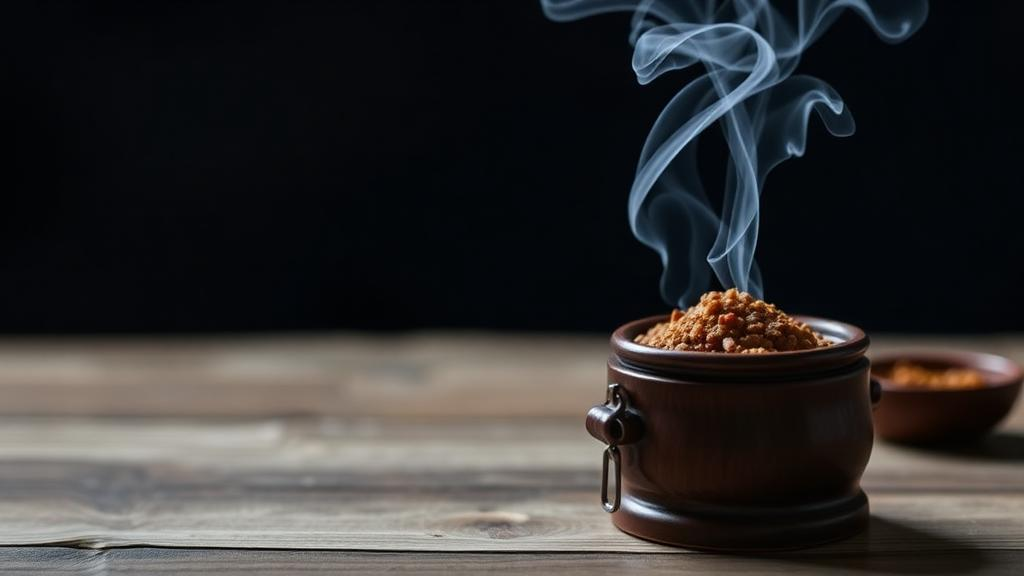
Why might moxibustion perform so well? The therapy involves burning processed mugwort, either on or hovering just above selected acupuncture points, delivering sustained radiant heat to the skin. Trials included in the review tested several refinements, from temperature-controlled thunder-fire moxibustion to heat-sensitive moxibustion, in which practitioners identify points that respond unusually to warmth, and herbal cake moxibustion applied to the back Shu points. Proposed mechanisms are largely indirect: heat stimulation may modulate local blood flow, influence immune parameters — some trials in the review tracked lymphocyte counts and immune function — and alter signaling in pathways implicated in the biology of cancer-related fatigue, which is thought to involve inflammation, hypothalamic-pituitary-adrenal dysregulation and disrupted energy metabolism. Auricular acupressure, meanwhile, has a plausible neurological rationale, since stimulation of the ear’s vagal distribution can influence autonomic balance, a mechanism explored in related work on transcutaneous auricular vagus nerve stimulation.
The authors themselves temper enthusiasm with an important caveat. The included trials showed considerable risk of bias, a common problem in the complementary medicine literature where true placebos are difficult to design — patients and practitioners inevitably know whether mugwort is being burned on their skin, and blinding of outcome assessors is often incomplete. Small sample sizes, heterogeneous intervention protocols and variable fatigue measurement instruments further weaken the evidence. The review’s conclusion is therefore deliberately cautious: moxibustion and auricular acupressure may be the most promising TCM-based non-pharmacological therapies for alleviating cancer-related fatigue in lung cancer patients, qigong appears less effective, but these conclusions require validation through more rigorously designed, high-quality clinical trials before they can guide practice with confidence.
Context matters for interpreting the stakes. Lung cancer remains the leading cause of cancer death worldwide, and fatigue is among its most prevalent and disabling symptoms, reported during palliative chemotherapy and long after treatment ends. Qualitative studies show that patients describe the exhaustion as qualitatively different from everyday tiredness, shaping their depression, anxiety and willingness to continue treatment. Because fatigue also independently predicts reduced health-related quality of life in lung cancer survivors, an inexpensive, low-risk, non-drug therapy that meaningfully reduces it would be a genuine addition to supportive care — particularly if it can be delivered by nurses as part of routine symptom management, as many of the included trials envisioned.
For now, the study offers both a roadmap and a warning. The roadmap points researchers toward moxibustion and auricular acupressure as priority interventions deserving large, well-blinded, preregistered trials with standardized fatigue instruments and adequate follow-up. The warning is that a network meta-analysis is only as reliable as the trials feeding it, and 32 small studies with elevated risk of bias can inflate or distort rankings in ways that only better primary research can resolve. Patients and clinicians should read the result as a promising signal rather than a prescription: the ancient practice of warming acupuncture points with burning mugwort may yet earn a modern place in oncology supportive care, but the definitive trials that would justify it have still to be run.
Subject of Research: Comparative efficacy of Traditional Chinese Medicine-based non-pharmacological therapies for cancer-related fatigue in lung cancer patients
Article Title: Comparative efficacy of traditional Chinese medicine-based non-pharmacological therapies for managing cancer-related fatigue in lung cancer patients: a systematic review and network meta-analysis
Article References: Song, Y., Zhou, X., Luo, Y., Guo, H., Xia, Y., Ni, F., & Geng, S. (2026). Comparative efficacy of traditional Chinese medicine-based non-pharmacological therapies for managing cancer-related fatigue in lung cancer patients: a systematic review and network meta-analysis. Supportive Care in Cancer, 34(10), Article 984. https://doi.org/10.1007/s00520-026-11208-6
Image Credits: AI Generated
DOI: 10.1007/s00520-026-11208-6
Keywords: cancer-related fatigue, lung cancer, moxibustion, auricular acupressure, Traditional Chinese Medicine, network meta-analysis, qigong, acupuncture, non-pharmacological therapies, supportive care, randomized controlled trials, systematic review
News Source: Nathaniel Bowman. (October 10, 2026). Moxibustion Emerges as Strongest Traditional Chinese Medicine Therapy Against Cancer Fatigue. Scienmag.