Chikungunya virus has a deep historical connection to East Africa, the region where it was first identified, yet the surveillance systems meant to detect its return remain fundamentally reactive. According to a recent analysis published in New Microbes and New Infections, outbreak detection across the region is still anchored largely to the recognition and reporting of human illness. That dependence on clinical case detection introduces intrinsic delays: many infections produce no apparent symptoms, febrile illness caused by the virus overlaps with malaria, dengue and other common pathogens, and the standardization of surveillance varies widely between countries. The result is that outbreaks tend to appear sporadic and unpredictable, often recognized only after viral amplification is already underway in human and mosquito populations.
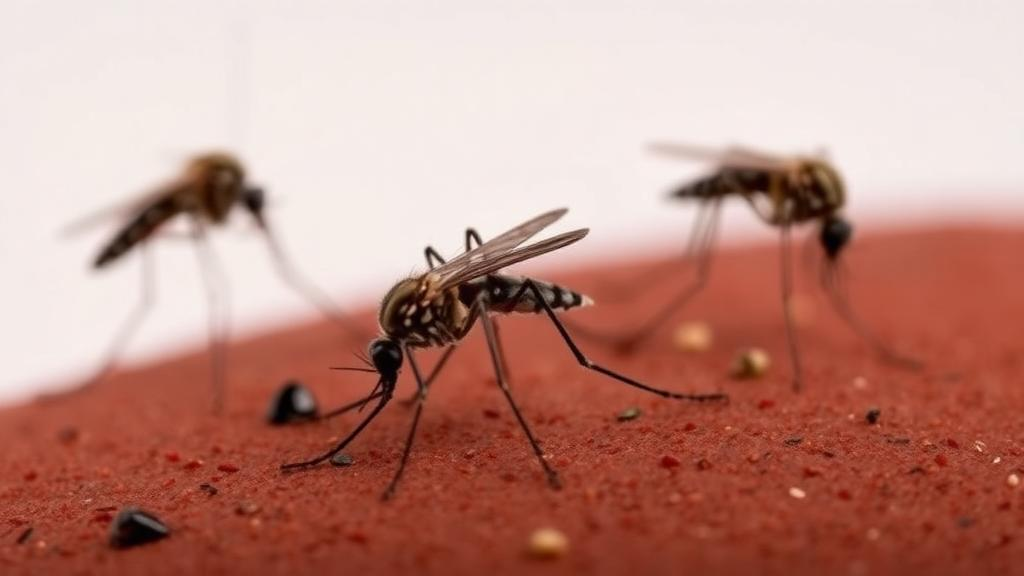
The authors, a team of researchers led by Mohamed Abdulkadir Hussein, argue that this clinical anchoring is no longer adequate in a region where transmission patterns have shifted. Chikungunya increasingly spreads through urban and peri-urban human–mosquito cycles involving Aedes aegypti and, in some settings, Aedes albopictus, rather than arising solely from sylvatic spillover between forest mosquitoes and wild primates. Urban transmission cycles can amplify rapidly in dense city environments, which means the window for intervention between viral introduction and large-scale spread is narrow. Detection systems that only register the outbreak once patients fill clinics arrive too late to exploit that window.
The documented outbreak record illustrates both the scale of the threat and the unevenness of the data. The largest documented outbreak in the peer-reviewed evidence base occurred in Dire Dawa, Ethiopia, in 2019, with 41,162 suspected cases and 16 laboratory-confirmed cases in one outbreak report; a regional review using WHO-AFRO-linked surveillance synthesis describes the same event as involving more than 50,000 suspected cases. Kenya experienced major epidemics in 2004 and again in 2016 to 2018, with the 2004 outbreak on Lamu Island reaching an attack rate of 75 percent, one of the highest ever recorded for chikungunya. Djibouti confirmed a 2019 to 2020 urban outbreak, though the full citywide extent was not captured because of missing dedicated reporting; only a French Defense Community surveillance cohort reported 58 confirmed cases.
The gaps in that record are as revealing as the numbers themselves. For Tanzania, Uganda, Somalia, Rwanda, Burundi and South Sudan, extractable outbreak counts are largely absent, even though serologic evidence and reports of viral circulation exist for several of them. Reviews of African chikungunya transmission explicitly note disparities between reported cases, genomic data and dedicated reporting systems, and studies from Tanzania and Ethiopia emphasize inadequate laboratory capacity, under-recognition of cases and geographic heterogeneity in detection. In practical terms, a virus can be moving through mosquito populations and producing infections across entire provinces before any quantifiable signal reaches national or international reporting systems.
The case for reform is sharpened by climate change. Climatic suitability for the mosquitoes that transmit chikungunya is increasing, with warmer conditions expanding the geographic range of Aedes vectors and lengthening transmission seasons. Experimental and field evidence shows that temperature, rainfall and humidity shape both mosquito abundance and transmission potential in measurable ways. Higher temperatures generally increase mosquito infection rates and transmission efficiency, because viral replication within the mosquito accelerates as ambient temperature rises. Rainfall increases Aedes abundance by expanding breeding sites, and precipitation and temperature extremes are strong predictors of habitat suitability and hotspot formation across the region.
Recent outbreak analyses add a second layer to this climatic picture: heavy rainfall events combined with high temperatures can rapidly generate high vector densities and accelerate local spread within weeks. Broader climate-event cascades, in which droughts, floods and shifting rainfall patterns interact with urbanization, land use change and human mobility, intensify outbreak risk in ways that single-sector surveillance cannot capture. A public health ministry tracking only human cases sees the downstream consequence of these drivers; a system that also monitors the drivers themselves can anticipate them. This is the central technical argument for moving beyond pathogen-focused reporting toward surveillance of emergence.
The proposed alternative is a One Health early warning architecture that explicitly integrates human, animal and environmental intelligence. One Health surveillance, as defined in the literature the authors cite, includes monitoring of the drivers of emergence rather than pathogens alone, combining clinical and laboratory diagnosis with vector, environmental, epidemiological and genomic surveillance. Operational examples from climate-sensitive vector-borne disease programs show that such integration can reveal overlooked transmission clusters, track viral diversity and guide preventive action before notifications peak. Regional networks have demonstrated that long-term multisectoral collaboration strengthens diagnostic capacity, vector monitoring, risk assessment and coordinated response across borders, a capability directly relevant to East Africa’s transboundary arboviral risk.
Entomological surveillance is a critical component of this architecture, but the authors are careful to note its limitations. Field studies show that vector infection prevalence can be low and highly focal even when arboviruses are actively circulating, meaning that failure to detect virus in sampled mosquitoes does not imply absence of local risk. Nevertheless, vector surveillance still provides actionable early signals through metrics such as adult female density, egg counts, larval habitat mapping, vector distribution and risk stratification. In Mombasa, for example, entomological investigations detected chikungunya virus in Aedes vittatus while Aedes aegypti remained the dominant collected vector, showing how vector community composition itself carries information about transmission potential. Combined with epidemiological and environmental data, these indicators support targeted vector control and rational prioritization of scarce resources.
Geography reinforces the integrated approach. Documented outbreaks cluster in coastal, urban and transport-linked settings such as Lamu, Mombasa, Kilifi, Dire Dawa and Djibouti City, locations where port traffic, trade corridors and rapid urban growth concentrate both human mobility and Aedes breeding habitat. The main periods of increased transmission in the region were the 2004 to 2005 East African resurgence centered on Kenya, the 2007 to 2008 period of Tanzanian activity, and the 2016 to 2020 wave that affected Mandera, Mombasa, Somalia, Ethiopia and Djibouti. Because these transmission chains follow movement and trade, an early warning system confined to one country or one data stream will systematically miss the cross-border seeding events that ignite new outbreaks.
The policy conclusion the authors draw is unambiguous: ministries of health should move from passive case reporting toward regionally coordinated One Health surveillance platforms that link routine human case detection with mosquito monitoring and climate intelligence. Such platforms would require interoperable data systems, shared laboratory protocols and cross-border alert thresholds, allowing a signal detected in vector or climate data in one country to trigger preparatory action in neighboring ones. East Africa faces precisely the constraints this approach is designed to overcome: fragmented sectoral systems, weak data sharing, uneven laboratory capacity and rising exposure driven by mobility, urban growth and climate variability. Earlier detection of chikungunya, the analysis concludes, will depend less on counting human cases after spread has begun and more on integrating the entomological, environmental and climatic signals that precede them.
Subject of Research: One Health surveillance for chikungunya early warning in East Africa
Article Title: One Health surveillance integrating human, mosquito, and climate data for early warning of chikungunya outbreaks in East Africa
Article References: One Health surveillance integrating human, mosquito, and climate data for early warning of chikungunya outbreaks in East Africa. (n.d.). Original publication
Image Credits: AI Generated
DOI: Not provided
Keywords: chikungunya, One Health, East Africa, Aedes aegypti, Aedes albopictus, climate change, surveillance, vector-borne disease, early warning, arbovirus, Ethiopia, Kenya
News Source: Kristina Jarvis. (October 10, 2026). Mosquitoes, Climate Data Could Give East Africa Early Warning of Chikungunya. Scienmag.