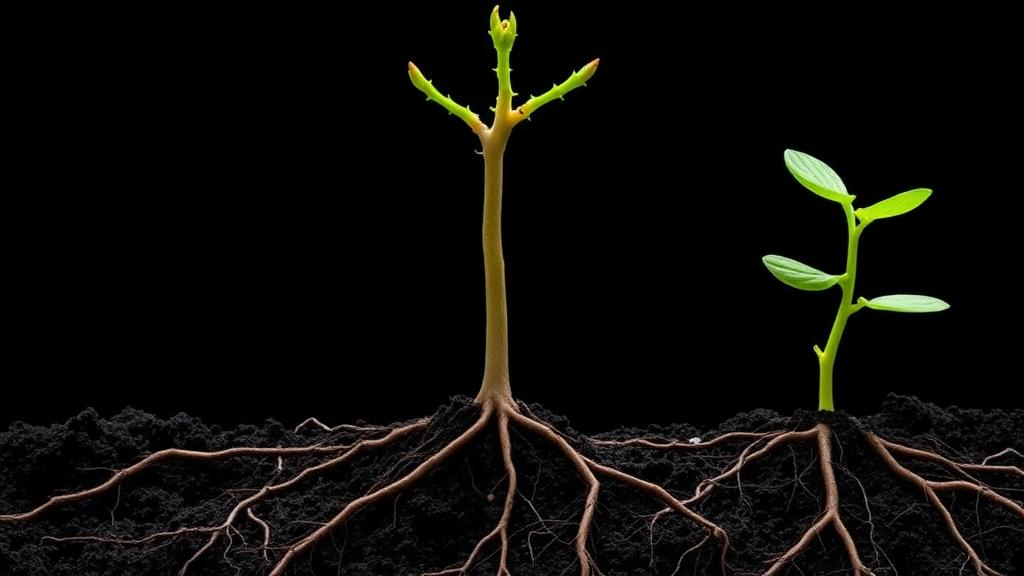
Every time a plant closes its stomata, thickenens its cell walls, or bolts into flower, a burst of calcium ions surges through its cells, and a family of molecular interpreters translates that fleeting signal into action. These interpreters, the calcium-dependent protein kinases, or CPKs, sit at the heart of how plants sense and respond to their world. A sweeping new phylogenomic analysis published in BMC Plant Biology has now reconstructed how this pivotal gene family arose, multiplied, and diversified across the green plant lineage, offering one of the most complete evolutionary accounts yet of the machinery that helped plants conquer dry land.
The research team, led by Yi Dai and Tianya Zhang of Nanchang University, together with colleagues at Jiangxi Normal University and Jiangxi Agricultural University, examined CPK genes across 86 representative species spanning the breadth of green plant diversity, from single-celled green algae to the most evolutionarily recent flowering plants. Their survey revealed a striking range in the size of the family. The single-celled green alga Chlamydomonas reinhardtii carries just two CPK genes, while the soybean, Glycine max, harbors 83, one of the largest repertoires documented. Between those poles lies the story of how a modest set of ancestral genes was repeatedly copied, rearranged, and refined over hundreds of millions of years.
Technically, CPKs are elegant molecular devices. Each protein combines a calcium-sensing domain, resembling the calmodulin found across eukaryotes, with a protein kinase domain that can switch target proteins on or off by adding phosphate groups. This fusion allows CPKs to decode calcium spikes directly, without the intermediate steps that other calcium-responsive systems require. In practical terms, when drought, salinity, pathogens, or temperature shifts trigger a calcium wave inside a plant cell, CPKs are among the first responders, phosphorylating downstream targets that orchestrate stress responses, immune signaling, and developmental programs. Their importance to life on land is precisely why the authors of the new study describe them as core integrators of plant calcium signaling and as indispensable to the terrestrial colonization of green plants.
To trace the family’s history, the researchers built phylogenetic trees from CPK sequences across the 86 species, a strategy that reveals both how genes are related and when new branches appeared. The analysis showed that land plant CPKs fall into four well-supported subfamilies, each a distinct branch descending from a common ancestor. In contrast, the CPK genes of Chlamydomonas formed a separate, basal clade that sits outside the land plant subfamilies. That arrangement implies the ancestral CPK toolkit was already present in the green algal ancestors of land plants, and that the four subfamilies were established early in the lineage that moved onto land, before flowering plants, conifers, mosses, and ferns went their separate evolutionary ways.
The copy-number expansion that produced today’s diverse repertoires was driven by identifiable genetic mechanisms. Tandem duplication, in which a gene is duplicated side by side with its original copy along a chromosome, emerged as the predominant force driving copy-number increases within each subfamily. Alongside it, whole-genome duplications and larger-scale segmental duplications also contributed to gene gains. These processes are well known engines of evolutionary innovation: a duplicated gene is freed from the constraints of its original function and can accumulate mutations that allow it to take on new roles, fine-tune old ones, or specialize in particular tissues or stress conditions. The angiosperms, or flowering plants, showed particularly significant expansions of their CPK complements during their evolutionary history, consistent with their ecological dominance and their sophisticated responses to environmental challenges.
Despite that expansion, the underlying architecture of CPK proteins has remained remarkably stable. The researchers found that core sequence motifs and protein structures were highly conserved across the different representative plant lineages they examined. The one notable exception lies at the N-terminal end of the protein, where a variable region of differing length occurs among lineages. This N-terminal region is known to carry lipid-modification sites and other features that help direct CPKs to specific membranes within the cell, so variation in its length may underlie differences in where and how particular CPKs operate. The pattern of conserved cores and variable termini suggests natural selection preserved the calcium-sensing and kinase machinery intact while allowing regulatory flexibility at the protein’s periphery.
That interpretation is reinforced by the study’s selective pressure analysis, which estimated the ratio of non-synonymous to synonymous substitution rates, a standard measure known as the omega value, for each subfamily. Across all four land plant subfamilies, omega values were far below one, the signature of strong purifying selection. In evolutionary terms, purifying selection weeds out mutations that impair protein function, indicating that the amino acid sequence and structure of CPKs are under intense constraint because organisms bearing damaging changes are removed from the population. Such strong constraint across hundreds of millions of years underscores how little room for error the calcium-signaling system permits and how essential each subfamily has remained throughout plant history.
The functional analysis added a second layer of insight. Genes enriched among CPKs were primarily associated with calcium-dependent protein kinase activity and with environmental adaptation pathways, aligning the family’s molecular role with its proposed importance in helping plants cope with challenging surroundings. Notably, the authors suggest that high temperatures encountered during the evolutionary history of green plants likely facilitated the diversification of the CPK subfamilies. Heat stress is among the most acute challenges plants face, triggering calcium signatures that CPKs decode into protective responses such as heat-shock protein production and membrane stabilization. An expanding, diversifying CPK repertoire could have provided raw material for plants to tune their thermal responses as climates shifted and as they colonized habitats increasingly exposed to the sun’s full intensity.
The evolutionary timeline implicit in these findings dovetails with the broader story of plant terrestrialization. When green algal ancestors of land plants emerged from aquatic environments roughly half a billion years ago, they confronted desiccation, ultraviolet radiation, temperature extremes, and gravity, all conditions absent from their watery origins. Calcium signaling, which in aquatic algae served simpler regulatory purposes, became a versatile information system for a stationary organism whose survival depended on rapidly adjusting its physiology to a fluctuating environment. The establishment of four CPK subfamilies before the major land plant lineages diverged, followed by lineage-specific expansions concentrated in flowering plants, maps neatly onto the escalating complexity of plant form and ecological strategy, from mosses carpeting damp soil to forests and grasslands engineered by angiosperms.
For contemporary plant science, the study offers more than an evolutionary narrative. Because CPKs govern responses to drought, heat, salinity, and pathogens, understanding which subfamilies arose when, and how copy number varies among species, can guide researchers seeking to breed crops with enhanced stress tolerance. The finding that tandem duplication drove much of the expansion suggests that copy-number variation is a dynamic, ongoing process, one that continues to shape the signaling capacity of plant genomes today. As the authors conclude, their phylogenomic analysis provides novel evolutionary insights into the adaptive significance of the CPK gene family during plant terrestrialization and diversification, a reminder that the quiet chemistry of calcium, decoded by an ancient and carefully guarded set of genes, helped write the history of life on land and may yet help secure its agricultural future.
Subject of Research: Evolution and diversification of the calcium-dependent protein kinase gene family across green plants
Article Title: The origin, evolution and diversification of the CPK gene family in green plants
Article References: Dai, Y., Zhang, T., Gao, D., Zhou, P., Lu, S., Zhang, Y., Guo, C., & Xiang, X. (2026). The origin, evolution and diversification of the CPK gene family in green plants. BMC Plant Biology. https://doi.org/10.1186/s12870-026-10117-4
Image Credits: AI Generated
DOI: 10.1186/s12870-026-10117-4
Keywords: CPK genes, calcium signaling, green plants, gene family evolution, plant terrestrialization, gene duplication, phylogenomics, purifying selection, angiosperms, whole-genome duplication, environmental adaptation, BMC Plant Biology
News Source: Juliet Wilcox. (October 10, 2026). Calcium-Sensing Genes Traced to the Roots of Plant Life on Land. Scienmag.